
24/7 Customer Support

Free returns

Same-day & Next-day Delivery

Quality Guaranteed

Unlock Your Welcome Offers: FREE Delivery | Up to 80% OFF | Free 30-day JoyPlus trial
Download the APP
A good folding chair is an essential piece of kit for anyone who enjoys the great outdoors in the UK. Whether you're setting up camp in the Lake District, enjoying a picnic in a local park or saving your spot at a summer festival, the right seat makes all the difference. However, the market is flooded with options and it's easy to end up with a chair that fails after a single season.
As the Joybuy Product Recommendation Officer, my role is to help you see past the marketing jargon. Before you buy, let's look at the common pitfalls that lead to disappointment and wasted money.
To ensure you get a durable and comfortable chair, focus on these core specifications. Getting these right is more important than any single advertised feature.
The frame is the backbone of any portable outdoor chair. The two most common materials are steel and aluminium.
The seat fabric takes a lot of punishment. The industry standard for quality is Oxford fabric, measured in Denier (D).
A chair's shape and features determine how stable and comfortable it will be in practice.
Based on these practical criteria, here are some folding chair options matched to different user needs.
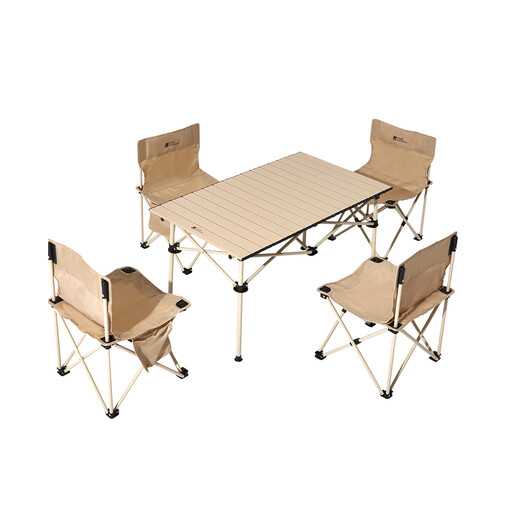
Why This Fits Their Persona: This all-in-one set is ideal for families who enjoy car camping or picnics. It eliminates the hassle of packing separate items, providing a complete dining and seating solution that sets up in minutes.
It sidesteps the "one-size-fits-all" trap by being a purpose-built set for group activities. The robust steel tubing frames for both table and chairs counter the "featherlight" fallacy, offering stability for family use.
The entire set packs into a single carry bag for ultimate convenience. The high-back chairs provide good lower back support for comfortable mealtimes.
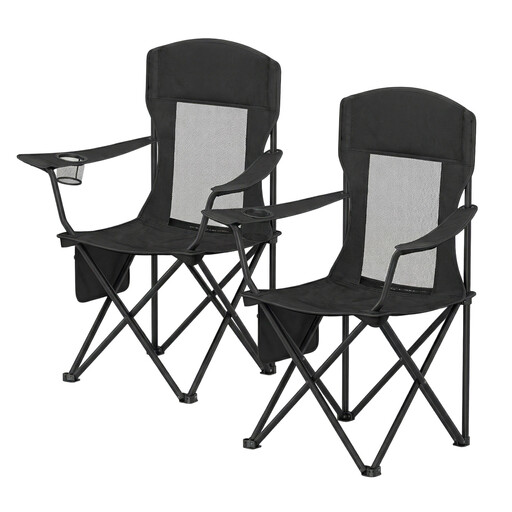
Why This Fits Their Persona: Perfect for those who spend hours outdoors, from fishing by a lake to attending a long festival day. The high-back design and sturdy frame prioritise comfort and support for extended relaxation.
This chair directly addresses the comfort compromise. Its ergonomic high-back shape is purpose-built for support, not just portability. The 150kg max static load is backed by a reinforced steel frame, avoiding the misleading capacity trap.
The combination of supportive Oxford fabric and breathable nylon mesh offers comfort in various weather conditions. It comes as a convenient set of 2 camping chairs with carry bags.
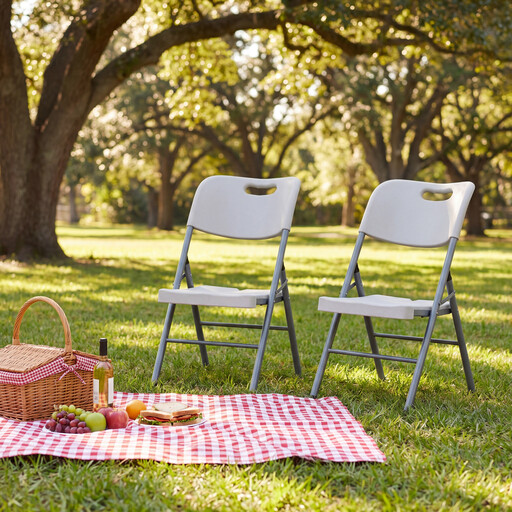
Why This Fits Their Persona: An excellent choice for those needing reliable, occasional seating for garden parties, BBQs or as extra chairs for indoor gatherings. The focus is on sturdiness, easy cleaning and space-saving storage.
This chair prioritises durability over portability, avoiding the "featherlight" trap entirely. Its impressive 200kg maximum weight capacity is supported by a robust steel and HDPE plastic build, making it a truly heavy-duty option for its intended use.
The HDPE plastic is weatherproof and extremely easy to wipe clean. The chairs fold flat for compact storage in a shed or cupboard and non-marking feet protect indoor flooring.
We have compiled a complete, real-time list of products that fully satisfy these strict selection criteria and UK safety regulations.
The lifespan of a folding chair depends heavily on its materials, frequency of use and how it's cared for. A well-made chair with a powder-coated steel frame and 600D Oxford fabric should last for many seasons of typical use. To maximise its life, always clean off mud and dirt after use, allow it to dry completely before storing and keep it in its carry bag in a dry place away from direct sunlight.
The primary difference is often in the leg design. Beach chairs may feature wide, flat feet or a U-shaped bar at the base to stop them from sinking into the sand. Traditional camping chairs usually have four separate legs with smaller feet, designed for firmer ground like grass or dirt. Beach chairs also tend to favour quick-drying mesh fabrics.
Not necessarily. While a high capacity indicates strength, it can also mean the chair is much heavier and less portable. It's more important to find a balance that suits your needs. A chair with a 120kg capacity built with a high-quality steel frame and reinforced joints can be more reliable in real-world use than one claiming a 150kg limit but using lower-quality components. Always consider the frame material and construction alongside the stated weight limit.