
24/7 Customer Support

Free returns

Same-day & Next-day Delivery

Quality Guaranteed

Unlock Your Welcome Offers: FREE Delivery | Up to 80% OFF | Free 30-day JoyPlus trial
Download the APP
A folding camping wagon can save repeated trips between the car and campsite, carry picnic supplies across a park or move groceries from the supermarket. However, the wrong model may become awkward to steer, difficult to store or unstable when loaded.
The main challenge is separating useful specifications from inflated capacity figures and vague descriptions. Before choosing a collapsible camping wagon, check how much it can carry in real use, whether its wheels suit your route and how securely it folds away.
A large litre figure does not always mean the trolley will hold bulky items comfortably. High sides, a narrow opening or an awkward internal shape may limit what you can actually load.
A 127L wagon may suit camping equipment, shopping bags and picnic supplies without taking up excessive storage space. A 200L model is more suitable when you regularly transport large cool boxes, chairs, event stock or garden materials. Check both the internal capacity and the folded dimensions before purchasing.
A product listed with a 200kg load capacity should not automatically be loaded to that limit on every surface. Weight distribution, wheel design, slopes and uneven ground all affect handling. Heavy items placed at one end can make a trolley harder to pull and more likely to tip.
Use the stated maximum as a limit, not a target. Spread weight evenly and keep dense items low in the wagon.
An off-road wagon trolley with large treaded wheels can be easier to move over grass, gravel and sand than a compact trolley with small swivel wheels. However, no folding trolley is designed for every terrain. Soft sand, steep slopes, kerbs and muddy ground can still require extra effort.
Look for wheel size, tread, wheel material, swivel function and brakes. A dual-brake system is particularly useful when loading or unloading on a gentle incline.
For occasional picnics or light shopping, a portable folding trolley with a moderate capacity may be easier to lift into a boot. For camping, gardening or vending, prioritise a reinforced metal frame and a clearly stated weight rating.
Useful options include:
Do not rely on phrases such as “heavy duty” alone. Check the actual load figure, frame material and whether the manufacturer provides set-up and maintenance instructions.
A grocery trolley with wheels normally prioritises smooth movement on pavements and shop entrances. A beach wagon or outdoor trolley needs larger wheels with a suitable tread. Four-wheel swivel systems can make turning easier in tight spaces, while fixed or larger rear wheels may offer more predictable movement over rougher ground.
For safer use:
A foldable utility wagon is only convenient if it fits your storage space. Measure the boot, shed, cupboard or under-bed area where you intend to keep it. Some high-capacity models fold flat but may still be wide or heavy to lift.
After use, remove sand, soil and moisture with a damp cloth. Allow the fabric and frame to dry before folding. Periodically inspect wheel fixings, brakes, stitching and folding joints. Do not exceed the stated capacity or use the trolley as a seat or step.
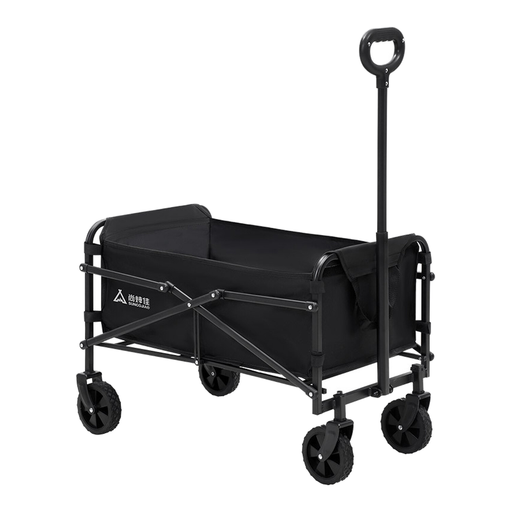
Why This Fits Their Persona: A practical choice for occasional camping, picnics, beach trips and grocery runs where portability matters. The listed 170L cargo capacity provides room for bulky items, while the stated 100kg load rating suits many everyday tasks.
Its capacity and load rating are stated separately, making it easier to avoid confusing storage volume with carrying weight. Minor wheel assembly is required, so check the fixings before use.
Foldable format, 600D Oxford fabric, multi-directional wheels and a stated 100kg load capacity.
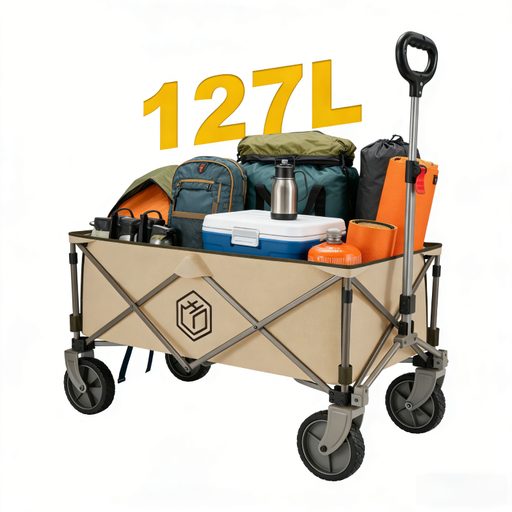
Why This Fits Their Persona: Suitable for shoppers who want a substantial load rating but still need a manageable wagon for car travel, camping weekends, picnics or market equipment.
The product specification states a 127L interior and a 200kg maximum load, rather than presenting one figure as both capacity and weight support. It should still be used on stable ground with evenly distributed contents.
Heavy-duty spray-painted steel tubes, dual brakes and 360° swivel wheels are listed features.
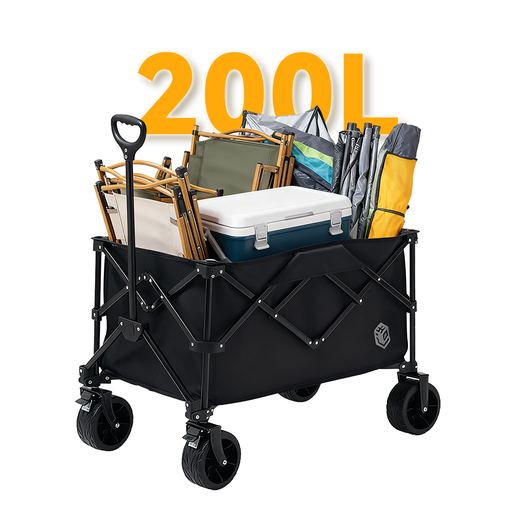
Why This Fits Their Persona: Designed for users transporting high volumes of camping gear, beach supplies, garden materials, groceries or market-stall stock across outdoor surfaces.
The high-sided 200L design is paired with large off-road wheels and dual brakes. These features address bulky loads and outdoor movement, although slopes and unstable ground should still be avoided.
200L capacity, steel frame, 600D Oxford cloth, PVC off-road wheels and a foldable design.
If your main journey is from a flat or nearby shop to home, a folding shopping trolley may be more convenient than a large camping wagon. An ergonomic handle, compact frame and lightweight construction can make it easier to manoeuvre on pavements and store indoors.
Check the handle height, wheel spacing and stated load limit. Avoid using a grocery trolley on stairs unless it is specifically designed for that purpose and never use any trolley to carry children.
We have compiled a complete, real-time list of products that fully satisfy these strict selection criteria and UK safety regulations.
Models with larger, wider off-road wheels are generally more suitable for grass, gravel and firmer sand than small-wheel shopping trolleys. Very soft sand can make any loaded wagon difficult to pull. Reduce the load, keep it balanced and avoid steep access routes.
Lifespan depends on load frequency, terrain, moisture and storage. Do not exceed the stated capacity, clean off grit and allow fabric to dry fully before folding. Check the frame, wheel bolts, brakes and fabric regularly, replacing or repairing parts where the product instructions allow.
Many models require no assembly and can be unfolded for use. Some trolleys, including the listed 100kg foldable cart, require minor wheel attachment. Always confirm that the frame is locked before loading and keep fingers clear of folding joints during set-up.