
24/7 Customer Support

Free returns

Same-day & Next-day Delivery

Quality Guaranteed

Unlock Your Welcome Offers: FREE Delivery | Up to 80% OFF | Free 30-day JoyPlus trial
Download the APP
Whether you're taming an unruly garden, clearing a path on a weekend hike, or preparing kindling at a campsite, the right tool can make all the difference. A quality folding pruning saw is a compact and powerful companion for homeowners, gardeners and outdoor enthusiasts alike. Unlike bulky bow saws or imprecise loppers, a folding saw offers precision and portability in one package.
But with so many options available, choosing the right one can feel overwhelming. This guide is designed to help you understand the key features to look for, so you can select a tool that meets your specific needs for cutting wood and managing greenery.
Before you make a decision, consider these practical points. Understanding them will help you find a reliable gardening saw or camping saw that performs well and lasts for years.
The heart of any saw is its blade. Most quality folding saws use high-carbon steel, with SK-5 steel being a popular choice known for holding a sharp edge and resisting wear. Some models feature bi-metal blades, which combine flexible alloy steel with hard high-speed steel teeth for enhanced durability.
Pay attention to the tooth configuration. Many pruning saws have triple-ground or "3D razor" teeth, which are designed to cut aggressively on the pull stroke. This makes cutting through green wood and branches faster and requires less effort than a traditional hand saw for wood.
The length of the blade determines the diameter of the branch you can cut efficiently.
A comfortable, non-slip handle is essential for both safety and reducing fatigue during use. Look for handles made from materials like TPR (thermoplastic rubber), which provide a secure grip even in damp conditions.
Crucially, a reliable safety lock is non-negotiable. It should secure the blade firmly in both the open and closed positions to prevent accidental cuts during use or transport. A well-designed lock is easy to operate but robust enough to withstand rigorous work.
Here are our recommendations, selected to cover a range of common uses, from detailed garden work to demanding outdoor tasks.
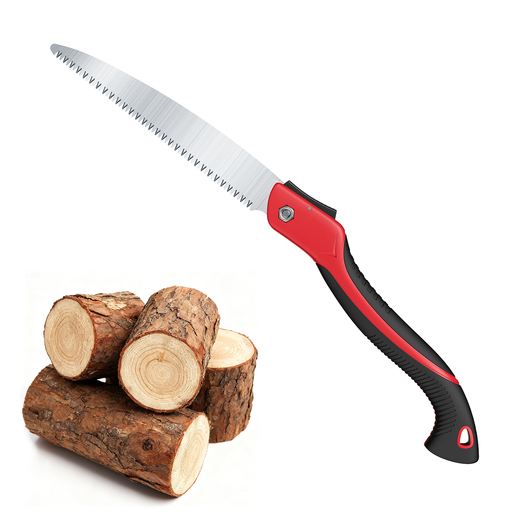
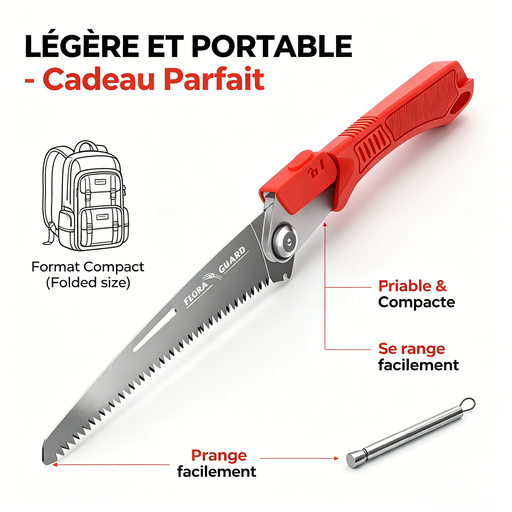

If a folding saw isn't quite what you're looking for, or if you need a tool for different types of woodwork, there are many other styles available. From traditional fixed-blade saws to larger bow saws, you can find the right tool for any project.
Explore our full collection of wooden saw options to find the perfect fit for your needs.
The primary difference lies in the teeth and cutting action. A pruning saw typically has larger, more aggressive teeth designed to cut on the pull stroke. This prevents the blade from buckling and makes it highly efficient at cutting green, wet wood without getting clogged. A standard hand saw for wood is often designed for pushing and is optimised for cutting dry, seasoned timber in a workshop.
Proper maintenance is simple but key to longevity. After each use, wipe the blade clean of sap and debris. Ensure it is completely dry before folding it away to prevent rust. A light coat of camellia oil or a similar lubricant can help protect the blade. Periodically check that the locking mechanism is functioning correctly and that the pivot screw is snug.
Yes, a folding pruning saw is an excellent tool for processing firewood. It is particularly effective for cutting fallen branches and smaller logs into manageable sizes for a campfire. For this purpose, a model with a blade of 8 inches or more is generally more efficient. It's a much safer and more portable alternative to carrying a large axe, making it a staple in many campers' and bushcrafters' kits.