
24/7 全天候客户支持

免费退货

当日/次日达

品质保障

开启新人专享福利: 全场免邮 | 低至 2 折 | 免费试用 30 天 JoyPlus 会员
下载 Joybuy
A folding shopping trolley can make supermarket trips, market visits and household transport considerably easier. However, a low price or a large capacity figure does not always indicate a practical design. The wrong trolley may be difficult to steer, awkward to store or uncomfortable to pull when fully loaded.
Before buying, UK shoppers should look beyond promotional wording and check the frame, wheels, folding mechanism and stated load limits. This guide highlights common buying traps, explains the specifications that matter and matches several options to different everyday needs.
A large-capacity shopping trolley may quote the total volume of its bag or compartment, but that does not necessarily mean it will carry bulky groceries comfortably. Check whether the interior is deep and accessible, and consider how the shape will work with milk bottles, tins, household supplies or reusable shopping bags.
For occasional supermarket trips, a standard grocery trolley may be sufficient. Families, carers and market shoppers may prefer a larger heavy-duty shopping trolley, provided the frame and wheels are suitable for the intended load.
A stair-climbing shopping trolley can be useful where steps are unavoidable, but it still requires controlled handling. Its wheel arrangement may help the trolley move over individual steps, yet the user must manage the weight and keep a secure grip. Never exceed the product’s stated capacity, and use extra care on wet, uneven or steep surfaces.
If your route includes lifts, kerbs or narrow aisles rather than stairs, a conventional two-wheel foldable shopping trolley may be easier to manoeuvre.
A trolley can appear compact in product images but occupy more space than expected when folded. Measure the available area in your hallway, car boot, cupboard or under-bed storage before ordering.
Also check that the frame locks securely in its open position. A folding shopping trolley should be fully unfolded and stable before groceries are loaded. Loose joints, damaged fabric or stiff wheels can affect safe handling over time.
The frame supports the load, so look for clearly stated materials such as carbon steel, cold-rolled iron or aluminium alloy. Aluminium may offer a lighter feel, while steel-based frames can be appropriate for heavier loads. The material alone does not guarantee durability; joints, wheel attachments and the base of the bag also matter.
Fabric descriptions should identify the construction where possible. For example, a reinforced Oxford fabric cargo bag may be more suitable for outdoor use than a lightweight shopping bag. A damp cloth is generally appropriate for routine cleaning, but the care instructions supplied with the product should take priority.
Always compare the maximum load capacity with your usual shopping habits. Do not treat the stated figure as a target. Heavy items concentrated in one area can place more strain on the wheels and frame than evenly distributed groceries.
For a wheeled shopping bag used for light food shopping, compact dimensions may be more important than maximum capacity. For camping, parcels or bulky household items, a larger platform-style cart may be more appropriate.
Look for an ergonomic handle if hand or wrist strength is limited. A handle should be comfortable to grip and positioned at a usable height. Wheel size and type affect how easily the trolley travels over pavements, supermarket thresholds and uneven paths.
Four swivel casters can help a rolling storage trolley turn in tight indoor spaces, while larger fixed or semi-fixed wheels may be more suitable for pulling a grocery trolley outdoors. Lockable wheels are valuable for storage trolleys that need to remain stationary, but they are not a substitute for careful loading.
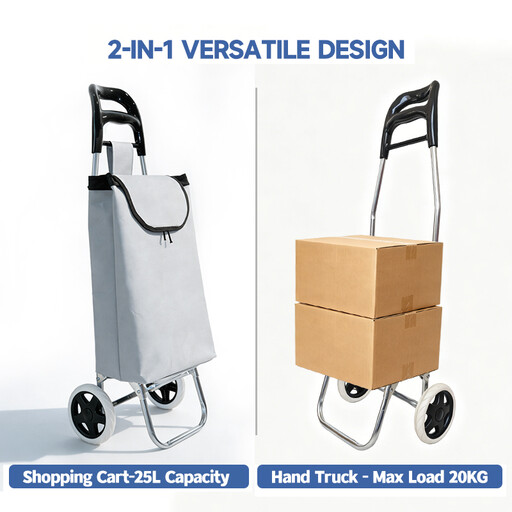
Why This Fits Their Persona: A practical starting point for supermarket shopping, grocery transport and regular errands where a spacious bag and foldable frame are useful.
The listing identifies a large-sized frame, ergonomic handle and foldable construction, making these important details easier to check before purchase.
Ergonomic handle; collapsible design for storage in a car, cupboard or under a bed.
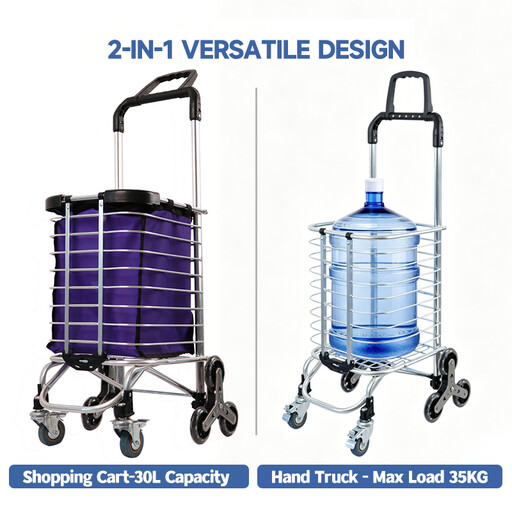
Why This Fits Their Persona: Suitable for shoppers who prioritise an adjustable handle and an aluminium alloy frame for regular home and supermarket use.
The listed material is aluminium alloy rather than an unspecified “premium” construction. Buyers should still confirm dimensions and capacity on the product page.
Aluminium alloy frame; adjustable handle; foldable format.
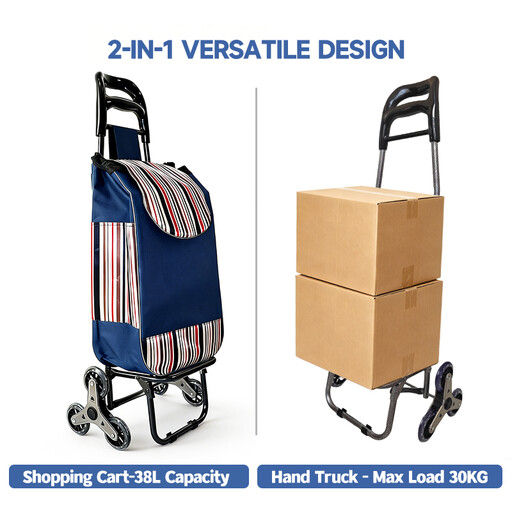
Why This Fits Their Persona: A compact choice for flats, maisonettes or homes where the route from the shop includes steps and storage space is limited.
Its compact collapsible format addresses the storage issue, while the stair-climbing layout is clearly identified rather than implied by general wheel wording.
Compact folding design; ergonomic handle; stair-climbing configuration.
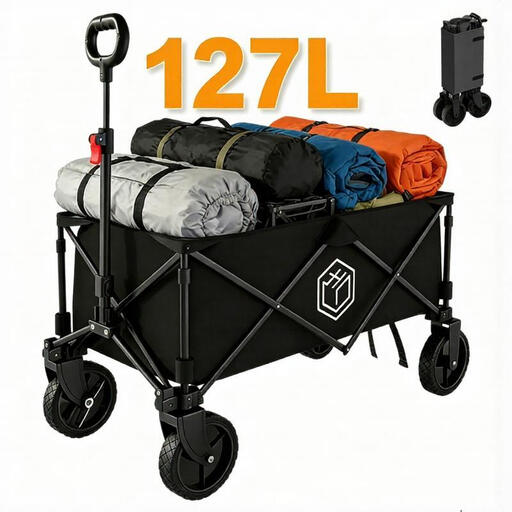
Why This Fits Their Persona: Designed for camping, picnics, vending, shopping and moving bulky supplies where a wagon-style load area is more useful than a narrow grocery bag.
The listing states a 127-litre interior, 200 kg load capacity and dual brakes. These figures should still be considered alongside terrain, handling ability and folded size.
127-litre capacity; collapsible construction; 360-degree swivel wheels and dual brakes.
We have compiled a complete, real-time list of products that fully satisfy these strict selection criteria and UK safety regulations.
Before the first trip, unfold the trolley completely and confirm that the frame and locking mechanisms are engaged. Attach any wheels or components according to the supplied instructions. Place heavier items low and centrally, then check that the bag or cargo area is not rubbing against the wheels.
After use, wipe away rain, mud or spilled food. Allow fabric components to dry before folding, particularly after shopping in wet UK weather. Inspect wheel movement, handle joints and screws regularly. Stop using the trolley if the frame bends, a wheel becomes loose or the locking system no longer holds securely.
An elderly-friendly grocery trolley may be suitable when it has a comfortable handle, manageable weight and stable wheels. The user should be able to control it when empty and loaded. For stairs or steep paths, consider whether assistance is needed rather than relying solely on a stair-climbing design.
Lifespan depends on load frequency, pavement quality, moisture exposure and maintenance. Avoid overloading, keep wheel axles clean and store the trolley dry and folded. Regularly checking the frame and fasteners can help identify wear before it affects stability.
A manual trolley has no battery or fuel cost. Ongoing expenses are usually limited to replacement wheels or minor parts if needed. A larger camping wagon may require more physical effort to pull when loaded, so choose the capacity based on your normal use rather than the highest figure shown.