
24/7 全天候客户支持

免费退货

当日/次日达

品质保障

开启新人专享福利: 全场免邮 | 低至 2 折 | 免费试用 30 天 JoyPlus 会员
下载 Joybuy
A folding shopping trolley can make supermarket trips, market visits and everyday transport considerably easier. However, a trolley that looks practical online may be awkward on pavements, difficult to store or unsuitable for heavier groceries.
For UK households, the main buying decision is not simply choosing the largest bag. You also need to consider wheel design, frame strength, handle comfort, folded dimensions and how the trolley will be used. The following guide highlights common shopping traps and explains which specifications deserve attention.
A large-capacity shopping trolley may hold plenty of items but still feel unstable when fully loaded. Check whether the product description provides a maximum load capacity, not only a volume measurement in litres.
Capacity and weight support are different:
Avoid exceeding the stated limit, as overloading can affect the frame, wheels and handle.
A shopping trolley with wheels may move smoothly on a supermarket floor but behave differently on kerbs, paving slabs or cobbled paths. Small wheels can be convenient indoors but may catch on uneven surfaces.
Stair-climbing shopping trolley designs can help with certain steps, but they still require careful handling. They should not be treated as a substitute for a lift or a safe, level route. Always check the wheel configuration and follow the manufacturer’s instructions.
The word foldable does not tell you the folded size. A trolley may collapse flat, partially fold or require the bag to be removed first. Before buying, look for:
A lightweight portable cart is useful only if it can be lifted and stored comfortably between trips.
For regular supermarket use, a metal frame provides structure, while a fabric bag keeps the trolley relatively portable. Blended fabric and metal construction can offer a practical balance between weight and support.
For outdoor or heavier tasks, look for more specific material details. One utility cart in this selection uses a cold-rolled iron frame, reinforced PP plastic components and a tear-resistant 600D Oxford fabric cargo bag. These details are more useful than vague descriptions such as “premium quality”.
For a rolling storage trolley, powder-coated metal and mesh shelving can be suitable for kitchens, bathrooms, garages and utility areas. Remember that an open shelf design is intended for organised storage rather than protecting groceries from rain.
Match capacity to your typical routine. A small weekly shop may only require a compact grocery carrier, while families and householders transporting bulkier goods may prefer a large capacity shopping trolley.
Check whether the stated capacity refers to:
Heavy items should be placed low and centrally to reduce tipping. Keep fragile goods separate from tins, bottles and cleaning products.
An ergonomic handle shopping trolley may feel more comfortable for people with limited hand or wrist strength, but the handle shape and height should still suit the user. An adjustable handle can be helpful when several household members share the trolley.
Swivel wheels can improve manoeuvrability in open spaces, while fixed wheels may provide a more predictable pulling motion. Lockable casters are particularly useful for a storage trolley that needs to remain stationary once positioned.
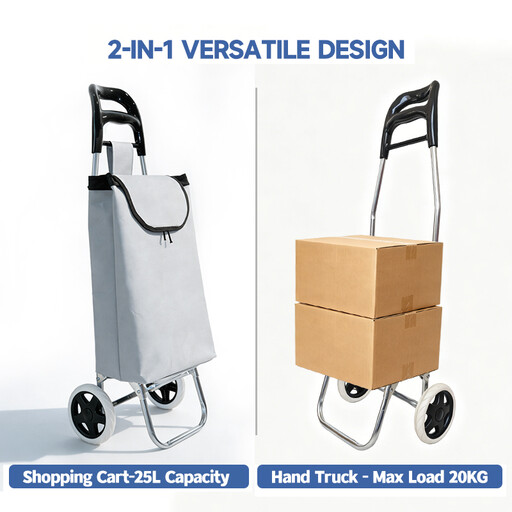
Why This Fits Their Persona: A practical option for regular supermarket trips, market visits and daily errands where a larger bag and comfortable pulling position are useful.
Its description specifies a foldable design, ergonomic handle and heavy-duty frame rather than relying only on a broad capacity claim.
Large-size format, grey blended-material construction, ergonomic handle and collapsible storage design.
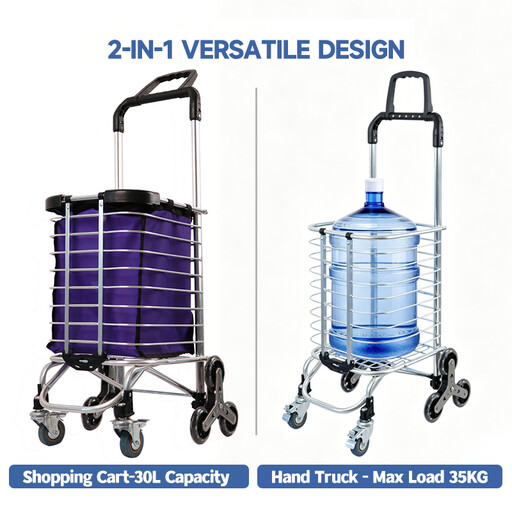
Why This Fits Their Persona: Suits shoppers prioritising a lighter-feeling frame, adjustable handling and a trolley that can be used around the home as well as for supermarket shopping.
The listed features identify an aluminium alloy frame and adjustable handle, helping buyers compare construction and usability more clearly.
Aluminium alloy frame, foldable format, adjustable handle and multi-purpose positioning.
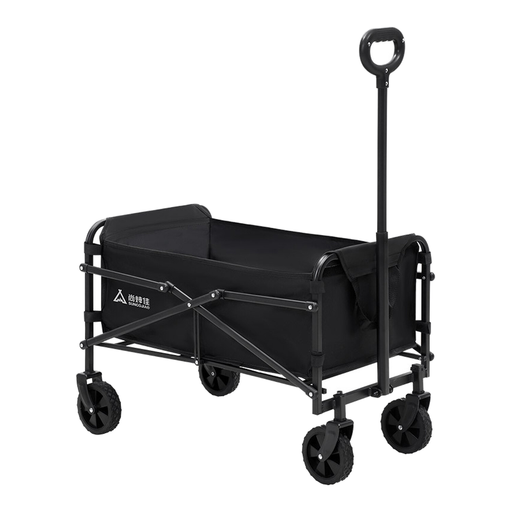
Why This Fits Their Persona: A camping utility cart for families, campers, gardeners and householders moving bulky equipment, parcels or outdoor supplies.
The listing states both a 170-litre cargo capacity and a 100 kg load capacity, making the distinction between space and weight easier to assess.
170-litre cargo bag, stated 100 kg capacity, 600D Oxford fabric and multi-directional swivel wheels.
Before loading any trolley:
For a rolling storage trolley, engage lockable casters when it is parked. For outdoor carts, remove dirt from the wheels and allow the cargo bag to dry before storage.
We have compiled a complete, real-time list of products that fully satisfy these strict selection criteria and UK safety regulations.
Some models are designed with stair-climbing wheel arrangements, but stairs still require extra care and controlled movement. Check the product instructions, keep the load within its limit and avoid pulling a heavily loaded trolley if balance or grip is uncertain.
Lifespan depends on load frequency, storage conditions, wheel quality and how often the trolley is used on uneven ground. Avoid overloading, keep wheels clear of grit and store the folded trolley somewhere dry. Regularly inspect the frame, seams, handle and wheel fittings.
Most manual folding trolleys have no ongoing fuel or electrical cost. The main expenses may be replacement wheels, fasteners or a damaged bag after extended use. Choosing a model with accessible replacement parts and maintaining it properly can help reduce ownership costs.