
24/7 全天候客户支持

免费退货

当日/次日达

品质保障

开启新人专享福利: 全场免邮 | 低至 2 折 | 免费试用 30 天 JoyPlus 会员
下载 Joybuy
A folding shopping trolley can make supermarket trips easier, particularly when you regularly carry bottles, tins, laundry products or other heavy items. However, a low price or a large-looking bag does not automatically mean the trolley will suit your routine.
The most common buying mistakes usually come from three areas:
A practical choice should balance capacity, frame strength, wheel design, handle comfort and storage size.
For frequent shopping, look for a frame made from a material suited to repeated loading. An aluminium shopping trolley can offer a relatively light frame, while reinforced steel designs may feel more substantial but can add weight.
Do not rely on labels such as “premium” or “heavy-duty” alone. Check whether the product page gives a maximum load capacity, and consider your usual shopping pattern. Bottled drinks and large tins can quickly create a heavier load than a weekly basket of dry goods.
A stated load limit should not be exceeded. It is also sensible to leave some allowance rather than loading the trolley to its maximum every time.
A large capacity shopping trolley should be assessed by its practical dimensions rather than the word “large”. Check:
A wide opening is useful for supermarket shopping because it reduces the need to push groceries through a narrow zip. If you often carry cartons, packaged food or household supplies, a firm base can also help prevent the contents from bunching at the bottom.
A shopping trolley with ergonomic handle may be more comfortable for longer walks between the supermarket and home. An adjustable-handle shopping trolley is useful when more than one person uses it, or when the user prefers a particular pulling height.
Wheel configuration also matters. Standard two-wheel models are usually straightforward to pull on pavements and shop floors. A stair-climbing shopping trolley may be more appropriate for homes with steps, although buyers should check how the wheel arrangement affects balance, turning and weight distribution.
Before purchasing, look for clear information about the folded dimensions. A foldable shopping trolley should fit your intended storage area, such as a hallway cupboard, utility room or car boot.
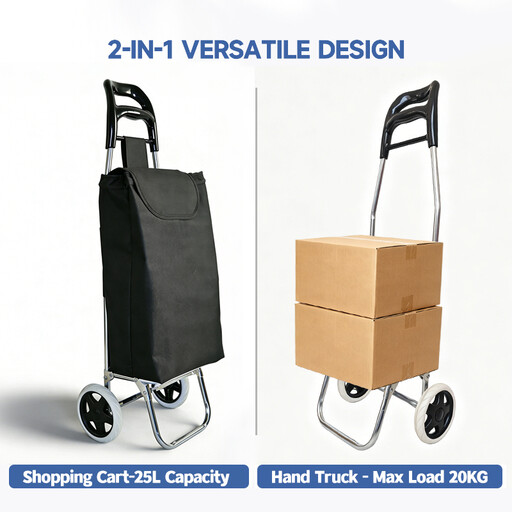
Why This Fits Their Persona: Its large-size format and ergonomic handle suit shoppers who want a straightforward grocery trolley for regular supermarket trips without choosing a more specialised wheel arrangement.
The listing identifies a large-size folding design and ergonomic handle, helping buyers check the features most relevant to capacity and handling rather than relying only on promotional wording.
Large-size format; folding construction; ergonomic handle described in the product listing.
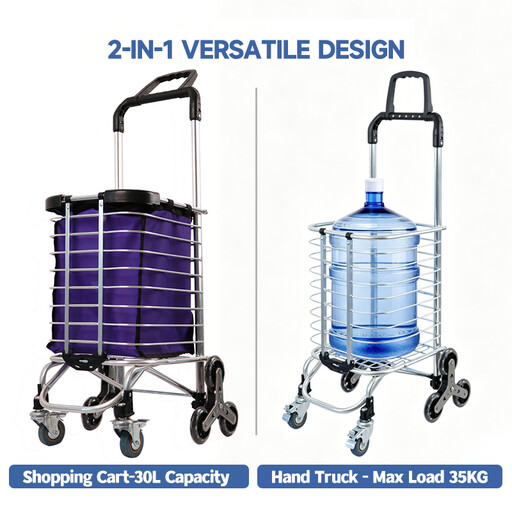
Why This Fits Their Persona: This option is suited to shoppers who prioritise an aluminium alloy frame, adjustable handle and a trolley that can be stored between supermarket visits.
The frame material and adjustable handle are specified in the listing, giving buyers concrete features to compare alongside folded dimensions and the stated load limit.
Aluminium alloy frame; adjustable handle; foldable format identified in the product name.
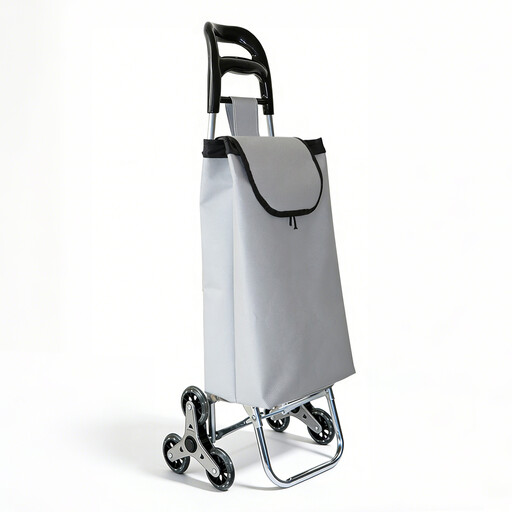
Why This Fits Their Persona: The stair-climbing description makes this a relevant option for users who may need to manage steps around a flat, maisonette, house entrance or local shopping route.
The product description identifies a stair-climbing format, but buyers should still check wheel dimensions, balance guidance and the permitted load before using it on steps.
Stair-climbing format stated in the listing; large-size folding design; ergonomic handle.
For UK use, compare the product measurements with your home and transport arrangements. Measure the space where the trolley will be stored, then check whether the folded frame can fit through doors or into your car.
Also confirm:
An elderly-friendly shopping trolley should not be judged by its label alone. The user should be able to open, fold, steer and load it without awkward force. If mobility is limited, consider whether the person will pull it independently or whether a carer will usually handle it.
We have compiled a complete, real-time list of products that fully satisfy these strict selection criteria and UK safety regulations.
It can be, provided the stated load capacity matches your typical groceries and the frame, base and wheels are designed for that load. Spread heavier items across the base instead of placing everything at the top, and avoid exceeding the manufacturer’s limit.
Lifespan depends on load frequency, pavement conditions, storage and care. Regularly carrying excessive weight, dragging the trolley over kerbs or storing it in damp conditions can accelerate wear. Check wheel fixings, seams, handle joints and the folding mechanism periodically.
No. A stair-climbing design may help negotiate steps, but it still needs controlled handling. Read the instructions, keep the load within the stated limit and use the handrail where appropriate. For users with limited mobility, assistance may still be needed on stairs or uneven ground.