
24/7 全天候客户支持

免费退货

当日/次日达

品质保障

开启新人专享福利: 全场免邮 | 低至 2 折 | 免费试用 30 天 JoyPlus 会员
下载 Joybuy
A folding shopping trolley can make supermarket trips, market visits and daily errands more manageable, particularly when carrying bulky or heavy items. However, not every foldable shopping trolley is equally practical. A trolley may look spacious online yet offer limited usable room, awkward wheels or a handle that becomes uncomfortable after several minutes.
Before choosing a wheeled grocery cart, check three common buying traps:
A reliable shopping trolley should clearly identify its main materials. Common combinations include a metal or carbon steel frame, synthetic fabric bag and plastic or PVC wheels. These materials are practical for regular shopping, but they are not interchangeable.
For heavier loads, look for:
For example, the SUNCOJIA cart lists a cold-rolled iron frame, PP plastic components and a tear-resistant 600D Oxford fabric bag. Its stated load capacity is 100 kg, with a 170-litre cargo capacity. These specifications are useful because they provide measurable information rather than relying only on the phrase “heavy-duty grocery cart”. Do not exceed any stated limit, and remember that the contents may shift when the cart is pulled over uneven ground.
Wheel design affects comfort, stability and where you can use the trolley. A two-wheel model is generally pulled behind the user and may be suitable for pavements and supermarket trips. A four-wheel portable shopping cart can offer a different pushing or pulling experience and may be useful for camping, picnics or beach equipment.
Look for:
A stair-climbing shopping trolley should not be treated as a replacement for a lift or safe stair access. Even when a model is marketed for steps, users should keep the load within the stated limit, maintain a firm grip and take extra care on wet or irregular stairs.
An ergonomic-handle shopping trolley can be more comfortable for older shoppers and anyone who experiences hand or wrist discomfort during ordinary pulling. The handle should feel secure, provide enough clearance for the user’s stride and avoid forcing the wrist into an awkward angle.
Also confirm:
A trolley is only convenient if it can be opened and closed without unnecessary effort. Always engage the locking mechanism before loading, and check that the wheels are firmly attached after assembly.
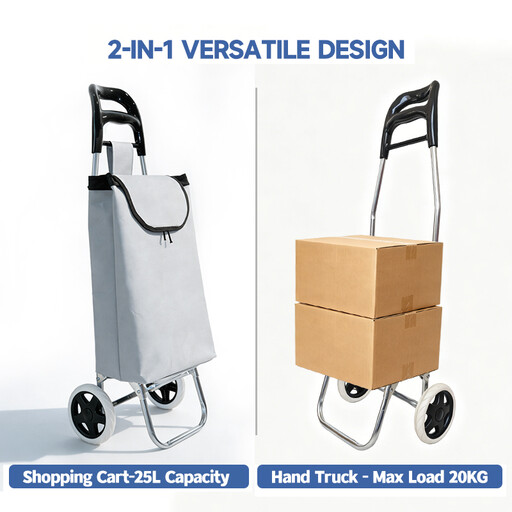
Why This Fits Their Persona: A practical option for routine supermarket shopping, local markets and daily errands where a collapsible frame and large interior are more important than specialist outdoor features.
The listing identifies an ergonomic handle, blended material, metal frame and folding design, while also instructing users to check the locking mechanism and maximum weight capacity.
Ergonomic handle; large folding frame; wipe-clean maintenance guidance.
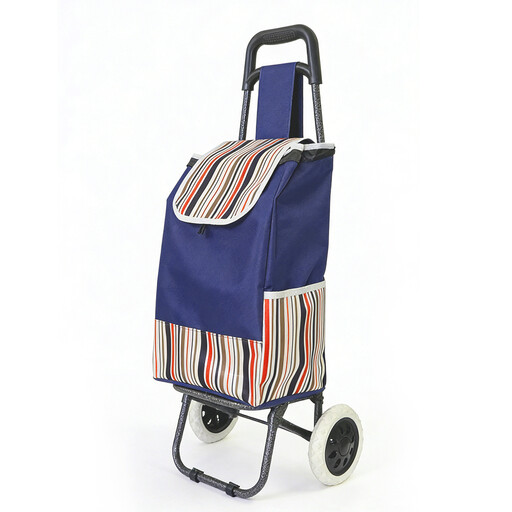
Why This Fits Their Persona: Suits shoppers who want a sturdier frame with a more structured appearance for regular use, while still needing a space-saving cart for home storage.
Its product description specifies a carbon steel frame and folding format, helping buyers compare frame construction rather than choosing from appearance alone.
Carbon steel frame; foldable format designed for compact storage.
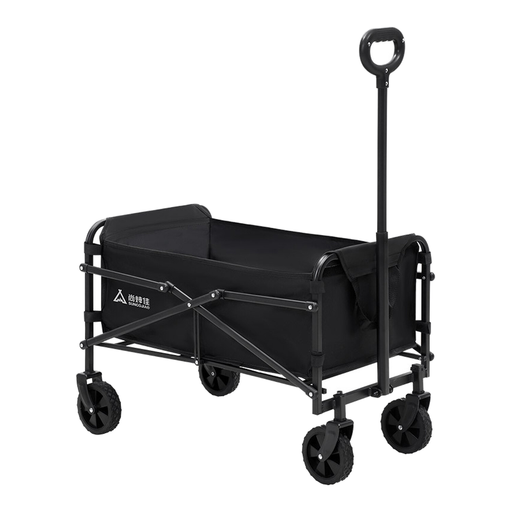
Why This Fits Their Persona: A spacious utility cart for campers, beachgoers, anglers and shoppers transporting bulky items rather than only a standard grocery load.
The listing provides a 100 kg load figure and 170-litre capacity, plus the frame, fabric and wheel materials. This gives heavy users clearer limits to compare.
170-litre cargo capacity; multi-directional swivel wheels; foldable construction.
We have compiled a complete, real-time list of products that fully satisfy these strict selection criteria and UK safety regulations.
A standard supermarket trolley is intended for use within a shop, whereas a personal folding shopping trolley is designed to transport purchases between the shop, car and home. Choose based on the distance, terrain and amount you normally carry.
It can be suitable when the handle height, wheel movement and folded weight are manageable for the user. An ergonomic handle may make pulling more comfortable, but the trolley should still be tested for balance and manoeuvrability with a realistic load. Carers and family members should also check the opening mechanism and brake or locking features, where included.
Lifespan depends on load frequency, terrain, storage and maintenance. Regularly exceeding the stated capacity, dragging the cart over rough ground or leaving fabric damp can shorten its usable life. A metal frame, reinforced bag and securely fitted wheels may provide a practical foundation, but no trolley should be assumed to have a fixed lifespan without a stated warranty.
There is normally no fuel or charging cost. Ongoing expenses may include replacement wheels, fasteners or a damaged fabric bag, depending on availability. Keeping the cart within its load limit and storing it dry can help reduce avoidable maintenance costs.