
24/7 全天候客户支持

免费退货

当日/次日达

品质保障

开启新人专享福利: 全场免邮 | 低至 2 折 | 免费试用 30 天 JoyPlus 会员
下载 Joybuy
A folding shopping trolley can make supermarket trips, market visits and everyday errands easier—but only if its design matches how you intend to use it. A small grocery trolley may be convenient on pavements, while a large-capacity model could be more suitable for weekly shopping. Outdoor users may need a foldable camping wagon, whereas home organisers may prefer a rolling storage trolley.
The main challenge is separating useful specifications from attractive marketing language. Before buying, watch for these common pitfalls.
A product may display a large litre figure, but the usable space can be reduced by the frame, wheel housing or a narrow opening. Check whether the stated capacity refers to the internal bag, the complete wagon or a stackable arrangement.
For supermarket use, consider the type of shopping you normally carry. Bottles, tins and laundry products require a stronger base than lightweight bread and packaged goods. A large-capacity grocery trolley should also have a stable frame so it does not twist when loaded unevenly.
“Heavy-duty” is not a universal performance standard. Always look for a stated maximum load capacity and avoid exceeding it. A trolley designed for 20–30 kg of groceries is not interchangeable with a portable utility trolley intended for camping equipment.
Weight capacity also depends on the surface. Even a sturdy trolley can become difficult to pull over kerbs, gravel, sand or steep slopes. Treat stair-climbing wheels as a design feature rather than a guarantee that a fully loaded trolley will move safely up every staircase.
A collapsible shopping trolley may fold down neatly, but its folded dimensions still need to fit your cupboard, car boot or storage area. Also check the wheel position and handle height. Wheels that sit too close to the bag may catch on kerbs, while a short handle can make pulling uncomfortable.
For UK homes with narrow hallways or limited storage, measure the intended space before ordering. This is particularly important for a large camping wagon, which may carry more but occupy more room when folded.
Look for a clearly stated load limit, not simply words such as “strong” or “premium”. Metal frames can provide useful rigidity, but the frame material is only part of the overall structure. Fabric quality, wheel attachment points, hinges and the base panel also affect everyday handling.
An aluminium alloy frame may offer a lower carrying weight than a steel frame, while still being convenient for routine supermarket trips. Cold-rolled iron and carbon steel designs may be more appropriate for heavier loads, although the trolley itself can weigh more.
A wheeled grocery trolley should be easy to steer without excessive lifting. Consider:
Four swivel casters can suit a rolling storage trolley used on level floors. A two-wheel elderly-friendly shopping trolley may be simpler for pulling behind you, but its stability depends heavily on handle height, wheel spacing and how the load is distributed.
The trolley should open fully and lock securely before loading. Look for an ergonomic or adjustable handle if more than one person will use it. This can help carers and older shoppers choose a height that feels natural, although it does not remove the need to stay within the stated weight limit.
Check the product instructions for assembly, cleaning and storage. Fabric baskets should be dried before folding, while metal frames and wheels benefit from occasional wiping to remove grit and moisture. For UK purchases, review the supplied safety information, responsible-person details where provided and any applicable product compliance markings rather than relying on a listing headline.
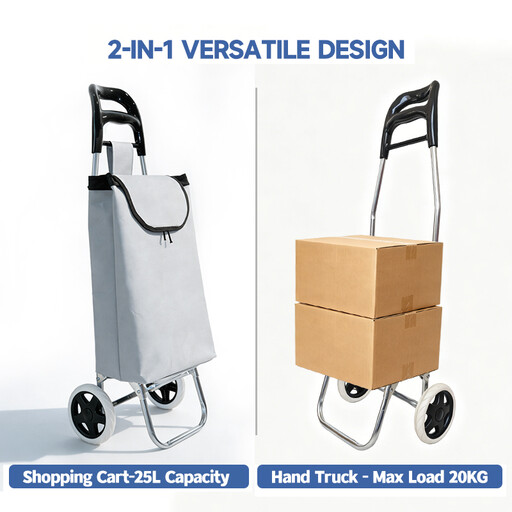
Why This Fits Their Persona: A practical option for regular supermarket trips, market visits and daily errands where foldable storage and a comfortable pulling position matter.
Its listing identifies an ergonomic handle, large-size format, foldable construction and a heavy-duty frame. Check the stated load limit before carrying dense groceries.
Large interior; ergonomic handle; collapsible format for cupboards, cars or under-bed storage.
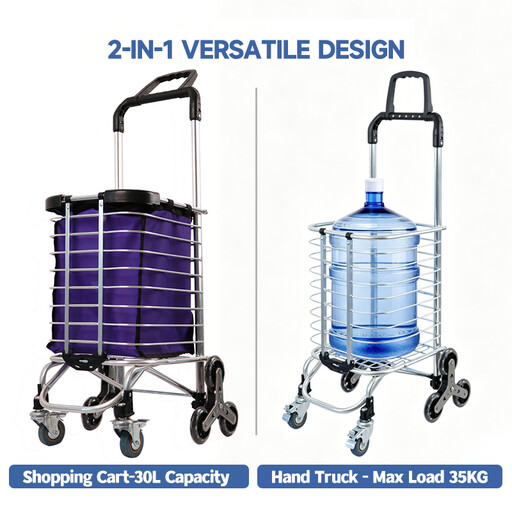
Why This Fits Their Persona: Suitable for shoppers who prioritise a lighter-feeling frame, adjustable handle positioning and a trolley that can move between home and supermarket use.
The aluminium alloy frame and adjustable handle are specified features, giving more useful information than an unsupported “premium” label. Confirm dimensions and capacity on the product page.
Foldable aluminium alloy frame; adjustable handle; multi-purpose design.
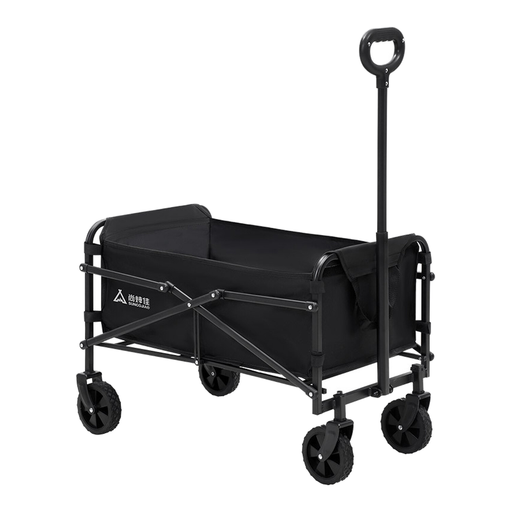
Why This Fits Their Persona: Designed for families, campers, beach users and anyone moving bulky items beyond a standard grocery run.
The listing provides a stated 100 kg load capacity and 170-litre cargo capacity, plus a cold-rolled iron frame and 600D Oxford fabric bag. Keep within the limit and check the surface before pulling.
170-litre cargo bag; stated 100 kg capacity; foldable frame; multi-directional wheels.
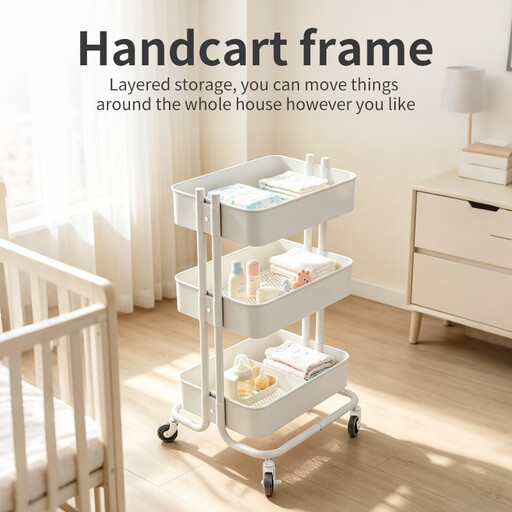
Why This Fits Their Persona: A useful alternative to a grocery trolley for kitchens, bathrooms, salons, offices and other indoor spaces where visible, mobile storage is needed.
The three-tier mesh structure makes the storage area visible, while two lockable casters help prevent unwanted movement when parked. It is intended for indoor organisation rather than outdoor hauling.
Three metal mesh tiers; four 360-degree swivel casters; two lockable wheels; wipe-clean powder-coated finish.
We have compiled a complete, real-time list of products that fully satisfy these strict selection criteria and UK safety regulations.
Some models are marketed as stair-climbing shopping trolleys, but safe use depends on wheel design, stair width, load and the user’s ability to control the trolley. Avoid dragging a fully loaded trolley up or down stairs unless the instructions specifically allow it. For regular stair use, a lighter load and secure grip are sensible precautions.
Lifespan depends on load frequency, storage conditions, wheel quality and whether the frame is repeatedly overloaded. To help maintain it, keep wheel joints free of grit, wipe away moisture, dry fabric before folding and check hinges, screws and locking mechanisms regularly. A trolley used outdoors may require more cleaning than one used only in supermarkets.
A manual folding shopping trolley has no battery or fuel cost. The ongoing expenses are usually limited to replacement wheels, fasteners or a damaged fabric bag, depending on the design. Choosing a trolley with accessible components and storing it in a dry place can help reduce avoidable maintenance costs.