
24/7 全天候客户支持

免费退货

当日/次日达

品质保障

开启新人专享福利: 全场免邮 | 低至 2 折 | 免费试用 30 天 JoyPlus 会员
下载 Joybuy
A folding shopping trolley can make supermarket visits, market trips and household errands more manageable. However, a trolley that looks spacious online may be awkward to steer, difficult to store or unsuitable for uneven pavements.
Before buying, look beyond phrases such as “heavy-duty” or “elderly-friendly”. The useful questions are: how much can it carry, how does it move and will it fit your home or car when folded?
A deep bag may hold many groceries, but that does not automatically mean the frame, base or wheels can safely support a heavy load. Bottles, tins and cleaning products quickly add weight.
Check whether the listing provides a maximum load capacity. If no figure is given, avoid assuming that a large-capacity grocery cart is suitable for transporting particularly heavy items. Distribute weight evenly and keep fragile products towards the top.
A stair-climbing shopping trolley may use a multi-wheel arrangement to help move over individual steps, but it still requires controlled handling. Narrow staircases, wet surfaces, high kerbs and uneven paving can affect stability.
Look at the wheel layout, handle position and overall balance. A stair-climbing feature is not a replacement for lifting assistance and users should follow the product instructions carefully. Never pull a loaded trolley down stairs without checking that it is designed for that use.
A trolley can be foldable yet still take up considerable space in a hallway, boot or cupboard. Check the folded dimensions if they are available, as well as whether the handle height suits the person using it.
For older adults and people with limited mobility, an ergonomic handle can make pulling more comfortable, but comfort also depends on wheel resistance, load distribution and walking posture. A compact collapsible shopping cart is only useful if it can be stored and reopened without excessive effort.
Frame materials affect weight, rigidity and storage. A carbon steel frame or other metal construction may suit shoppers carrying regular grocery loads, while an aluminium frame shopping trolley can appeal to users who want a lighter structure.
The bag and frame should work together: a reinforced base, secure attachment points and a frame that remains stable when opened are more useful than decorative material descriptions. Check that the trolley locks fully into its open position before loading.
For pavements, supermarket car parks and market streets, smooth-rolling wheels with a stable axle can make a noticeable difference. Larger wheels may handle small surface changes more easily than very small wheels, although the exact performance depends on the construction.
If you are considering a supermarket trolley for regular UK trips, think about the route from home to the shop. Does it include kerbs, paving slabs, ramps or a bus journey? For outdoor use, a camping wagon with broad wheels may be more practical than a narrow grocery trolley, but it may also be heavier and less convenient indoors.
Capacity should match the usual shopping routine rather than an occasional large shop. A medium-sized trolley may be easier to manoeuvre for daily errands, while a large-capacity grocery cart is useful for family shopping or transporting bulky supplies.
Before use:
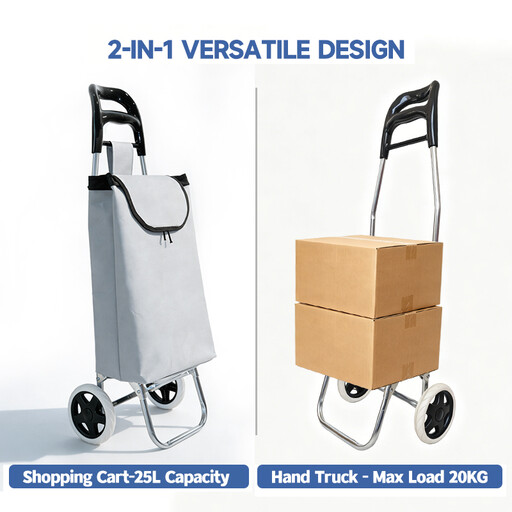
Why This Fits Their Persona: A straightforward option for regular supermarket shoppers who want a large bag, a pull handle and foldable storage without adding outdoor-wagon features they may not need.
Its listed ergonomic handle, heavy-duty frame and foldable format address common comfort, storage and load-management concerns. Check the stated limit before filling it with heavy goods.
Large-sized fabric-and-metal construction; collapsible design for storage in a car, cupboard or under a bed.
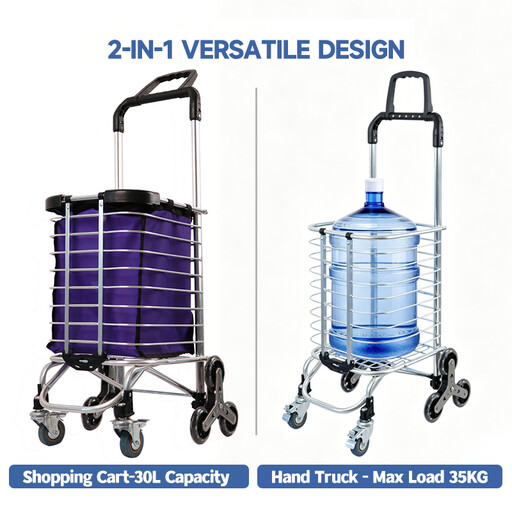
Why This Fits Their Persona: Suitable for shoppers who prioritise an aluminium alloy frame, adjustable handle and a multi-functional design for home and supermarket use.
The adjustable handle helps address the poor-fit problem. Buyers should still confirm the folded size and maximum load before purchase.
Aluminium alloy frame; adjustable handle and foldable format.
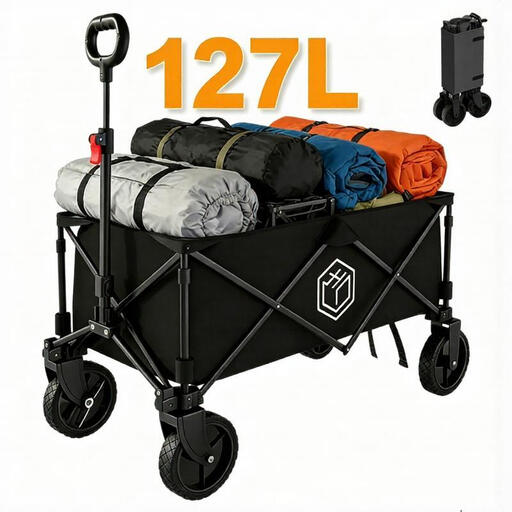
Why This Fits Their Persona: Designed for users moving bulky supplies on camping trips, picnics, vending events, grocery runs or around the home.
The listing gives both capacity and load figures, helping buyers compare it with vague heavy-duty claims. Its brakes should be engaged when stationary.
127-litre interior; stated 200 kg load capacity; dual brake and 360-degree swivel wheels.
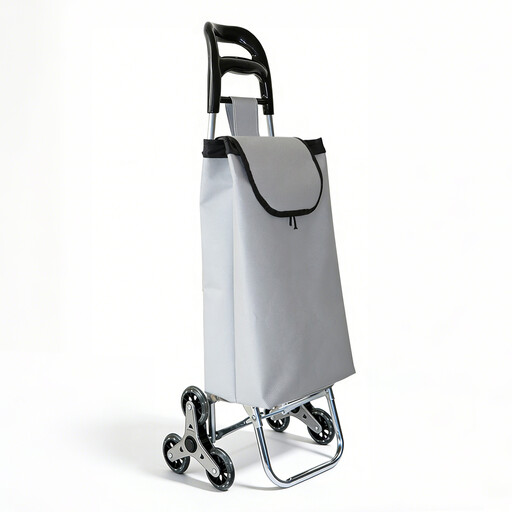
Why This Fits Their Persona: A possible match for shoppers whose route includes steps or kerbs and who want an elderly-friendly shopping trolley with a large-size format.
Its listed stair-climbing design directly addresses kerb and step concerns, but users should confirm the wheel arrangement and follow safe handling guidance.
Ergonomic handle; large-capacity format; stair-climbing wheel design listed for grocery transport.
We have compiled a complete, real-time list of products that fully satisfy these strict selection criteria and UK safety regulations.
It can be, particularly when it has an ergonomic handle, manageable wheel resistance and a frame that opens securely. The user should be able to pull, turn and stop it without overreaching. A carer or family member should check the loaded trolley on a short, familiar route before using it for a full shop.
Lifespan depends on load frequency, terrain, storage conditions and maintenance. Avoid regularly exceeding the stated capacity, keep the wheels clear of grit and inspect screws and fabric attachments. Folding the trolley carefully rather than forcing the mechanism can also help reduce wear.
There is no fuel or electrical running cost for a standard shopping trolley. Ongoing expenses may include replacement wheels, fasteners or a worn shopping bag, depending on the design. For a camping wagon, also consider its heavier construction and whether its larger size suits your storage space and transport method.