
24/7 全天候客户支持

免费退货

当日/次日达

品质保障

开启新人专享福利: 全场免邮 | 低至 2 折 | 免费试用 30 天 JoyPlus 会员
下载 Joybuy
A folding shopping trolley can make weekly shopping, market trips and transporting household items considerably easier. However, a trolley that looks spacious online may have a shallow frame, awkward wheels or a handle that becomes uncomfortable when fully loaded.
Before buying, focus on how the trolley will be used in real UK conditions: pavements, kerbs, supermarket aisles, bus journeys, narrow hallways and limited storage space. The right model should balance capacity, stability, manoeuvrability and compact storage rather than simply advertising the largest possible load figure.
A large-capacity shopping trolley may advertise its internal volume in litres, but this does not show how much weight the frame, base and wheels can safely support. Bulky but light items may fill a bag quickly, while tins, bottles and cleaning products place much greater stress on the base.
Check both:
Never exceed the manufacturer’s stated weight limit. A trolley must also be fully opened and locked before loading.
A stair-climbing shopping trolley may use a multi-wheel arrangement intended to help move over steps, but performance depends on stair width, step height, load distribution and the user’s pulling technique. It should not be treated as a replacement for a lift or a reason to carry excessive weight upstairs.
For regular use on stairs, look for a secure frame, comfortable handle, balanced base and clear instructions. Use caution on wet, uneven or steep surfaces.
A foldable grocery trolley can still take up significant space when collapsed if its wheels, handle or frame protrude. Measure the intended storage area, such as a car boot, cupboard or space beneath a bed.
Also check whether the wheels rotate freely without catching on the fabric base. A trolley that is compact but difficult to steer may be frustrating during a supermarket trip.
For everyday groceries, consider how frequently you shop and whether you carry heavy products. A compact model may suit small top-up trips, while a heavy-duty shopping trolley or camping wagon is more suitable for larger shops, market purchases or transporting supplies.
Place dense items low and near the centre of the base. This reduces tipping and makes a loaded trolley easier to pull. A stated 127-litre interior and 200 kg load capacity, for example, provide useful reference points, but the product instructions remain the controlling guidance.
A metal or carbon-steel frame can offer rigidity, while blended fabric baskets are generally light and can fold with the frame. Aluminium alloy may reduce overall weight, although buyers should still check the listed load rating and hinge construction.
Look for:
For a rolling storage trolley, an open metal mesh design may be more suitable than a fabric bag because it allows quick visibility and ventilation. It is usually intended for indoor organisation rather than carrying groceries outdoors.
Two-wheel shopping trolleys are often simple to pull, while four-wheel designs can be easier to push and turn when loaded. 360-degree swivel wheels may help with manoeuvring in kitchens, garages or outdoor areas, but wheel size still matters on kerbs and uneven pavements.
Brakes are particularly useful when a trolley is parked on a slope. Check whether the brakes lock two wheels or all wheels, and avoid leaving a loaded trolley unattended near stairs or roads.
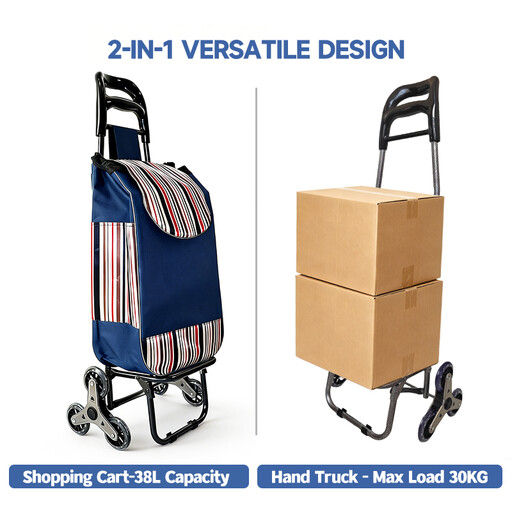
Why This Fits Their Persona: Its compact format is suitable for smaller grocery trips, flats and homes where storage space is limited. The product listing describes it as a collapsible trolley for grocery and home use.
The compact format encourages buyers to match the trolley to realistic shopping quantities instead of paying for unused bulk. Check the full load details before purchase.
Compact collapsible format; ergonomic handle; intended for grocery and home use.
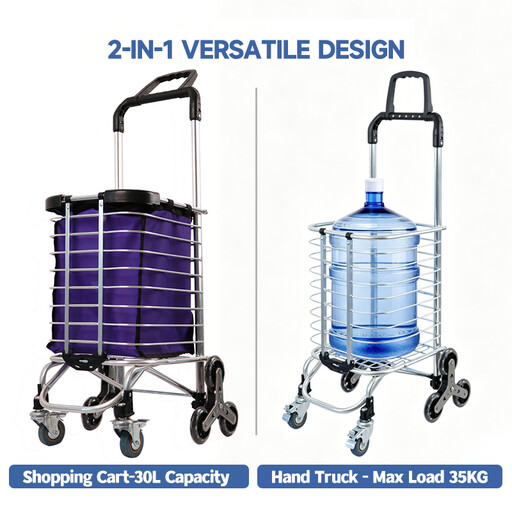
Why This Fits Their Persona: The listed aluminium alloy frame and adjustable handle may suit shoppers who prioritise a lighter, adaptable design for home and supermarket journeys.
An adjustable handle helps address poor pulling posture. Confirm the folded dimensions and maximum load rather than judging portability from the frame material alone.
Aluminium alloy frame; adjustable handle; foldable construction.
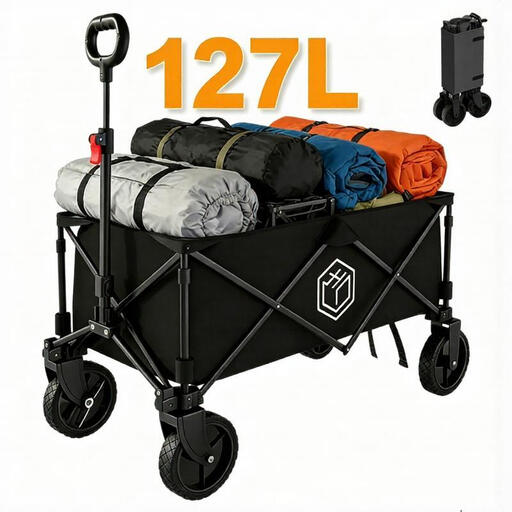
Why This Fits Their Persona: This model is designed for larger loads, camping equipment, picnics, vending supplies, shopping and moving items. Its four-wheel wagon format suits users who need more carrying space than a conventional grocery bag trolley.
The listing states a 127-litre interior and load capacity of up to 200 kg, making the capacity information clearer than volume-only listings. Follow the product instructions and do not exceed the stated limit.
127-litre interior; listed 200 kg load capacity; foldable frame; dual brakes and 360-degree swivel wheels.
We have compiled a complete, real-time list of products that fully satisfy these strict selection criteria and UK safety regulations.
For UK purchases, review the product’s safety information, responsible-person details and supplied instructions. Safety markings, where applicable, should be checked alongside the actual construction and intended use rather than treated as a substitute for sensible loading.
Many are designed with features such as ergonomic handles, lighter frames and compact folding mechanisms. Suitability depends on the individual’s grip strength, walking stability, preferred pulling height and the weight normally carried. A family member can help check handle height and wheel movement before purchase.
Lifespan depends on load frequency, pavement conditions, moisture exposure and maintenance. Avoiding overloading, keeping wheels clear and storing the trolley indoors can reduce unnecessary wear. Inspect the frame and wheel attachments if steering becomes uneven or the basket begins to sag.
A manual trolley has no fuel or charging cost. Ongoing expenses are generally limited to replacement wheels or small hardware if these are available for the model. Regular cleaning and sensible loading can help minimise avoidable maintenance.