
24/7 全天候客户支持

免费退货

当日/次日达

品质保障

开启新人专享福利: 全场免邮 | 低至 2 折 | 免费试用 30 天 JoyPlus 会员
下载 Joybuy
A folding shopping trolley can make supermarket trips, market visits and everyday errands easier to manage, particularly when carrying groceries over longer distances. However, product listings often focus on capacity or fashionable materials while leaving out details that affect daily usability.
Before choosing a folding shopping trolley, check how it handles weight, kerbs, uneven pavements, narrow aisles and home storage. The right model should match your route and shopping habits rather than simply having the largest advertised basket.
A large basket does not automatically mean a practical large-capacity grocery trolley. Some designs have generous volume but limited frame support, making them unsuitable for heavy tins, bottles or multiple food shops.
Look for clear information about the frame construction, basket material and maximum load. If the listing does not provide a weight limit, avoid assuming that a larger bag can safely carry more.
“Heavy-duty” can refer to the appearance of a frame rather than a clearly stated load rating. A metal frame may still feel unstable if the wheels are small, the base is narrow or the bag hangs too far behind the axle.
For a heavy-duty shopping trolley, consider the complete structure: frame, wheel size, axle position, handle attachment and base support. These parts work together when the trolley is pulled over paving slabs or a kerb.
A trolley may be described as foldable but still be awkward to collapse, store or reopen. Check whether it requires tools, whether the locking mechanism is easy to identify and how much space it occupies when folded.
An ergonomic handle trolley can also vary considerably. A comfortable grip and suitable handle height are useful, but they do not remove the need to distribute weight sensibly. Keep heavier items low and avoid exceeding the stated capacity.
Common options include aluminium alloy, carbon steel, blended fabric and plastic components. An aluminium alloy frame may be lighter to move, while carbon steel can provide a more substantial structure. The trade-off depends on the frame design and the intended load.
For everyday supermarket shopping, a blended fabric basket with a metal frame can offer a balance between portability and storage space. Check the care instructions: a wipe-clean exterior is more convenient when transporting chilled or packaged food.
A standard two-wheel shopping trolley is generally suitable for pavements, supermarket floors and relatively even paths. Larger wheels can make kerbs and uneven surfaces easier to manage, although they may increase the folded size.
A stair-climbing shopping trolley may be designed for steps, but do not assume that the feature makes every staircase safe or effortless. Check the product instructions and maintain control of the load. The supplied safety guidance for the referenced products advises caution on stairs and uneven surfaces.
Four-wheel rolling storage trolleys are a different category. They are more suitable for moving items around a kitchen, bathroom, office or salon than for pulling a weekly shop along a pavement.
Before loading, the trolley should be fully unfolded with its locking mechanism engaged. The handle should remain secure during pulling, and wheels should rotate without excessive wobble.
For older adults, carers and families, useful checks include:
No trolley should be used as a seat or child carrier. Store it in a dry place when folded and wipe the frame and basket with a damp cloth as recommended by the product information.
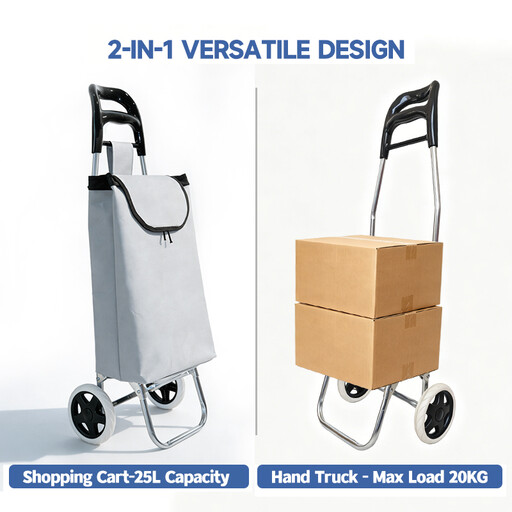
Why This Fits Their Persona: A practical option for routine supermarket trips, market visits and daily errands where a spacious basket and compact storage are important.
The listing specifies a blended fabric and metal frame, an ergonomic handle, foldable construction and a warning to check the locking mechanism before loading.
Large-size format, grey blended material, foldable design and a handle intended for easier manoeuvring.
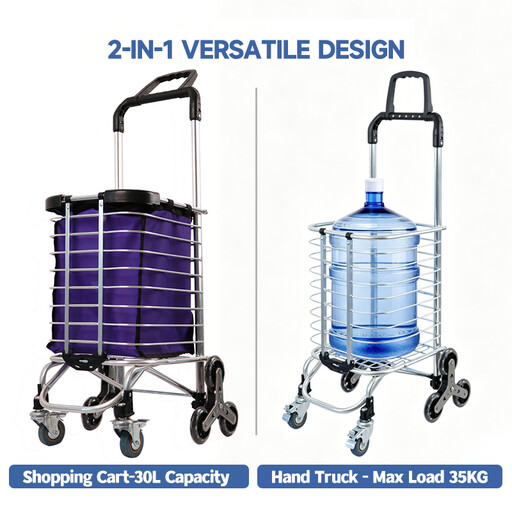
Why This Fits Their Persona: Suits shoppers who prioritise an aluminium alloy frame, an adjustable handle and a multi-purpose trolley for home and supermarket use.
Its listed construction directly identifies an aluminium alloy frame rather than relying only on a general “sturdy” description. Confirm the load limit and folded measurements before ordering.
Adjustable handle, foldable format, aluminium alloy frame and multi-purpose use.
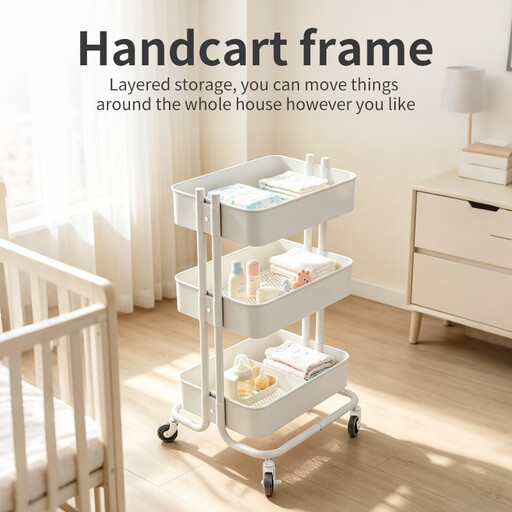
Why This Fits Their Persona: Designed for households, salons, kitchens, bathrooms and offices that need mobile shelving rather than a fabric grocery basket.
The product description clearly identifies three mesh tiers and four casters, including two lockable wheels, rather than presenting capacity as an unspecified figure.
Three open storage tiers, four rolling casters, two lockable wheels and a powder-coated white finish.
We have compiled a complete, real-time list of products that fully satisfy these strict selection criteria and UK safety regulations.
A trolley can remain useful for longer when it is not overloaded or dragged sideways. Use these habits:
The cost of running a manual portable grocery trolley is generally limited to maintenance and eventual replacement parts. There is no battery charging or fuel expense, but worn wheels and damaged fasteners can affect safe handling.
An elderly-friendly shopping trolley may be useful when it has a comfortable handle, manageable weight and straightforward folding mechanism. Suitability depends on the individual user, route, load and ability to control the trolley. Check the handle position and wheel movement before committing to a full shop.
Some products are listed as stair-climbing shopping trolleys, but stairs require additional care. Read the supplied instructions, keep the load within its stated limit and maintain a firm grip. A conventional two-wheel trolley should not automatically be treated as suitable for stairs.