
24/7 Customer Support

Free returns

Same-day & Next-day Delivery

Quality Guaranteed

Unlock Your Welcome Offers: FREE Delivery | Up to 80% OFF | Free 30-day JoyPlus trial
Download the APP
Finding space for fitness in a typical UK home can feel like a puzzle. A folding treadmill seems like the perfect solution: a convenient way to walk or run, neatly tucked away afterwards. Yet, many buyers find their promising purchase quickly becomes a bulky, noisy clothes horse. The market is filled with models that over-promise and under-deliver.
As a Joybuy Product Recommendation Officer, my role is to help you sidestep these common issues. Before you commit, be aware of three frequent pitfalls that lead to buyer's remorse:
By understanding a few key features, you can confidently choose a machine that fits your home, lifestyle and fitness goals.
Marketing language can be confusing. Let's cut through the jargon and focus on the three parameters that determine whether a folding treadmill will be a valuable addition to your home or a costly mistake.
The motor is the heart of the treadmill. Its power dictates the machine's speed range and how smoothly it operates. This is where you must distinguish between two main types:
For anyone living in close quarters, this is non-negotiable. Look for a quiet flat treadmill with a specified noise level, measured in decibels (dB). A machine that operates below 50 dB is generally considered quiet—comparable to the hum of a modern refrigerator. Anything below 45 dB is exceptionally quiet and unlikely to disturb others.
Equally important are the folded dimensions. Before you even browse, measure your intended storage space. Will it be under a bed, beneath a sofa, or standing in a narrow gap? Check the product's folded height, width and length to ensure it will actually fit. Also, consider the weight and whether it has transport wheels for easy manoeuvring.
A treadmill with incline for home use is an excellent way to increase workout intensity without increasing speed or impact. It engages different muscle groups and can significantly boost calorie burn. You will typically find two options:
Based on these practical criteria, we've matched a few standout models to different user needs. These selections prioritise quiet operation, genuine space-saving design and stable construction.
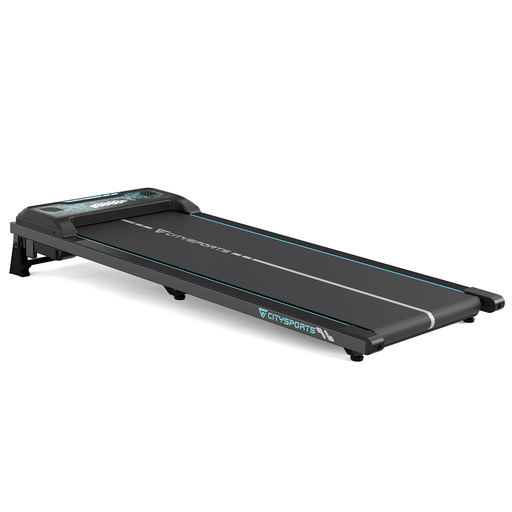
Why This Fits Their Persona: This is a dedicated under-desk walking pad, perfect for integrating light activity into the workday. Its slim profile and remote control make it ideal for use with a standing desk without disrupting workflow.
It tackles the "compact illusion" by being genuinely slim and designed for under-furniture storage. Its focus on quiet operation at walking speeds (1-6 km/h) avoids the noise pitfall in a home office setting.
No assembly required—it's ready to use straight out of the box. The shock-absorbing belt is designed to reduce impact on joints during long walking sessions.
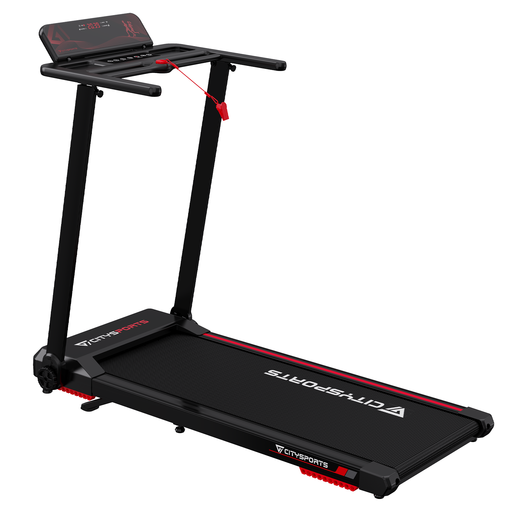
Why This Fits Their Persona: This is a versatile foldable running machine for those who want to do more than just walk. It's a great fit for a compact treadmill with a small footprint, offering the speed for jogging and the option for incline.
It avoids the unstable frame pitfall with a durable ABS plastic construction and a 120 kg weight capacity. The motor is rated for quiet operation (below 45 dB) and supports speeds up to 12 km/h, making it a true running machine, not just a walker.
Features a 1400W motor for smooth performance up to 12 km/h and two manual incline settings (0% and 8%) to add intensity to workouts.
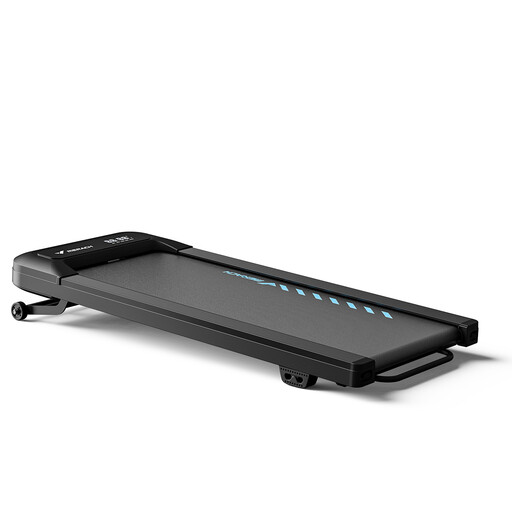
Why This Fits Their Persona: For those who want a challenging workout in a minimal footprint. This model combines the compact form of a walking pad with the advanced feature of automatic incline, usually found on much larger machines.
It delivers a high-end feature (auto incline) without the bulk. The quiet 2.5HP motor (under 45dB) and alloy steel frame provide a stable, neighbour-friendly workout, even when simulating a hill climb.
The 9% automatic incline is adjustable via remote control during your workout. It also features a dual shock absorption system to help protect knees and joints.
We have compiled a complete, real-time list of products that fully satisfy these strict selection criteria and UK safety regulations.
The running cost is surprisingly low. Based on an average UK electricity rate of around 28p per kilowatt-hour (kWh), a treadmill with a 1400W (1.4kW) motor would cost approximately 39p to run for a full hour. A smaller walking pad would cost even less. This makes it a very cost-effective way to exercise at home compared to a gym membership.
Generally, no. A walking pad is specifically designed for walking, with a top speed of around 6 km/h. Its motor and frame are not built to handle the higher impact and speed of running. For jogging or running, you need a foldable running machine with a higher top speed (10-12 km/h or more) and a more powerful motor.
Durability depends on several factors: build quality, motor power and how it's used and maintained. A model with a steel frame and a motor appropriate for your intended use (walking vs. running) will typically last longer. Regular maintenance, such as lubricating the belt and keeping it clean as instructed in the user manual, is crucial for extending its lifespan. Always check the maximum user weight and ensure it's well above your own to avoid straining the motor and frame.