
24/7 Customer Support

Free returns

Same-day & Next-day Delivery

Quality Guaranteed

Unlock Your Welcome Offers: FREE Delivery | Up to 80% OFF | Free 30-day JoyPlus trial
Download the APP
A folding treadmill for home can make indoor walking, jogging or running far easier, particularly in a UK flat, home office or compact spare room. However, treadmill listings often highlight headline figures while leaving practical limitations unclear.
Before buying, look beyond phrases such as “powerful motor”, “silent operation” or “professional cushioning”. The useful questions are: will it fit your available floor space, support your intended pace, remain manageable to store and provide the incline or connectivity you will actually use?
A high wattage or horsepower figure does not automatically indicate that a treadmill is appropriate for every user. Check the speed range, maximum user weight and intended activity. A walking pad designed for office walking may not suit regular running, while a motorised treadmill with a higher top speed may require more clearance and storage space.
Also check whether the quoted motor figure is continuous or peak output. Product descriptions do not always present these measurements in the same way, so comparing the complete specification is more useful than comparing one number.
A quiet treadmill can still transmit vibration through a hard floor, especially in an upstairs flat. Noise depends on the motor, belt, user weight, running style and flooring. A stated operating level below 45 dB, where provided, offers a clearer point of comparison, but it does not guarantee complete silence in every room.
A rubber equipment mat can help reduce vibration and protect flooring. Keep the treadmill away from shared walls where possible, and avoid using it during times when household or neighbour noise may be a concern.
“Foldable” does not mean effortless to move. Check the folded dimensions, net weight, transport wheels and whether the frame folds vertically or simply lowers flat. A compact treadmill still needs a safe operating area, access to a power socket and enough room behind the belt.
For a treadmill with a small footprint, measure doorways, cupboard gaps and the intended exercise area before ordering. Remember that the dimensions shown in a listing may describe the folded product rather than the space required during use.
For casual walking, a walking pad or under-desk treadmill with a lower maximum speed may be sufficient. Joggers should consider a model reaching around 10–12 km/h, while regular runners may need a wider belt and higher speed range.
The belt should be described in practical terms, such as multi-layer construction, non-slip finish or cushioning. A longer and wider running deck generally provides more room for a natural stride, but it also increases the treadmill’s footprint.
A treadmill with incline can add variety and increase the effort required for a session. Manual incline settings require you to stop and adjust the deck, whereas automatic incline can be changed from the controls during exercise.
Do not assume that a higher incline figure is automatically more useful. Consider whether you prefer simple walking sessions, structured hill workouts or regular running. Models offering 0%, 6%, 8% or 18% incline settings cater to noticeably different routines.
Treat the stated maximum user weight as a firm limit, not a target. Leave a sensible margin if you plan to run, as impact is greater than during gentle walking. A solid steel frame may provide a more substantial feel, while a lighter compact treadmill is easier to move.
Cushioning should also be assessed carefully. Look for clear information about the belt, deck and suspension system rather than relying on general claims about comfort. A safety key, auto-stop function where included, stable placement and suitable clearance are essential practical considerations.
For electrical safety, follow the supplied instructions, use a suitable socket and keep the power cable away from walkways. Look for relevant conformity markings and documentation for the UK market, but do not assume that a marketing statement replaces the user manual.
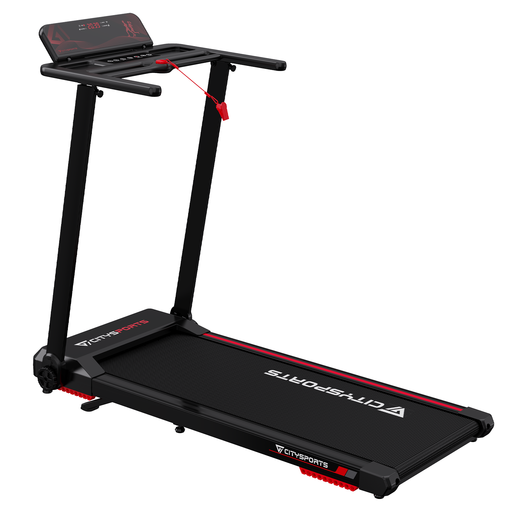
Why This Fits Their Persona: Its compact footprint and 26.5 kg net weight suit UK flats and spare rooms where storage space is limited. The 1–12 km/h range covers walking, jogging and moderate running.
The listing gives specific dimensions, noise information below 45 dB and a 120 kg maximum user weight rather than relying only on broad “quiet” or “compact” wording.
1400W motor, two manual incline positions at 0% and 8%, six-layer running belt and LED workout display.
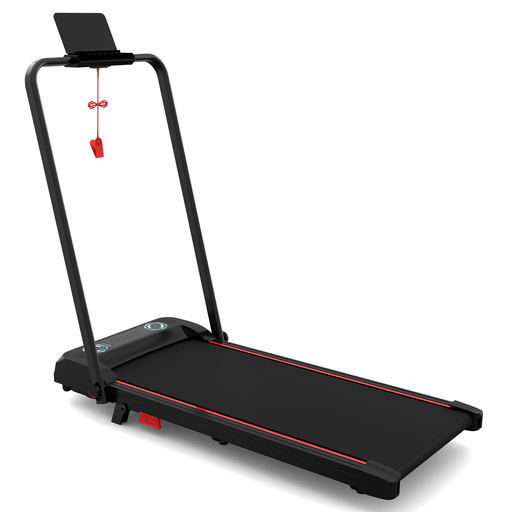
Why This Fits Their Persona: The 3-in-1 format allows walking with the handlebar folded, jogging with it flat or incline training with it raised. It is suitable for a home office or compact living area.
Its use modes are clearly defined, while transport wheels and no-assembly setup reduce the handling problem often hidden behind “foldable treadmill” descriptions.
1–10 km/h speed range, manual 0–6% incline, phone holder, remote control and auto-stop function.
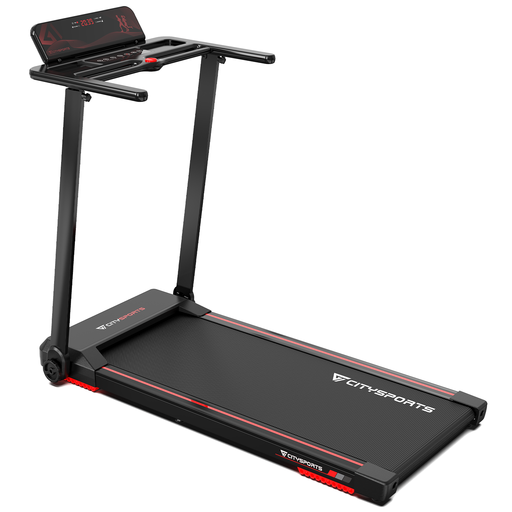
Why This Fits Their Persona: It combines indoor exercise with digital entertainment, making it suitable for users who want a Bluetooth treadmill for music, app-linked sessions or laptop-supported home working.
The connectivity features are specified as dual Bluetooth speakers and smart fitness app integration, rather than an undefined “smart” label.
2.0HP motor, 1–12.5 km/h speed range, folding dimensions of approximately 123 × 59 × 10 cm and LED display with device stand.
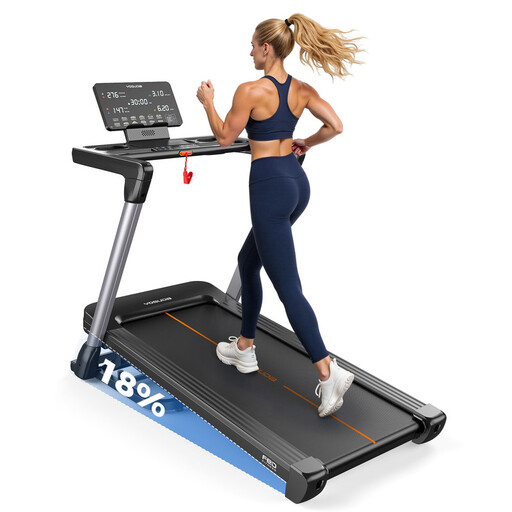
Why This Fits Their Persona: The 172 kg maximum load, automatic incline and larger cushioning specification make it suitable for users prioritising a more structured home running setup.
It states a defined load capacity, automatic 18% incline and four-way cushioning system, helping buyers compare concrete specifications instead of vague durability language.
3.0HP brushless motor, automatic incline, 15 mm cushioning plate, high-resolution LED screen and Bluetooth app compatibility.
We have compiled a complete, real-time list of products that fully satisfy these strict selection criteria and UK safety regulations.
Place your home treadmill on a level, stable surface with clear space around the belt. Keep children and pets away during operation, use the safety key and follow the manufacturer’s instructions for lubrication and belt alignment.
Electricity use depends on motor output, workout duration, user weight and incline. The wattage shown on a listing is not a direct prediction of household cost because a treadmill does not necessarily draw its full rated power continuously. To estimate running cost, multiply actual energy consumption in kilowatt-hours by your electricity tariff. Regular belt maintenance may also help preserve smooth operation.
Some are, but not every foldable treadmill is designed for regular running. Check the top speed, running deck dimensions, maximum user weight and frame stability. Models with a 1–10 or 1–12 km/h range may suit walking and jogging, while runners should assess whether the belt length and speed match their stride.
Noise varies with the motor, belt, floor and pace. A listed level below 45 dB provides a useful reference, but footsteps and vibration can still be noticeable. Using a suitable mat and placing the treadmill on a solid, level floor can help reduce transmitted vibration.
Lifespan depends on construction, frequency of use, user weight, maintenance and storage conditions. Clean the belt and frame, lubricate as instructed, check alignment periodically and unplug the machine when it will not be used for an extended period. Always keep within the stated load limit.