
24/7 Customer Support

Free returns

Same-day & Next-day Delivery

Quality Guaranteed

Unlock Your Welcome Offers: FREE Delivery | Up to 80% OFF | Free 30-day JoyPlus trial
Download the APP
A folding treadmill with incline can make home exercise more varied without taking over a spare room. For UK households, however, choosing the right model involves more than comparing motor power or the highest incline percentage. Floor space, storage, noise, user weight, running speed and daily energy use all affect whether the treadmill remains practical after the initial purchase.
A walking pad treadmill may suit a home office, while a larger automatic incline treadmill is more appropriate for regular jogging or running. The key is matching the specification to your routine rather than paying for features you are unlikely to use.
Many compact machines are marketed as an under desk treadmill, but their speed range may be designed mainly for walking. A model capped at 6 km/h can work well beneath a desk or for brisk walking, but it is not intended for sustained jogging.
Before ordering, check:
A 40 x 100 cm running surface, for example, is compact for storage but offers less room than a conventional home treadmill.
An automatic incline treadmill changes elevation using a motor and console or remote control. A manual incline treadmill requires the user to stop and reposition the deck, usually between a small number of preset levels.
Manual systems can reduce mechanical complexity and cost, but they are less convenient during interval training. Check whether the advertised percentage refers to genuine deck elevation and whether the adjustment is continuous or limited to two or three positions.
A stated noise figure, such as below 45 dB, usually refers to the motor under specified conditions. Footfall, belt friction, floor construction and nearby walls can make the overall sound louder. In flats or upstairs rooms, place a quiet treadmill on a suitable exercise mat and avoid using it during times when neighbours may be disturbed.
Also check belt lubrication requirements. Poor maintenance can increase friction and noise, regardless of the motor’s quoted rating.
Incline increases the effort required at a given speed, but a higher percentage is not automatically more useful. Walkers and beginners may find 6–9% sufficient for regular sessions. Users who want steeper hill-style workouts may prefer a treadmill offering up to 18%.
Compare:
The treadmill must be placed on a stable, level surface, and users should follow the supplied instructions when changing incline settings.
For walking, a shorter deck may be acceptable. Jogging and running generally benefit from a longer and wider belt, particularly for taller users or people with a longer stride.
Pay attention to:
A shock-absorbing treadmill may use rubber pads, silicone supports or a multi-layer belt. These features can improve running comfort, but they do not remove the need for suitable footwear and safe technique. Treat the stated maximum load as a limit, not a target; a sensible margin can help the machine feel more stable.
A compact folding treadmill is useful only if it can be moved and stored safely. Measure the folded dimensions, doorways, cupboard space and the area beneath a sofa or desk before buying. Transport wheels can make a 23–31 kg unit easier to reposition, but the machine still needs to be lifted carefully where required.
A treadmill with remote control can be convenient for adjusting speed during walking. Bluetooth, app compatibility and preset programmes are useful if you actively want workout tracking. They should not outweigh basic requirements such as deck size, safe controls and reliable storage.
For a treadmill for home and office, check whether the handrail folds sufficiently for desk use and whether the desk provides safe clearance. Never allow cables, clothing or chair wheels to interfere with the running belt.
The following choices are arranged by usage profile rather than by an overall ranking.
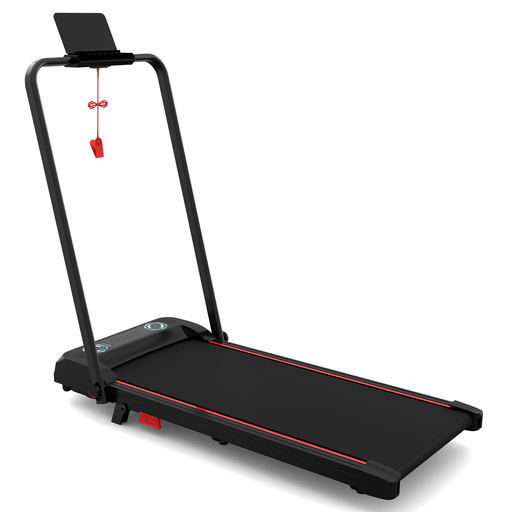
Why This Fits Their Persona: A practical option for beginners who want walking, occasional jogging and a foldable treadmill for a flat or home-office setup.
Its specifications clearly state a 1–10 km/h speed range and 0–6% manual incline, avoiding confusion between a walking pad and an automatic incline model.
1400W motor, stated noise level below 45 dB, no assembly required and transport wheels for storage.
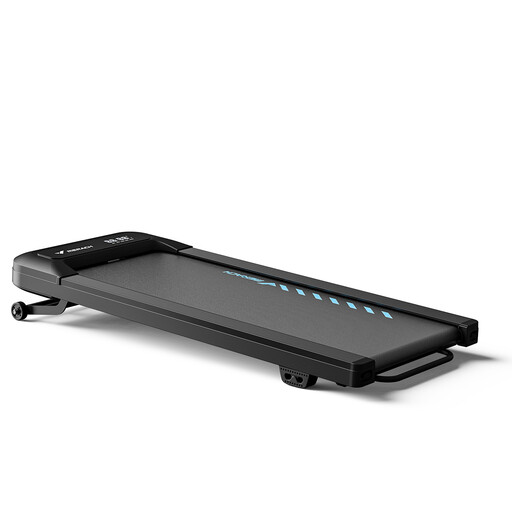
Why This Fits Their Persona: Designed for remote workers and flat residents who prioritise under-desk use, portable storage and walking rather than high-speed running.
The product specifies a 1–6 km/h range, making its walking-focused purpose clear, while the 9% incline is electronically adjusted rather than manually repositioned.
Under 45 dB stated motor noise, remote control, app compatibility, transport wheels and a five-layer belt with cushioning components.
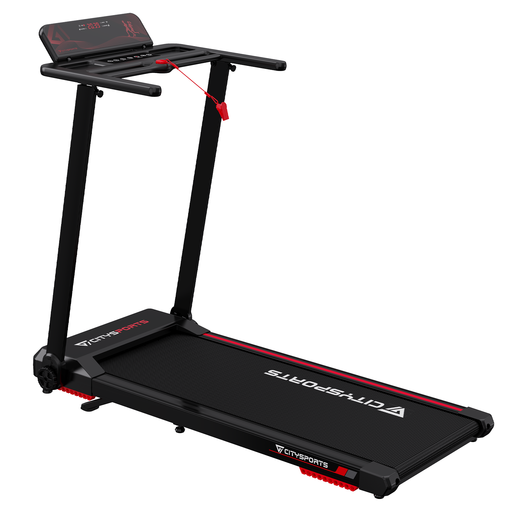
Why This Fits Their Persona: Suitable for users who want a compact home treadmill with a faster 12 km/h ceiling and a choice of flat or steeper manual incline.
Its incline is explicitly listed as two manual settings—0% or 8%—so buyers can plan around the need to stop before changing elevation.
1–12 km/h speed range, 120 kg stated maximum load, six-layer belt and LED workout display.
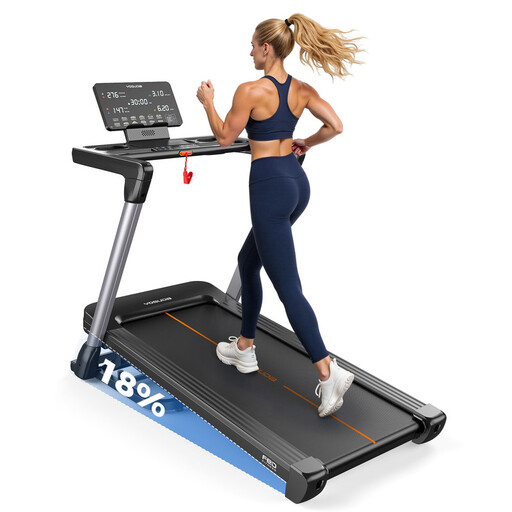
Why This Fits Their Persona: A larger-format choice for users who need a higher stated load capacity and automatic incline for planned home running sessions.
The listing states a 172 kg maximum load and automatic incline up to 18%, while also making clear that assembly is required.
One-piece steel frame, four-way cushioning, Bluetooth app compatibility and a high-resolution LED display.
Electricity cost depends on motor load, workout duration and your tariff. To estimate running cost, multiply the treadmill’s power in kilowatts by hours used and your electricity price per kWh. A 1,400W motor drawing its full rated power for one hour would use 1.4 kWh, although real consumption varies during use.
For longer service life:
UK buyers should also read the supplied manual and check the product’s applicable conformity and safety information. A treadmill should have adequate ventilation, clearance and a dedicated, safely positioned power connection.
We have compiled a complete, real-time list of products that fully satisfy these strict selection criteria and UK safety regulations.
Yes, provided the machine is used within the manufacturer’s stated limits and placed on a stable surface. A model with a stated noise level below 45 dB may reduce motor noise, but footsteps and floor vibration can still travel through a building. An exercise mat and considerate usage times may help.
A flat setting or modest incline such as 6% can be a sensible starting point for walking. Increase speed or incline gradually and stop if you feel uncomfortable. Users who want simple remote adjustment may prefer an automatic incline treadmill, while those comfortable stopping to reposition the deck can consider a manual incline treadmill.
Consumption varies according to motor power, user weight, speed, incline and session length. The wattage printed in a listing is not necessarily the amount used continuously. Use the electricity-cost calculation above for an estimate, and compare the machine’s power information with your household tariff before buying.