
24/7 全天候客户支持

免费退货

当日/次日达

品质保障

开启新人专享福利: 全场免邮 | 低至 2 折 | 免费试用 30 天 JoyPlus 会员
下载 Joybuy
A folding shopping trolley can make supermarket trips, market visits and household transport considerably easier. However, attractive capacity figures and phrases such as “heavy-duty” do not always tell you whether a trolley will handle British pavements, narrow aisles or compact home storage.
Before buying, pay particular attention to the frame, wheels, load information and folding mechanism. A suitable model should match how you travel, what you carry and where you intend to store it.
A large bag may advertise an impressive volume, but the space can be difficult to use if the opening is narrow or the frame flexes under weight. A large-capacity grocery trolley should provide enough room for practical items such as tins, bottles and boxed food without becoming awkward to pull.
Check both the stated volume and the shape of the cargo area. A 170-litre camping cart with wheels may suit bulky picnic equipment, while a conventional grocery trolley may be easier to position beside a supermarket trolley or kitchen worktop.
A wheeled shopping trolley that moves smoothly indoors may feel less stable on uneven pavements, kerbs or gravel. Small rigid wheels can catch on cracks, while larger multi-directional wheels may improve movement around campsites and outdoor areas.
Look for the number of wheels, their material and whether the front wheels swivel. Wheel locks are useful for storage trolleys, although they do not replace careful handling on slopes or steps.
Some products fold at the fabric bag but retain a sizeable metal frame. Measure the folded dimensions before purchasing, particularly if the trolley will be kept in a flat, hallway cupboard, car boot or beneath a bed.
The locking system also matters. The trolley should open fully and remain secure before loading. Never use a partially unfolded portable folding cart, and do not exceed its stated weight limit.
Manufacturers may state a maximum load in kilograms, but the rating assumes the weight is distributed sensibly. Heavy tins and bottles should sit low and centrally rather than at one side of the bag. A heavy-duty shopping cart is only practical when its base and frame remain stable while moving.
For older adults or anyone with limited lifting strength, consider the trolley’s own weight as well as its carrying capacity. A very large frame may carry more but could be difficult to lift into a car.
A metal frame, such as carbon steel or cold-rolled iron, generally provides a more structured base than a soft bag alone. Reinforced joints and secure fasteners are important points to inspect. For fabric sections, 600D Oxford fabric is a commonly specified material for outdoor cargo bags; check the product information rather than assuming every fabric trolley has the same resistance to tearing or moisture.
A blend-material grocery trolley may be suitable for routine supermarket use, while a reinforced outdoor cart can be more appropriate for camping, beach trips or transporting bulky parcels.
Compare the trolley’s width with your usual shopping aisles, doorway and storage space. An ergonomic handle can make pulling more comfortable, but handle height and grip shape still need to suit the user.
Also consider whether you will pull or push the trolley. A mobile storage trolley with four casters is useful indoors, whereas a two-wheel grocery cart may be easier to take along pavements. On stairs, lift the trolley rather than dragging it, unless the product is specifically designed for stair use.
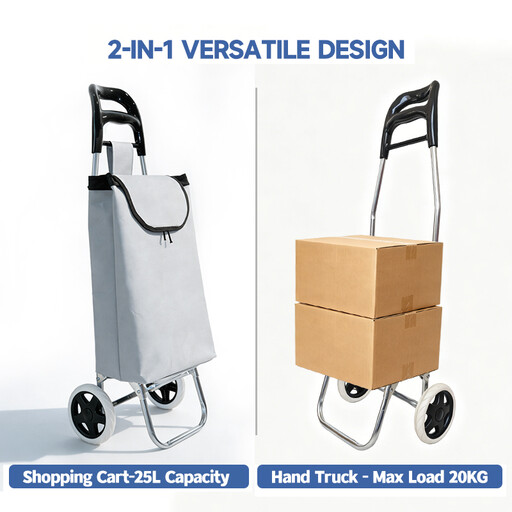
Why This Fits Their Persona: A practical option for regular supermarket trips, market visits and everyday grocery transport where compact storage and a comfortable handle are priorities.
The stated foldable design addresses storage concerns, while the opening and locking guidance helps prevent use before the frame is fully secured.
Ergonomic handle, blend-material body and a collapsible frame designed for routine errands.
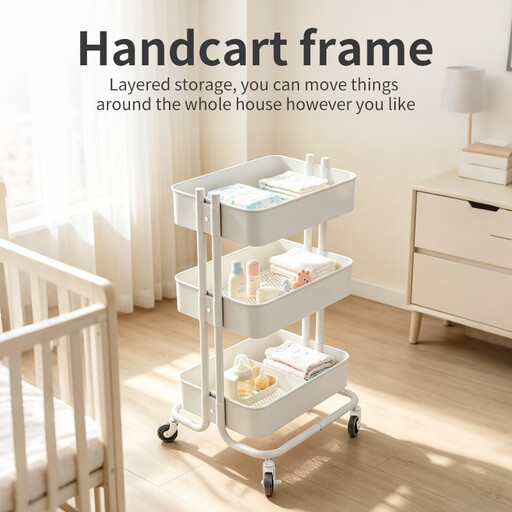
Why This Fits Their Persona: Suitable for shoppers seeking a mobile storage trolley for kitchens, bathrooms, home offices or salons rather than a fabric grocery bag.
The open mesh construction makes each tier visible, helping avoid inaccessible storage space. Two lockable casters provide a defined parked position.
Three metal tiers, four casters and a powder-coated white finish designed for straightforward cleaning.
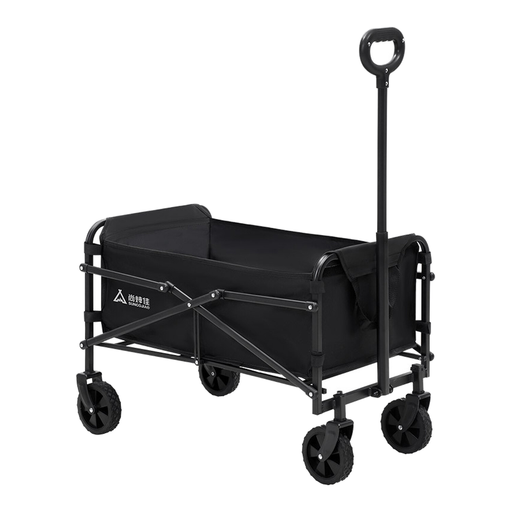
Why This Fits Their Persona: Designed for bulky loads during camping, fishing, beach outings, picnics, sports activities and larger shopping trips.
Its listed 100 kg load capacity and 170-litre cargo capacity give clearer guidance than vague “large” wording. Loads must still be balanced and kept within the stated limit.
Cold-rolled iron frame, 600D Oxford fabric bag, foldable construction and multi-directional PVC wheels.
Before setting off, check that the frame is fully open, the locking mechanism is engaged and the wheels turn freely. Keep heavy items low, avoid blocking your view and take extra care near kerbs, wet paving and public transport platforms.
A folding shopping trolley is not intended to carry children. Do not use it on stairs unless the instructions specifically permit this, and store it dry after rainy supermarket journeys or outdoor use. Periodically inspect the fabric, wheel fittings, screws and handle for visible wear.
We have compiled a complete, real-time list of products that fully satisfy these strict selection criteria and UK safety regulations.
It can be, provided the handle is comfortable, the trolley is not too heavy when empty and the wheels move predictably. An elderly-friendly shopping trolley should also be easy to open and close without excessive force. Check the handle height and stated load limit before ordering.
Lifespan depends on load frequency, surfaces, storage and maintenance. Avoid overloading, keep wheels free from grit and dry fabric sections before folding. Regularly tightening loose fittings can help maintain stability, but damaged frames or wheels should be replaced rather than repaired with improvised parts.
There is no fuel or electrical running cost for a standard manual trolley. Ongoing expenses may include replacement wheels or fasteners if available. The main cost consideration is choosing a size and construction that suits your normal trips rather than paying for capacity you will rarely use.