
24/7 全天候客户支持

免费退货

当日/次日达

品质保障

开启新人专享福利: 全场免邮 | 低至 2 折 | 免费试用 30 天 JoyPlus 会员
下载 Joybuy
A folding shopping trolley can make supermarket visits, market trips and everyday errands considerably easier, particularly when carrying bags home by hand is uncomfortable. However, product listings often focus on capacity or stylish appearance while leaving out details that affect day-to-day use.
Before buying a foldable shopping trolley, look beyond promotional wording and check the construction, wheel design, folded dimensions and handling information. The right choice should suit both your usual load and the route you take, whether that means pavements, supermarket aisles, car boot storage or occasional outdoor use.
A spacious fabric compartment does not automatically mean the trolley can safely carry heavy groceries. The frame, wheel mounts, base and handle all contribute to stability. Check whether the listing provides a stated load limit and whether the structure is described as reinforced or heavy-duty.
For everyday food shopping, consider the weight of bottles, tins, cleaning products and pet food rather than judging capacity by appearance alone. Never exceed the manufacturer’s stated maximum load.
A shopping trolley with wheels may move smoothly across a supermarket floor but feel difficult on paving, kerbs or uneven paths. Small wheels can be convenient for storage but may catch more easily outdoors. Swivel wheels can improve manoeuvrability, while stair-climbing designs may be more suitable for users who regularly encounter steps; they still require careful handling.
A stair-climbing shopping trolley is not a replacement for lifting assistance. Use caution on stairs, keep the load balanced and follow the product instructions.
The word “foldable” only tells you that the trolley collapses; it does not confirm that it will fit beneath a bed, in a hallway cupboard or inside a car boot. Check the folded measurements where available. Also look for a secure locking mechanism, as an incompletely opened frame can become unstable when loaded.
For a regular grocery trolley, a metal frame generally provides more structure than a soft-sided bag used on its own. Aluminium alloy can offer a lighter format, while steel or carbon steel may be selected for a more substantial frame. The material should be considered alongside the product’s stated load capacity, wheel design and overall weight.
A reinforced fabric compartment is useful for containing groceries, but it should not be treated as waterproof unless the listing specifically states this. For outdoor transport, materials such as 600D Oxford fabric may provide a more durable cargo surface, although care is still needed in wet conditions.
A large-capacity shopping trolley is practical for a weekly supermarket trip, but a larger compartment can become awkward if it is filled beyond a comfortable pulling weight. Compare:
A heavy-duty grocery cart with a clearly stated load rating is more straightforward to assess than one that only uses phrases such as “extra strong”.
A trolley with ergonomic handle should feel comfortable to grip without forcing the wrist into an awkward angle. If more than one person will use it, an adjustable handle may be helpful.
Before purchase, consider the route from your home to the shops. Four-wheel carts can be convenient to push and turn, while two-wheel grocery trolleys are often pulled behind the user. Multi-directional swivel wheels can be helpful for camping, picnics and larger loads, but wheel size and clearance still matter on kerbs and rough ground.
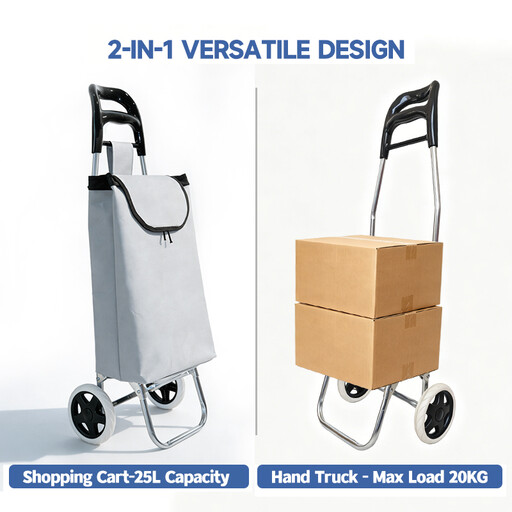
Why This Fits Their Persona: A practical option for routine supermarket shopping, market visits and household errands where a spacious compartment and straightforward folding design are useful.
The listing specifies a blended fabric and metal frame, ergonomic handle, large-size format and folding construction rather than relying only on appearance-based claims.
Ergonomic handle; collapsible format for storage in a car, cupboard or beneath a bed.
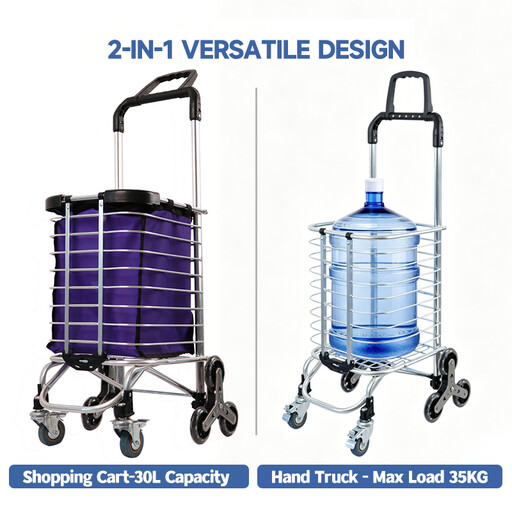
Why This Fits Their Persona: Suitable for shoppers who prioritise an aluminium alloy frame, adjustable handle and a multi-purpose format for home and supermarket use.
Its stated frame material and adjustable handle give buyers specific construction details to compare, instead of an unqualified “premium” description.
Aluminium alloy frame; adjustable handle for different users.
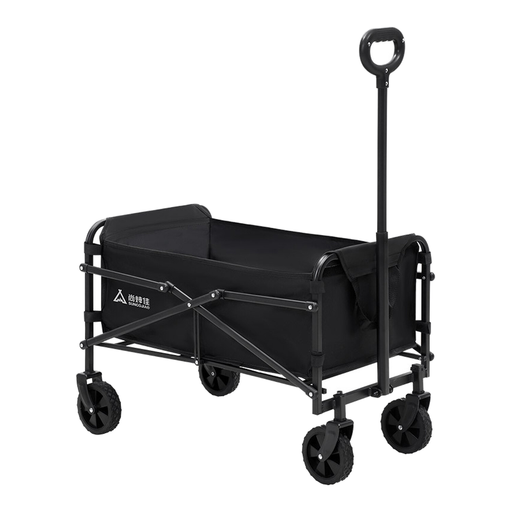
Why This Fits Their Persona: A practical match for campers, outdoor users and households transporting bulky items beyond a standard grocery trip.
The listing provides measurable figures: up to 100 kg load capacity and 170 litres of cargo space, making comparison more transparent.
600D Oxford fabric cargo bag; multi-directional swivel wheels; foldable frame.
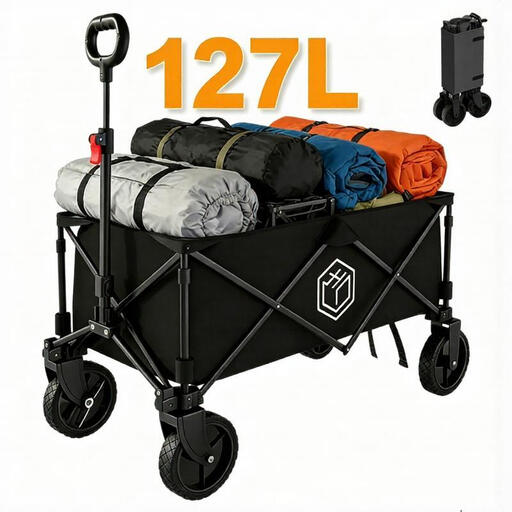
Why This Fits Their Persona: Designed for larger outdoor loads, moving supplies, picnics, vending equipment or substantial shopping runs where a wagon format is more useful than a conventional grocery trolley.
The product information states a 127-litre interior, 200 kg load capacity, dual brake and 360-degree swivel wheels, giving clear points for suitability checks.
Collapsible storage; spray-painted steel tube construction; dual brake system.
We have compiled a complete, real-time list of products that fully satisfy these strict selection criteria and UK safety regulations.
To keep a folding shopping trolley usable for longer:
A compact collapsible shopping cart can be convenient, but storage size should never take priority over safe handling. If the trolley feels unstable when empty, it is unlikely to become easier to control when full.
It can be, provided the handle is comfortable, the trolley is not too heavy to manoeuvre and the user can control the loaded weight. An elderly-friendly shopping trolley should also have a stable base and wheels suited to the route. Check the opening mechanism and avoid models that require excessive force.
There is no universal lifespan. Durability depends on load frequency, pavement conditions, wheel wear, storage and whether the stated capacity is respected. Regularly inspect the wheels, frame, stitching and locking mechanism. Replacing a worn wheel or loose component promptly may help prevent further damage.
A manual grocery trolley has no electricity or fuel cost. Ongoing expenses may include replacement wheels, fasteners or a damaged fabric bag. The main practical cost is maintenance and, for larger outdoor carts, the storage space required at home or in a vehicle.