
24/7 Customer Support

Free returns

Same-day & Next-day Delivery

Quality Guaranteed

Unlock Your Welcome Offers: FREE Delivery | Up to 80% OFF | Free 30-day JoyPlus trial
Download the APP
A food chopper can reduce preparation time for onions, herbs, vegetables, nuts and meat, but the wrong model may quickly become an inconvenient cupboard item. Product listings often focus on motor wattage or the number of functions while leaving out details such as bowl capacity, operating limits and cleaning requirements.
Before buying an electric food chopper, mini food chopper or manual food chopper, check these common pitfalls.
A 300W food chopper can be suitable for everyday ingredients such as onions, garlic, herbs and softer vegetables. However, wattage alone does not determine the final texture. Blade design, batch size and pulse control also matter.
A 550W food chopper may provide more motor power, but it still needs to be used within the manufacturer’s instructions. Hard foods, frozen ingredients and continuous operation can place stress on the motor. Always check the permitted ingredients and maximum running time rather than choosing by wattage alone.
A stated 2L capacity does not necessarily mean you should fill the bowl to the rim. Overfilling can produce uneven results, leave unprocessed pieces around the sides and increase the risk of spills.
For one or two portions, a mini food chopper with a 350ml bowl may be easier to control. Families and meal-prep users may prefer a larger glass bowl food chopper, but should still process ingredients in sensible batches.
A multi-function vegetable chopper may include slicing, dicing, grating and julienne blades, yet every additional component requires storage and cleaning. Check whether the bowl and removable blades are dishwasher-safe, and whether the motor base can be immersed. For electric models, the motor unit should generally be wiped with a damp cloth only, according to the supplied instructions.
Sharp blades also require careful handling. Use a food pusher or safety guard where provided, unplug electric appliances before disassembly and keep cutting parts away from children.
Plastic bowls are often lighter and easier to handle, making them practical for a compact kitchen chopper. A transparent bowl with measurement markings can help you monitor the quantity and chopping progress.
Glass bowls are heavier but can resist odours, flavours and scratches. A glass bowl food chopper may suit households that regularly prepare garlic, herbs, marinades or raw meat. Some models include separate glass and stainless steel bowls, which can help reduce flavour transfer between ingredients.
Consider the type of cooking you do:
Stainless steel blades are a practical choice for regular chopping. A rotating blade system suits an electric food chopper, while a curved double-blade design is common in a manual herb chopper or mezzaluna.
Speed settings and a pulse function give more control over texture. Short pulses can help produce a coarse chop, while longer operation may create a finer mince or purée. For a food processor chopper, check whether the supplied attachments are intended for slicing or dicing rather than assuming that a standard chopping blade performs every task.
Models supplied for the UK market should be checked for their stated electrical specifications, including 220–240V and 50Hz compatibility where listed. Follow the supplied manual and do not operate a motor continuously beyond its stated limit. Several compact models specify cycles such as 30 or 40 seconds of operation followed by a rest period.
A dishwasher-safe food chopper can save cleaning time, but dishwasher suitability may apply only to the bowl and blades. Keep the plug, cable and motor housing away from water. Also check whether the appliance has a secure lid lock, non-slip feet and an interlock that prevents operation when incorrectly assembled.
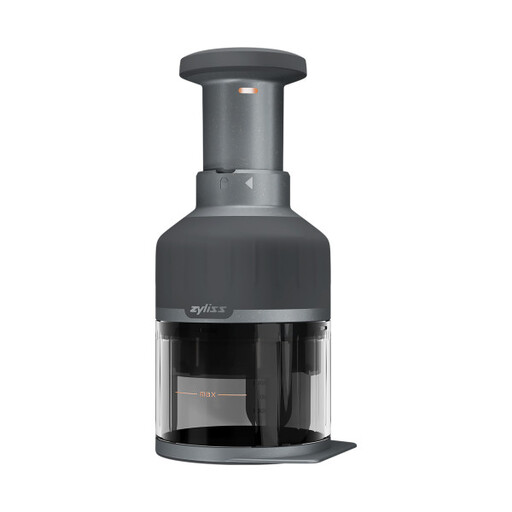
Why This Fits Their Persona: This manual food chopper avoids electricity and is suited to quick portions, packed lunches and smaller UK kitchens where cupboard and worktop space are limited.
There is no motor wattage to overvalue or electrical running limit to manage. The clear container also lets you view progress while chopping.
Push-down operation; stainless steel rotating blades; suitable for vegetables, nuts and herbs.

Why This Fits Their Persona: The dual-bowl format gives organised home cooks separate options for small and larger batches, including ingredients where odour or flavour transfer is a concern.
The 0.6L and 2L glass bowls make capacity clearer than relying on one maximum figure. The listing also specifies separate blade sets and dishwasher-safe removable parts.
300W motor; two speeds; two high-borosilicate glass bowls; stainless steel blade sets.
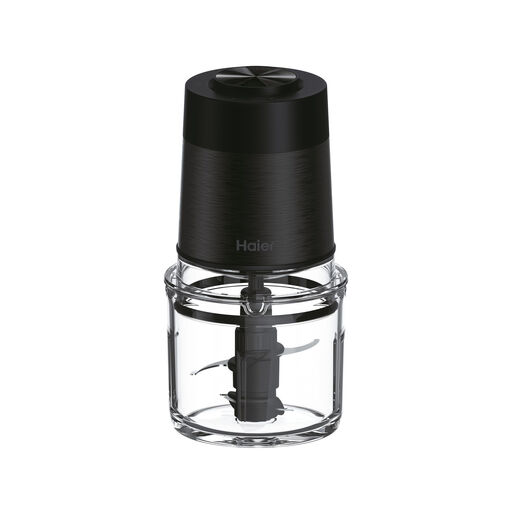
Why This Fits Their Persona: Its larger motor rating, glass bowl and stacked blade arrangement suit frequent preparation of vegetables, herbs, nuts and purées, provided users follow the operating instructions.
The two-speed top press control offers more adjustment than a single-speed unit, while the product instructions specifically warn against overfilling and require safe lid locking.
550W motor; four double-stacked blades; glass bowl and blades listed as dishwasher-safe; anti-slip base.
We have compiled a complete, real-time list of products that fully satisfy these strict selection criteria and UK safety regulations.
For short preparation tasks, an electric food chopper generally uses less time and has a smaller motor than a full-size food processor. Actual electricity cost depends on the appliance’s wattage, usage time and your energy tariff. A manual food chopper uses no electricity but requires physical effort.
Some electric models are listed for meat and tougher ingredients, but this does not apply to every kitchen chopper. Cut meat into smaller pieces, avoid overfilling and follow the specific instructions. Do not process bones, and check whether the appliance excludes frozen food or hard items.
Lifespan depends on cleaning, storage, blade care and whether the motor is operated within its stated duty cycle. Avoid forcing the lid, running the appliance empty or exceeding the recommended continuous operating time. Replace damaged blades or bowls rather than continuing to use them.