
24/7 Customer Support

Free returns

Same-day & Next-day Delivery

Quality Guaranteed

Unlock Your Welcome Offers: FREE Delivery | Up to 80% OFF | Free 30-day JoyPlus trial
Download the APP
Preparing onions, herbs, vegetables and meat can take up valuable time, particularly when cooking for a family or preparing several meals at once. A food chopper can reduce repetitive knife work, but choosing the wrong model may leave you with uneven pieces, difficult cleaning or a motor that needs frequent breaks.
This guide explains the practical features to check before buying an electric food chopper, manual food chopper or mini food processor, followed by product recommendations matched to different kitchen needs.
Motor power matters, but wattage alone does not determine chopping quality. Blade layout, bowl shape, usable capacity and pulse control also affect the result. A motor may be powerful on paper but still produce large pieces at the top of the bowl if the blades do not circulate ingredients effectively.
Look for a combination of motor power, blade configuration and speed control. A 2-speed food chopper can offer more control than a single-speed model, particularly when switching between soft fruit, onions and firmer ingredients such as carrots or nuts.
Plastic bowls are often lighter, but they may retain odours or show scratches over time. A glass bowl food chopper is heavier and requires careful handling, yet glass can resist odours, flavours and surface scratches.
Stainless steel bowls are also practical for ingredients such as raw meat, provided they are cleaned thoroughly after use. If you regularly prepare meat and vegetables, a model with separate bowls may help reduce flavour transfer and make kitchen preparation more organised.
A stated bowl capacity does not mean you can fill it to the rim. Ingredients need room to move around the blades, and manufacturers may specify maximum operating times or rest periods.
Check both the bowl capacity and the operating cycle. For example, the Bear 2L model specifies a maximum continuous operating period of 40 seconds, followed by a two-minute rest. After three consecutive cycles, it requires a longer cooling period. This is important for batch cooking, where repeated processing may take longer than expected.
For everyday vegetables, fruit, herbs and garlic, a compact motor may be sufficient. Tougher ingredients such as meat, nuts, carrots and cheese require a suitable blade system and a motor designed for short chopping cycles.
An electric food chopper with around 300W can be useful for ordinary preparation, while a 550W model may provide more capacity for harder or denser ingredients. However, always follow the product instructions. Do not use a chopper for bones, dry grains or other ingredients that the manufacturer excludes.
A vegetable chopper should distribute ingredients evenly rather than only cutting those closest to the bottom blade. Double-stacked blades or multi-level stainless steel blades can help process ingredients at different heights within the bowl.
A pulse or top-press control is also useful. Low speed can suit softer foods and herbs, while high speed may be more suitable for firmer vegetables, nuts or meat. Short pulses generally offer better control than leaving the motor running continuously.
A dishwasher-safe food chopper can make frequent use more convenient, but the motor base should never be immersed in water. Check whether the bowl, lid and blades are removable and dishwasher safe.
Useful safety features include:
Unplug the appliance before assembling, disassembling, cleaning or changing blades. A manual food chopper avoids electrical operation altogether, but its blades still require careful handling.
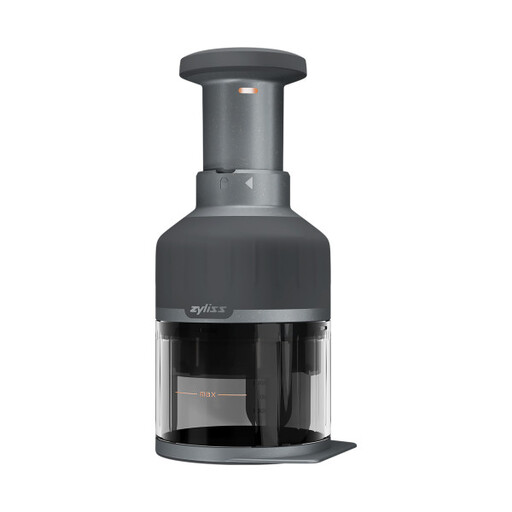
Why This Fits Their Persona: This compact manual tool suits occasional cooks, smaller kitchens and anyone who wants quick chopping without adding another powered appliance to the worktop.
There is no motor wattage to overvalue and no electrical running cost. The clear container also lets you monitor the chopping process.
Push-down operation; stainless steel rotating blades; suitable for vegetables, nuts and herbs.
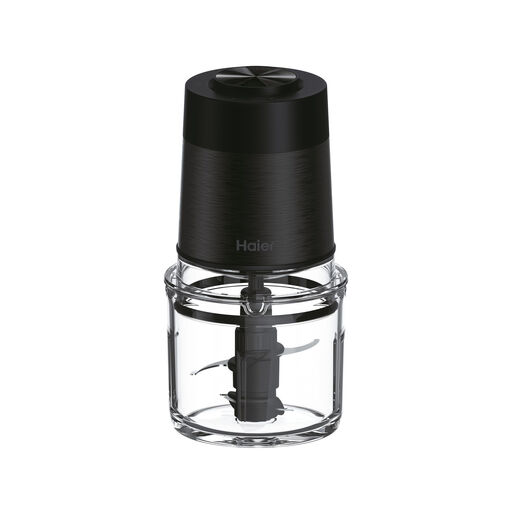
Why This Fits Their Persona: A suitable option for regular home cooks who prefer a glass bowl, two speed settings and a compact electric appliance for chopping and puréeing.
Its stated 550W motor is paired with four double-stacked blades and two-speed top-press control, rather than relying on wattage alone.
Glass bowl resists odours and scratches; bowl and blades are dishwasher safe; anti-slip base.
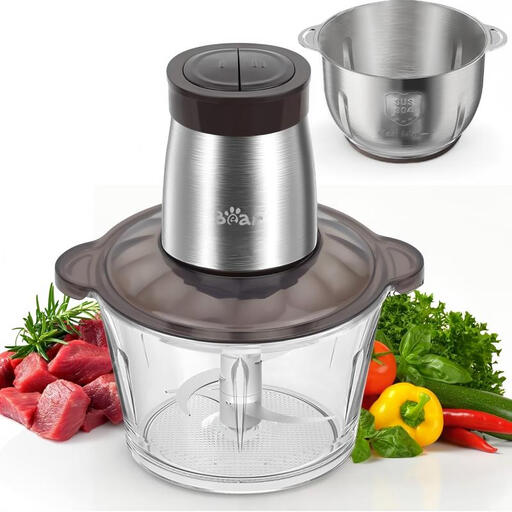
Why This Fits Their Persona: The two-bowl arrangement is practical for families and meal-prep users processing different ingredients in succession.
The 2L glass bowl and 1.8L stainless steel bowl make the stated capacity clearer, while the 40-second operating limit sets realistic expectations for batch preparation.
Two bowls can help separate flavours; two speeds; dishwasher-safe bowls and blades.

Why This Fits Their Persona: Its 2L glass bowl and dedicated chopping design suit households that prepare vegetables, meat and other ingredients in moderate batches.
The listing clearly identifies the included configuration as one blade set and one blending cup, helping buyers avoid confusion caused by review images from another listing.
Two speed settings; visible glass bowl; 304 stainless steel blades; safety-lock design.
We have compiled a complete, real-time list of products that fully satisfy these strict selection criteria and UK safety regulations.
To achieve more even results and help preserve the appliance:
A food chopper is not automatically a baby food processor. If preparing food for a baby, check the texture carefully, use fresh ingredients and follow suitable food-safety practices. A chopper may produce a coarse chop rather than a smooth purée, depending on its blade design and processing time.
It may use less electricity per short preparation cycle because it has a smaller motor and bowl, but the actual cost depends on the appliance’s power rating, usage time and household electricity tariff. The difference is usually less significant than the time saved and the convenience of cleaning a smaller bowl.
Some models are designed for meat, nuts and herbs, but suitability varies. Check the manufacturer’s instructions for maximum quantities and prohibited ingredients. The Bear models listed here specify meat and vegetables but exclude bones, ice cubes, frozen food, dry grains and coffee beans. The Haier model lists vegetables, nuts, herbs and ice among its suitable uses.
Lifespan depends on frequency of use, ingredient choice, cleaning and whether the motor is operated within its stated duty cycle. Avoid overfilling, forcing hard ingredients through the blades or ignoring required cooling intervals. A model with removable, dishwasher-safe parts can also be easier to maintain over regular use.