
24/7 Customer Support

Free returns

Same-day & Next-day Delivery

Quality Guaranteed

Unlock Your Welcome Offers: FREE Delivery | Up to 80% OFF | Free 30-day JoyPlus trial
Download the APP
A food chopper can reduce the time spent preparing onions, herbs, vegetables, meat and sauces, but choosing the wrong design may leave you with uneven pieces, difficult cleaning or an appliance that takes more cupboard space than expected. UK kitchens vary from compact flats to busy family homes, so the right choice depends on capacity, ingredients and how often you cook.
Before buying, watch for three common pitfalls:
A manual food chopper is suitable for quick, smaller tasks without a plug, motor noise or power consumption. Push-down models and rocking blade designs can work well for herbs, garlic, onions and small amounts of vegetables. They also tend to be compact and easy to store.
An electric food chopper is more appropriate when you regularly prepare larger quantities or tougher ingredients. Motor power alone should not determine your choice: a 300W motor, for example, may be suitable for everyday chopping, but the bowl size, blade design and operating instructions also matter.
For meat, nuts or dense vegetables, check that the product description specifically lists those ingredients. Do not assume that every kitchen chopper is suitable for hard or frozen foods.
A mini food chopper with a 350ml bowl can be convenient for sauces, herbs, garlic, breadcrumbs and small portions. It takes less space in a cupboard, but it may be unsuitable for preparing ingredients for a family meal in one cycle.
For batch cooking, look at the stated bowl capacity and the product dimensions. A 1.4L food processor and chopper offers more room for family portions, while a 2L bowl can be useful for larger quantities. Remember to leave space around an electric appliance during use and check whether the bowl, lid and blade can be removed for cleaning.
Stainless steel blades are commonly used for chopping and slicing because they are resistant to corrosion when maintained correctly. A curved double-blade mezzaluna uses a rocking motion, while an electric model rotates blades at different speeds.
If you want a vegetable chopper for salads or meal preparation, check whether it includes slicing, dicing, grating or julienne functions. A dishwasher-safe food chopper can save time, but read the details carefully: some listings specify that only the bowl and blades are dishwasher-safe, with the motor unit requiring a damp cloth.
In the UK, always follow the supplied instructions, use the correct voltage range and keep hands away from exposed blades. Sharp components should be handled carefully, and detachable parts should be fully dry before storage.
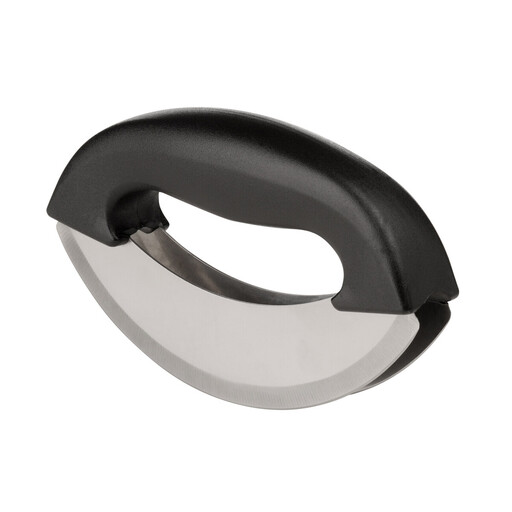
Why This Fits Their Persona: A compact manual option for tenants, students and occasional cooks who mainly chop herbs or small quantities without needing an electric appliance.
Its 15cm length and 0.15kg weight make the storage requirement clear, while the listing specifies dishwasher-safe cleaning.
Double stainless steel blades; curved rocking design; no electricity required.
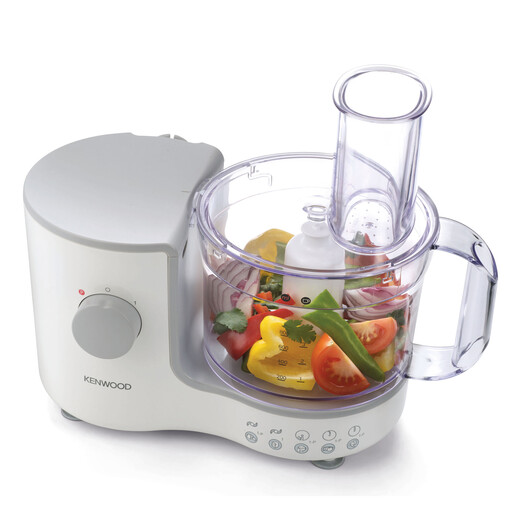
Why This Fits Their Persona: A practical match for UK home cooks wanting one compact appliance for chopping, blending, emulsifying and shredding.
The specification lists the 1.4L bowl, 0.8kg dry capacity and included shredder disc, making its intended workload easier to assess.
400W motor; 1 speed plus pulse; dishwasher-safe parts; safety interlock and non-slip feet.
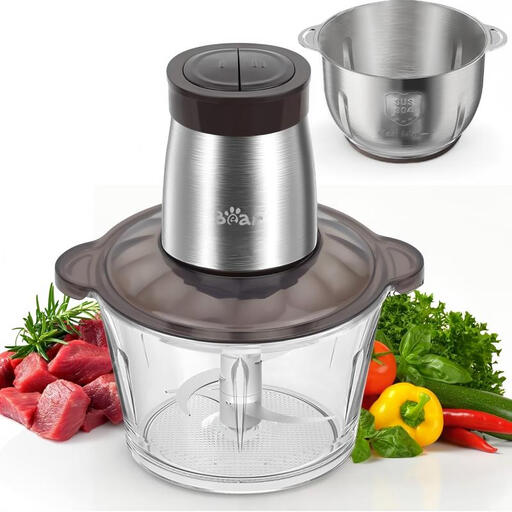
Why This Fits Their Persona: Designed for larger households and meal-preparation routines involving vegetables, meat, fruit or separate ingredient batches.
The listing states a maximum continuous operating time and rest periods, so users can plan batches rather than running the motor continuously.
2L glass and 1.8L stainless steel bowls; two speeds; dishwasher-safe bowls and blades; safety lock.

Why This Fits Their Persona: A space-saving electric food chopper for small kitchens, couples and quick preparation of herbs, garlic, nuts, dips and breadcrumbs.
Its 350ml BPA-free bowl clearly suits small batches, while the stated 30-second maximum continuous running time sets a practical usage boundary.
Two speeds plus pulse; dishwasher-safe bowl and blade; non-slip feet and lock-tight lid.
We have compiled a complete, real-time list of products that fully satisfy these strict selection criteria and UK safety regulations.
Electric choppers generally use short bursts of power, so their electricity use per preparation session is limited. The more relevant cost considerations are purchase price, replacement parts and whether the appliance suits your typical batch size. A manual food chopper avoids electricity use altogether but requires physical effort.
Some models are specifically listed for meat and include larger bowls, multiple blades or higher-capacity designs. Always check the individual instructions. Do not process bones, ice, frozen food or other excluded ingredients, and clean components thoroughly after handling raw meat.
Avoid overfilling the bowl, cut large ingredients into smaller pieces and use pulse settings where provided. Follow the stated operating and cooling intervals, keep the motor unit away from water and handle blades carefully during washing. Replacing or discontinuing use of damaged blades is also important for safe preparation.