
24/7 Customer Support

Free returns

Same-day & Next-day Delivery

Quality Guaranteed

Unlock Your Welcome Offers: FREE Delivery | Up to 80% OFF | Free 30-day JoyPlus trial
Download the APP
A food chopper can make light work of onions, herbs, vegetables, nuts and sauces, but the wrong model may quickly become an awkward item taking up space in a cupboard. Many shoppers focus on motor wattage or an impressive blade count, then discover that the bowl is too small, cleaning is inconvenient or the appliance cannot handle their usual ingredients.
The main buying traps are easy to overlook:
For one person or occasional garnishes, a mini food chopper with a bowl around 350ml may be sufficient. It can handle garlic, herbs, breadcrumbs, small quantities of nuts and ingredients for dips.
Small families and meal-prep users may prefer a 1-litre usable capacity or more. Larger bowls reduce the number of batches needed for onions, vegetables or meat, although the appliance will take up more cupboard and worktop space. Always follow the maximum fill line rather than relying solely on the advertised bowl capacity.
A transparent bowl or glass bowl chopper also makes it easier to monitor texture and ingredient distribution. Glass is generally less prone to retaining odours than some plastics, but it can be heavier and should be handled carefully.
A vegetable chopper with stainless steel blades is suitable for many everyday ingredients, but not every model is designed for the same tasks. Look for:
A 300W motor can be suitable for small-scale preparation, while 500W or more may be more appropriate for larger batches and tougher ingredients. This is not a guarantee of texture: cutting food into manageable pieces and using short pulses can be just as important.
If you need a meat mincer, nut chopper or food processor-style appliance, read the usage instructions carefully. For example, the BEAR QSJ-D03W5 specifies a maximum continuous operating time of 40 seconds, followed by a rest period. It also advises against processing bones, ice, frozen food, coffee beans and grains.
Food residue can collect around blades, beneath the lid or in the bowl base. A dishwasher-safe chopper with removable parts may save time, but confirm exactly which components can go in the dishwasher. Electrical motor units should be wiped with a damp cloth only.
Useful safety and convenience features include:
UK shoppers should also check the product instructions, plug and voltage information before purchase. Mains appliances listed here specify 220–240V operation, but users should still follow the supplied manual and safety warnings.
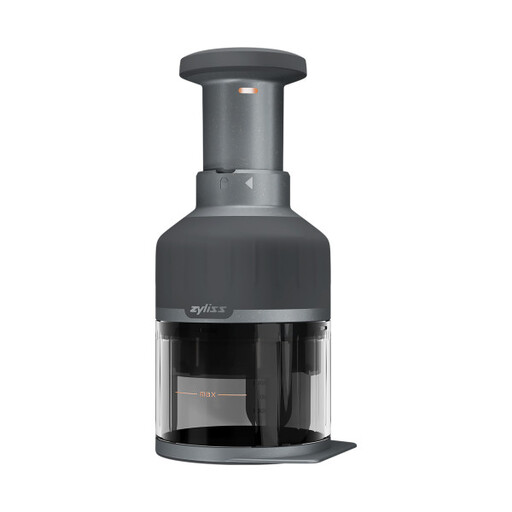
Why This Fits Their Persona: Its push-down mechanism needs no electricity, making it suitable for quick chopping in smaller UK kitchens, rented homes or homes where easy cupboard storage matters.
It avoids motor wattage comparisons and cable management altogether. The clear container helps you monitor chopping progress rather than relying on a fixed timer.
Manual operation; stainless steel rotating blades; suitable for vegetables, nuts and herbs.
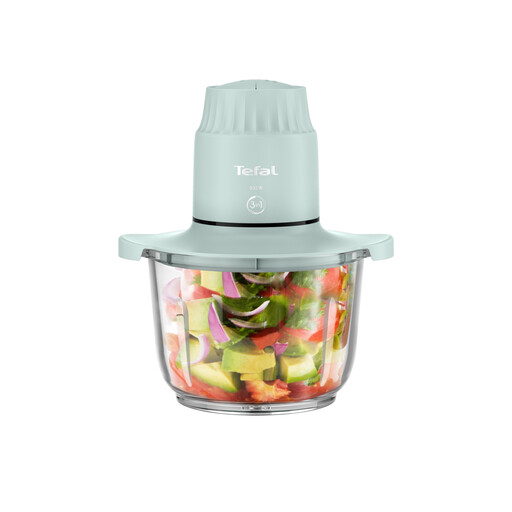
Why This Fits Their Persona: The borosilicate glass bowl and conservation lid suit cooks who value durable materials, visible preparation and the option to store ingredients in the same bowl.
The listing separates the 2-litre bowl size from its 1-litre useful capacity, helping buyers plan realistic batch sizes.
500W motor; two speed settings; four-blade stainless steel assembly; removable dishwasher-safe parts.
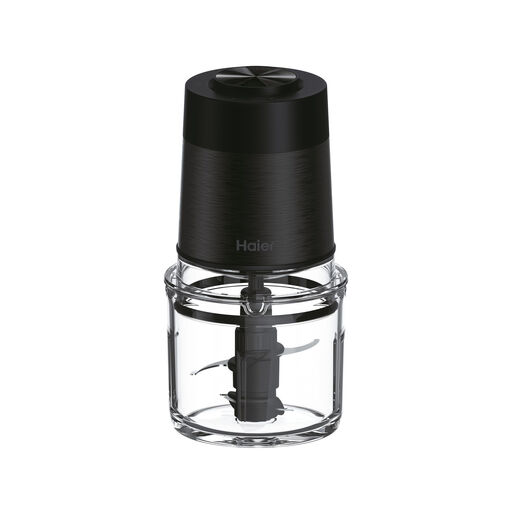
Why This Fits Their Persona: Its larger glass bowl, stacked blade arrangement and 550W motor are suited to frequent preparation involving vegetables, nuts, herbs and purées.
The two-speed top-press control provides more control than a single fixed setting, while the dishwasher-safe bowl and blades address cleaning concerns.
550W power; four double-stacked blades; glass bowl; anti-slip base; dishwasher-safe bowl and blades.

Why This Fits Their Persona: The compact bowl is practical for single portions, sauces, dips, garlic, onions and herbs without bringing out a full-size food processor.
Its 350ml capacity makes the small-batch limitation clear, while two speeds and pulse control offer more flexibility than a basic one-button design.
300W motor; two speeds plus pulse; BPA-free bowl; dishwasher-safe bowl and blade; non-slip feet.
We have compiled a complete, real-time list of products that fully satisfy these strict selection criteria and UK safety regulations.
Before ordering, compare the following points against your normal cooking routine:
An electric food chopper generally has a smaller motor and shorter operating time than a full-size food processor, so it may use less electricity per short preparation cycle. Actual running cost depends on the wattage, usage duration and household electricity tariff. Manual models use no electricity but require physical effort.
Some models are designed for meat mincing, but suitability varies. Check the product instructions, cut meat into manageable pieces and follow the stated fill limit and operating time. Do not assume that a vegetable cutter or herb chopper is suitable for raw meat simply because it has sharp blades.
Lifespan depends on frequency of use, ingredient hardness, cleaning and storage. Avoid overloading the bowl, respect continuous-use limits and handle removable blades carefully. A model with replaceable or readily available parts may also be easier to maintain over time, so check the product listing and warranty before purchase.