
24/7 Customer Support

Free returns

Same-day & Next-day Delivery

Quality Guaranteed

Unlock Your Welcome Offers: FREE Delivery | Up to 80% OFF | Free 30-day JoyPlus trial
Download the APP
Preparing onions, herbs, vegetables and nuts can be one of the more repetitive parts of cooking. A suitable food chopper can reduce preparation time, but choosing the wrong design may leave you with uneven pieces, difficult cleaning or an appliance that is too small for your usual meals.
For UK households, the right option depends on more than motor power or the number of blades advertised on the box. Manual tools, electric food choppers, vegetable choppers and mini food processors each suit different cooking habits. This guide explains the practical details to check before buying.
A 300W food chopper may be sufficient for herbs, garlic, onions and small batches. A 550W food chopper offers more motor capacity for tougher ingredients, but wattage alone does not guarantee uniform chopping. Blade design, bowl shape, batch size and pulse control also affect the result.
A powerful motor may be unnecessary if you mainly prepare small portions. Conversely, a compact model can struggle if it is repeatedly filled beyond its recommended capacity.
A bowl may have a generous total capacity, but ingredients need room to move around the blades. Overfilling can produce a mixture of large pieces and purée, particularly when processing vegetables or meat.
Check whether the product is designed for small batches or family-sized preparation. A 350ml bowl suits herbs, garlic, sauces and small portions, while a 2-litre bowl is more practical for batch cooking.
Food residue can collect around blade fittings, lids and feeding chutes. A product described as a dishwasher-safe food chopper may only have selected removable parts suitable for the dishwasher. The motor housing should never be immersed in water.
Also consider cupboard space. A large food processor with bowl may offer more capacity but can be inconvenient for quick weekday preparation. A manual food chopper is easier to store and does not require a plug socket.
For electric models, compare power with the ingredients you normally use:
Always follow the stated operating cycle. For example, one 300W model listed here specifies no more than 30 seconds of continuous operation, while another specifies a 40-second cycle followed by a rest period.
A transparent bowl makes it easier to monitor texture without removing the lid. Plastic is generally lightweight and practical for everyday use, while a glass bowl food chopper can resist odours, flavours and scratching. Glass is heavier, so check that the base has sufficient grip.
For capacity, match the bowl to your routine:
Look for stainless steel blades and a secure lid or locking system. A vegetable slicer and dicer with interchangeable attachments may be useful if you want slices, cubes, gratings and julienne cuts rather than chopping alone.
Manual designs use physical force instead of a motor. A push-down tool or rocking blade can be convenient for quick jobs, but it may require several presses or passes for a finer texture. Whichever style you choose, handle blades carefully, use the supplied food pusher or safety guard where provided and keep sharp components away from children.
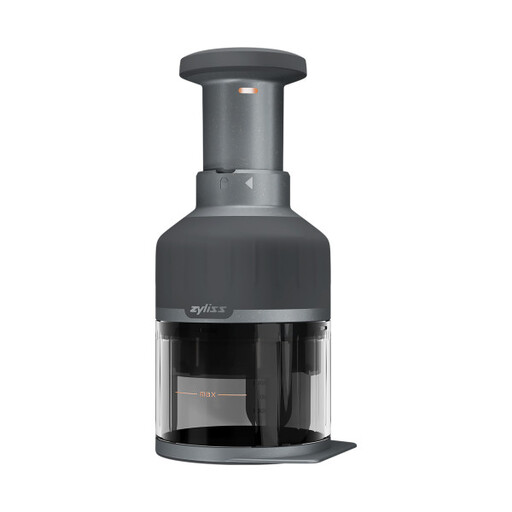
Why This Fits Their Persona: This compact manual kitchen chopper suits shoppers who want a straightforward tool for herbs, vegetables and nuts without adding an electric appliance to a small kitchen.
It does not depend on wattage or a power socket, and its clear container helps you monitor the chopping process.
Push-down operation; rotating stainless steel blades; compact format for everyday preparation.

Why This Fits Their Persona: Its multiple cutting functions suit cooks preparing salads, stir-fries and batch ingredients who want more than a basic vegetable chopper.
The integrated container catches ingredients directly, while the food pusher helps keep fingers away from the cutting inserts.
Chopping, slicing, dicing, grating and julienne functions; removable parts; stainless steel blades.
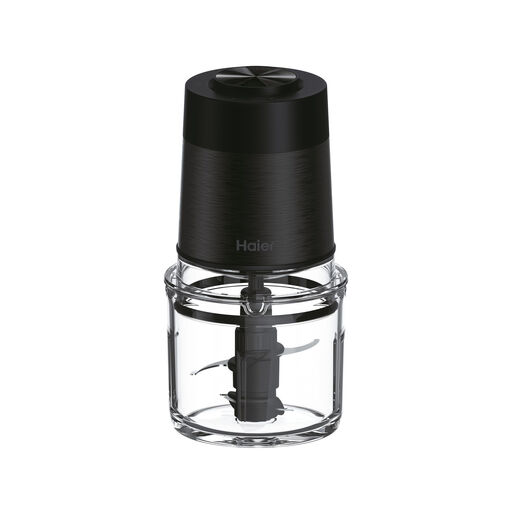
Why This Fits Their Persona: This electric food chopper is suited to households that prefer a glass bowl, two-speed control and a compact appliance for varied preparation.
The glass bowl addresses odour and scratching concerns, while the two-speed top press provides control rather than relying on one fixed setting.
550W motor; double-stacked blade system; dishwasher-safe glass bowl and blades.

Why This Fits Their Persona: Two bowl sizes make this practical for users who alternate between small preparations and larger family or meal-prep quantities.
The 0.6L and 2L glass bowls reduce the need to process every ingredient in the same oversized container. A safety lock helps prevent operation when incorrectly assembled.
300W motor; two glass bowls; two-speed control; detachable dishwasher-safe components.
The Kenwood Mini Chopper CH180B has a 300W motor, 350ml BPA-free bowl, two speeds and a pulse function. It may suit small households preparing breadcrumbs, dips, garlic, herbs or nuts. The bowl and blade are listed as dishwasher safe, although the motor unit should be wiped rather than immersed.
For herb-focused preparation, the Maison by Premier Mezzaluna Chopper uses two curved stainless steel blades and a rocking motion. Its dishwasher-safe design and small footprint make it a practical manual food chopper for garnishes and finely chopped herbs.
We have compiled a complete, real-time list of products that fully satisfy these strict selection criteria and UK safety regulations.
Usually, a compact chopper uses less electricity per short preparation cycle than a larger appliance, but actual running cost depends on the motor rating, usage time and household electricity tariff. For occasional chopping, the difference may be modest; convenience and bowl capacity may matter more.
Lifespan depends on frequency of use, ingredient hardness, cleaning and whether the operating cycle is followed. Avoid bones, frozen food or ice unless the product instructions specifically allow them. Replace damaged blades, bowls or lids rather than continuing to use unsafe components.
Not always. A standard chopper usually creates smaller, irregular pieces, while a dedicated slicer and dicer uses shaped inserts for more consistent cuts. Choose a multi-function model if slicing, grating and julienne preparation are regular parts of your cooking routine.