
24/7 Customer Support

Free returns

Same-day & Next-day Delivery

Quality Guaranteed

Unlock Your Welcome Offers: FREE Delivery | Up to 80% OFF | Free 30-day JoyPlus trial
Download the APP
A food chopper can make onions, herbs, vegetables, nuts and other ingredients quicker to prepare, but the wrong design may create more work than it saves. UK shoppers often compare motor wattage, blade counts and “multi-function” labels without checking how the appliance will fit their cooking habits.
Before choosing an electric food chopper, vegetable chopper or manual model, watch for three common buying traps.
A higher wattage does not automatically mean finer or more consistent results. Blade design, bowl shape, pulse control and maximum working capacity also affect how ingredients are processed. A compact 500W or 550W model may suit everyday chopping, while a manual food chopper can be more practical for small portions.
Look for details such as blade configuration, speed settings and whether the product is intended for hard ingredients, herbs, nuts, meat or puréeing.
A bowl may have a stated volume that is larger than the recommended filling level. This matters when preparing soup bases, sauces or batch-cooking ingredients. Overfilling can lead to uneven chopping and may interfere with the lid or blades.
For example, a bowl listed as 2 litres may have a 1-litre useful capacity. Always check the maximum fill mark and divide larger batches into separate cycles when necessary.
A food chopper that is difficult to dismantle may be left unused after a few meals. Food can collect around the blade shaft, lid seal or narrow feeding areas. Stainless steel blades still require careful handling, and dishwasher compatibility may apply only to removable components rather than the motor base.
A practical design should offer removable parts, clear cleaning instructions and a safe way to store or handle sharp blades.
A glass bowl food chopper is useful for shoppers who prefer a bowl that resists odours, flavours and visible scratching. Glass is heavier than plastic, so it may offer a stable base but require more cupboard space and careful handling.
Plastic bowls are generally lighter and easier to move. Check whether the material is clearly identified, such as ABS plastic or borosilicate glass, and confirm whether the bowl is dishwasher safe.
For UK family cooking, a model with a useful capacity of around 1 litre may handle several onions, vegetables or ingredients for a sauce. Smaller bowls are better suited to garnishes, herbs and one- or two-person portions.
A standard rotating blade is suitable for chopping, mincing and some puréeing. A vegetable slicer and dicer with interchangeable inserts may be more useful for salads, stir-fries and meal preparation, particularly if you want slices, cubes, grating or julienne cuts.
Check how the blades are removed and whether a food pusher or safety guard is included. Blades should not be touched directly during cleaning, and ingredients should never be pushed down with fingers.
An electric vegetable chopper offers faster processing and may be suitable for tougher ingredients or larger portions. Two speed settings can provide more control, allowing shorter pulses for coarse chopping and longer operation for finer textures.
A manual food chopper needs no socket, creates less motor noise and is convenient for quick preparation. It may be a better fit for small quantities, camping or kitchens with limited storage. However, the amount of food processed per press depends on the mechanism and bowl size.
The following options match different kitchen routines rather than one universal specification.
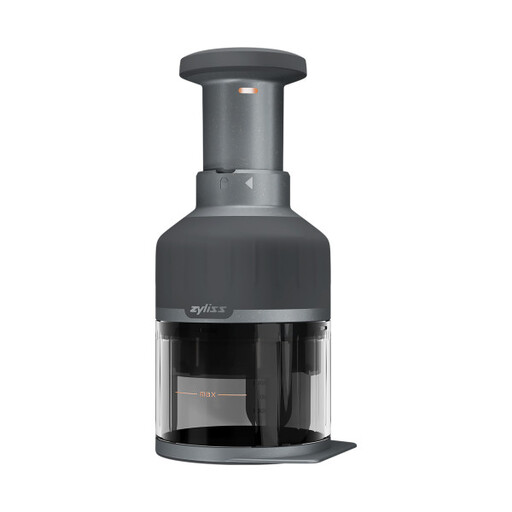
Why This Fits Their Persona: Its push-down manual mechanism suits shoppers who want a compact kitchen chopper for herbs, vegetables, nuts and garnishes without using electricity.
It does not rely on an advertised motor rating; the manual action and clear container make the preparation process easy to monitor.
No electricity required; stainless steel rotating blades and a clear container.

Why This Fits Their Persona: This multi-function vegetable chopper is designed for salads, stir-fries, salsas and batch preparation where different cutting styles are useful.
Its stated functions cover chopping, slicing, dicing, grating and julienne cuts, reducing the need to buy separate manual tools.
Integrated collection container; stainless steel blades and removable parts.
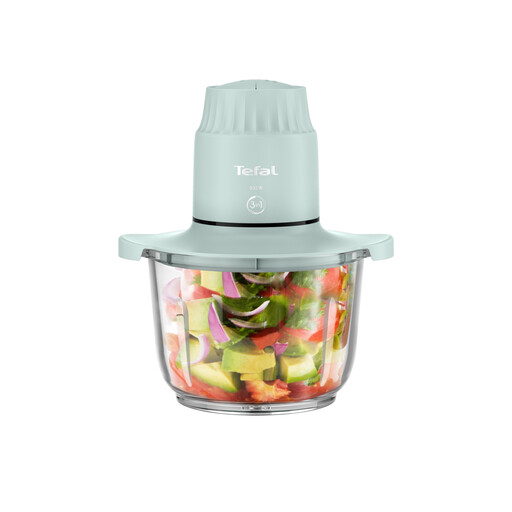
Why This Fits Their Persona: The borosilicate glass bowl, two speeds and conservation lid suit households wanting a substantial electric mini food processor for regular cooking.
The specifications distinguish the 2-litre bowl from its 1-litre useful capacity, helping shoppers plan realistic portions.
500W motor; four-blade stainless steel assembly; removable dishwasher-safe parts.
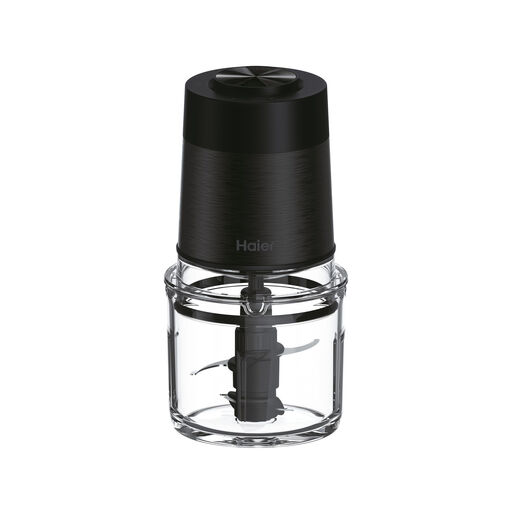
Why This Fits Their Persona: A 550W motor, double-stacked blade arrangement and two-speed top press control are suited to frequent chopping and puréeing.
The product information specifies the bowl material, speed control and dishwasher-safe components instead of relying only on general convenience claims.
550W power; glass bowl and blades listed as dishwasher safe; anti-slip base.
We have compiled a complete, real-time list of products that fully satisfy these strict selection criteria and UK safety regulations.
Electric models generally use very little power during short chopping cycles, so the cost of running one depends mainly on the appliance’s wattage and total operating time. A 500W appliance used for one minute consumes approximately 0.0083 kWh, before applying your electricity tariff. Manual models avoid electricity use but require physical effort.
It can be worthwhile if you regularly prepare onions, vegetables, nuts, herbs, mince or purées. Choose an electric model when speed, repeated use or harder ingredients matter. For occasional small portions, a manual food chopper may provide sufficient convenience with simpler storage.
Lifespan depends on frequency of use, ingredient choice, cleaning and blade care. Avoid overfilling, processing unsuitable ingredients and forcing the motor. Dry removable parts thoroughly and store blades safely. For an electric model, also follow the manufacturer’s guidance on operating cycles and cooling time.
A mini food processor can handle many everyday preparation tasks, but it may not offer the capacity, dough functions or wider attachments of a full-size food processor. Check the useful bowl capacity and included blade or slicing accessories against your normal recipes before buying.