
24/7 Customer Support

Free returns

Same-day & Next-day Delivery

Quality Guaranteed

Unlock Your Welcome Offers: FREE Delivery | Up to 80% OFF | Free 30-day JoyPlus trial
Download the APP
Preparing onions, herbs, nuts and vegetables can be one of the more repetitive parts of cooking. A suitable food chopper can reduce preparation time, but choosing one based only on motor power or the number of advertised functions can lead to disappointment.
For UK households, the right choice depends on batch size, available cupboard space, cleaning preferences and the ingredients you regularly prepare. This guide explains the practical specifications to check before buying, highlights common purchasing traps and compares suitable options for different cooking routines.
A 550W food chopper may offer more power than a 300W food chopper, but motor output is only one part of performance. Blade arrangement, bowl shape and the recommended operating time also affect results.
A compact 300W electric food chopper may be more suitable for herbs, garlic and small portions, while a higher-powered model can be more appropriate for larger batches or firmer ingredients. Always check the manufacturer’s guidance before using a chopper for meat, nuts or other dense foods.
A large bowl can be useful for family meal preparation, but it also requires more cupboard and worktop space. Conversely, a mini food chopper may need several batches if you are preparing food for several people.
Look at the bowl capacity and the product dimensions together. A stated capacity of 2 litres does not necessarily mean the bowl should be filled to the rim. Overfilling can produce uneven chopping and may conflict with the appliance’s safety instructions.
A food chopper that is difficult to clean may spend more time in a cupboard than on the worktop. Food residue can collect around the blade assembly, lid or bowl rim, particularly when processing onions, herbs or sauces.
Check whether the bowl and blades are removable, and whether they are dishwasher safe. Even with a dishwasher-safe food chopper, the motor unit should generally be kept away from water and wiped with a damp cloth. Sharp blades also require careful removal, washing and storage.
A manual food chopper uses hand pressure, a pull cord or a rocking motion rather than electricity. It is quiet, compact and convenient for small jobs. The Zyliss Zick Zick 3, for example, uses a push-down mechanism and rotating stainless steel blades, making it suitable for quick portions of vegetables, nuts and herbs.
A mezzaluna-style herb chopper works differently. Its curved double blade is rocked across a chopping board, which can be useful for herbs and fine chopping but requires a stable surface and careful handling.
An electric food chopper is more convenient for repeated batches and can handle tasks such as mincing, blending dips or preparing some meats, depending on the instructions. Models with pulse control provide more control over texture than a single-speed appliance.
Plastic bowls are usually lighter and easier to handle, while a glass bowl food chopper can resist odours, flavours and scratches. Glass is heavier, so check that the base has adequate stability and that the bowl is practical to lift when full.
For one or two people, a 350ml bowl may be sufficient for garlic, herbs, breadcrumbs or a small sauce. Larger households may prefer capacities around 1.8 to 2 litres. Dual-bowl designs can also be useful when preparing raw meat and vegetables separately, helping to reduce flavour transfer between ingredients.
Stainless steel blades are common in kitchen choppers and may be arranged as single, double or stacked systems. Blade quantity alone does not guarantee uniform results, so also consider the bowl shape and how ingredients are distributed around the blades.
Two speed settings can help match softer foods such as fruit and onions with firmer ingredients such as carrots, nuts or meat. Short operating cycles are also important. Some appliances specify around 30 or 40 seconds of continuous operation followed by a rest period. These limits should be followed to reduce heat build-up and support safe everyday use.
A vegetable slicer and dicer with interchangeable inserts may be more suitable if you want slices, cubes, gratings and julienne cuts rather than minced or finely chopped ingredients. A food processor and chopper may provide broader functions, but it typically needs more storage space.
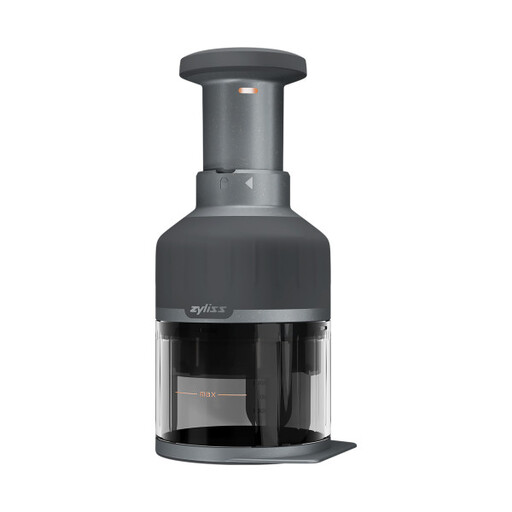
Why This Fits Their Persona: A practical option for small kitchens, renters or cooks who want occasional chopping without another appliance taking up cupboard space.
It does not rely on a high-wattage motor or complicated controls, so there is no electrical operating limit or motor unit to clean.
Push-down operation, rotating stainless steel blades and a clear container for monitoring progress.

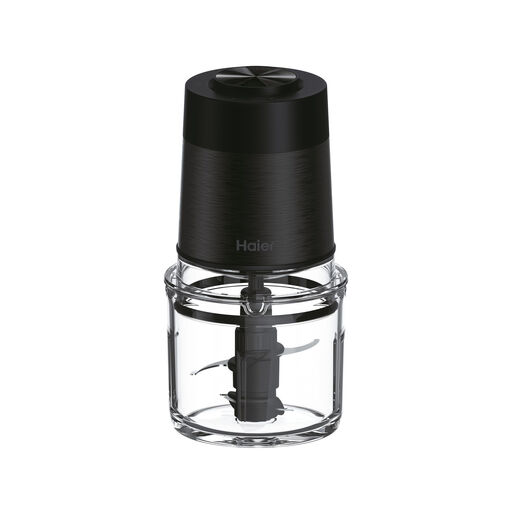
Why This Fits Their Persona: Its small bowl and compact footprint suit couples, single-person households and cooks preparing sauces or ingredients in modest quantities.
The 350ml capacity makes its intended portion size clear, while two speeds and pulse control reduce reliance on guesswork.
300W motor, two speeds plus pulse function, and dishwasher-safe bowl and stainless steel blade.
Why This Fits Their Persona: A glass-bowl design and higher stated power may appeal to frequent cooks who prioritise materials, control and straightforward cleaning.
Its specifications identify the motor power, two-speed control, bowl material and dishwasher-safe components rather than relying only on broad performance language.
550W motor, double-stacked four-blade system, glass bowl and dishwasher-safe bowl and blades.
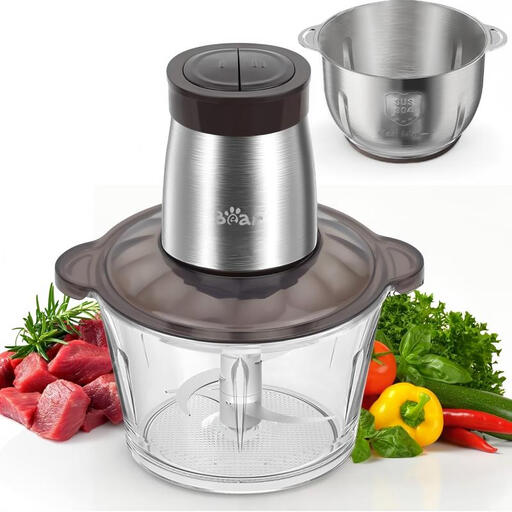
Why This Fits Their Persona: The larger dual-bowl format is suited to batch preparation, family meals and cooks who want separate containers for different ingredients.
The listing states separate 2L glass and 1.8L stainless steel bowls, two speeds and a defined rest period, helping buyers assess capacity and operating expectations.
Dual bowls, 304 stainless steel blades, two speed settings and dishwasher-safe bowls and blades.
Before ordering a food chopper, check:
We have compiled a complete, real-time list of products that fully satisfy these strict selection criteria and UK safety regulations.
Electric food choppers generally have relatively low stated power compared with larger kitchen appliances, and they are commonly used for short operating cycles. Actual electricity use depends on the wattage and how long the motor runs. For occasional chopping, the difference in running cost is usually less significant than capacity, cleaning and storage suitability.
Some electric models are designed for meat, but this is not universal. Check the individual product instructions, cut meat into suitable pieces and avoid bones, frozen food or other prohibited ingredients. A manual herb chopper is not intended for this type of preparation.
Lifespan depends on frequency of use, ingredient choice, cleaning and whether operating limits are followed. Avoid overfilling, do not run an electric motor beyond its stated cycle and handle stainless steel blades carefully. Replacing worn or damaged components where available can also support safer use.