Choose a food processor for avocado dressing by its usable liquid capacity and stated blending, puréeing or emulsifying functions, rather than its bowl size or accessory count alone. A larger processor can suit regular family batch cooking; a processor-blender gives you a separate vessel for other fluid recipes, while a compact model takes less storage space but may mean splitting larger batches. Check the limits and included tools for the exact model before deciding.
Who needs which setup?
Frequent family batch cooks
If you prepare several portions at once, look for a documented liquid-working limit that fits your usual dressing batch alongside the processor capacity you need for vegetables. Kenwood, for example, specifies liquid-working capacity separately from bowl size on its MultiPro models.
Dressing-and-sauce meal preppers
If the same appliance will also make sauces, soups or smoothies, check whether the package includes a blender vessel or a tool intended for puréeing or emulsifying. The appropriate vessel depends on the recipes you actually make, not the number of functions printed on the box.
Small-kitchen cooks making modest batches
If cupboard space matters more than making a large quantity in one run, compare compact models by their usable liquid capacity and how their accessories are stored. Kenwood lists in-bowl accessory storage for its MultiPro Compact FDP31.170GY; that feature should not be assumed for other compact models.
What matters when choosing?
Start with the amount of pourable dressing you normally make, then check how the exact machine blends it and how much space its parts will take between uses.
| Concern |
What to check |
Who this matters to |
| Usable batch capacity |
Check the liquid-working or maximum-quantity limit for the vessel you intend to use; total bowl or jug size is not necessarily its liquid-fill limit. |
If I make dressing for several meals, I want the usual quantity to fit without repeated runs. Around 50% of consumers put usable batch capacity first. |
| Texture and control |
Look for stated blend, purée or emulsify functions, and confirm which blade, tool or jug comes with the exact package. |
When I combine avocado with pourable ingredients, I want control over when to stop processing. Smooth texture and control come first for around 30% of consumers. |
| Storage, cleaning and other tasks |
Compare appliance dimensions, accessory storage and the cleaning instructions for the actual parts; consider which other prep functions you will use. |
With limited cupboard space and regular meal prep, I want parts I can store and clean without fuss. Around 20% of consumers prioritise this combination of everyday practicalities. |
Mistakes to avoid
-
Treating total bowl size as the dressing limit
A processor bowl may hold less liquid than its headline capacity suggests. Kenwood lists a 3.0 L bowl but a 1.5 L liquid-working capacity for the MultiPro OneTouch FDM73.850SS; Magimix also distinguishes total from soup capacity on the 5200XL.
Check the manual’s limit for the exact vessel and ingredients before planning a one-run batch.
-
Choosing by wattage alone
Motor wattage does not tell you whether the supplied tool and vessel are intended to blend, purée or emulsify dressing.
Check the exact package for the function and attachment you need, especially if you expect a separate blender jug.
-
Buying for an occasional batch rather than your usual one
A larger appliance offers more room for food preparation but also takes more storage space and may bring more parts to manage.
Size the machine around the batches you make regularly, then decide whether its additional functions earn their cupboard space.
-
Preparing more food than you can store safely
Batch cooking also needs a storage plan. GOV.UK advises keeping the fridge between 0 and 5°C and eating leftovers within two days; dressing may have a shorter recipe-specific storage instruction.
Plan portions before making a large batch, and follow the relevant chilling and storage instructions for the food you prepare.
Relevant brands to consider
Magimix
Magimix lists food processors from compact Mini Plus models to the larger 5200XL, with blending and emulsifying among its range’s stated functions.
- Magimix specifies 3.6 L total capacity and 1.8 L soup capacity for the 5200XL, giving two distinct figures to consider for larger-scale preparation.
- The total-capacity figure is not a dressing-fill instruction; check the model manual, and allow space for a larger appliance.
Kenwood
Kenwood’s MultiPro range includes compact processors and processor-blender combinations with model-specific liquid limits.
- Kenwood specifies a 3.0 L bowl and 1.5 L liquid-working capacity for the FDM73.850SS; its compact FDP31.170GY has a 2.1 L bowl, 1.2 L liquid-working capacity and an emulsifying tool.
- Those capacities and accessories belong to the named models, not every Kenwood processor. Check the exact variant and supplied tools.
KitchenAid
The KitchenAid 5KFP1319 is a prep-focused food processor with a 3.1 L work bowl and functions that include slicing, shredding and puréeing.
- KitchenAid lists pulse action and a multipurpose blade alongside the 3.1 L leak-resistant bowl, making this model relevant when dressing is one part of wider food preparation.
- Before relying on it for a pourable batch, check the bowl’s applicable liquid limit and whether its included setup gives you the texture you want.
Ninja
The Ninja BN800UK is a processor-blender system listed for food preparation as well as sauces, dips and dressings.
- The Joybuy listing describes a 1.8 L processor bowl, 2.1 L blending jug, 700 ml cup and purée programme for this model.
- Jug size alone does not establish its permitted liquid fill. Check the BN800UK instructions for your intended batch and consistency.
Joybuy products for this task
These food processors cover processor-blender combinations and compact or prep-focused options for making avocado dressing alongside batch-cooked food. Compare the liquid limit and included blending setup of each exact model against the amount you normally prepare.
 No image available
Kenwood MultiPro OneTouch FDM73.850SS 3-in-1 processor and blender, 3 L
Consider this model when dressing is one part of a larger meal-prep session and you want processing and blending functions in one appliance.
Its 3.0 L processor bowl has a stated 1.5 L liquid-working capacity, according to Kenwood. The listed variant also has integrated weighing, variable speed and pulse control. Plan to split dressing batches that exceed the applicable liquid limit.
View on Joybuy
 No image available
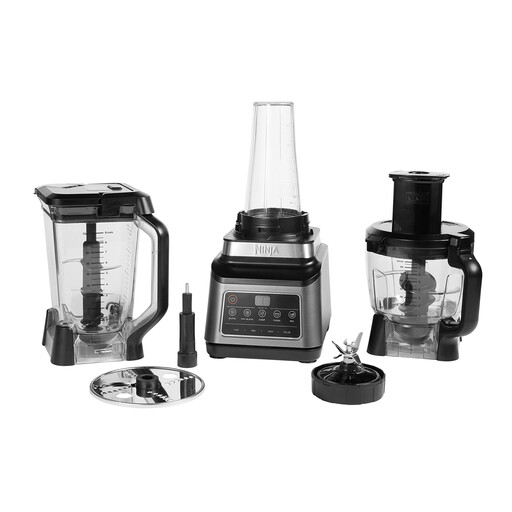
Ninja BN800UK 3-in-1 food processor, 1.8 L bowl and 2.1 L jug
The separate blending jug makes this a relevant option if you prepare dressings, sauces or dips as well as ingredients in a processor bowl.
The Joybuy listing gives a 1.8 L processor bowl, 2.1 L jug and 700 ml cup, with blend and purée programmes. Check the jug’s permitted liquid fill and the manual’s guidance for thicker mixtures before sizing a dressing batch.
View on Joybuy
 No image available
DAEWOO 2-in-1 food processor and blender, 2 L bowl and 1.8 L jug
This processor-blender format is worth considering if you want to prepare dressing separately from ingredients chopped in the processor bowl.
The listed bowl is 2 L and the blender jug is 1.8 L. Check the jug’s maximum permitted liquid fill rather than treating its stated capacity as a one-run dressing limit.
View on Joybuy
 No image available
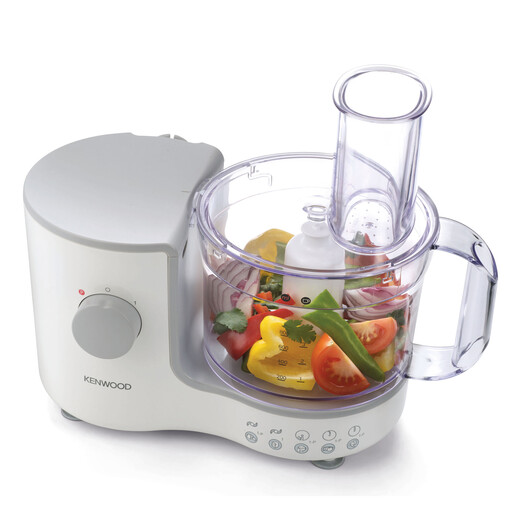
Kenwood FP120A compact food processor, 1.4 L
Consider the FP120A if storage space matters and you usually make modest dressing batches rather than a large quantity at once.
Its listed bowl capacity is 1.4 L, and the product name identifies blending and emulsifying functions. Confirm the usable liquid limit and exactly which blending tool or vessel comes with this variant before planning a batch.
View on Joybuy
 No image available
Kenwood MultiPro Express FDP65.180SI food processor, 3 L
This prep-focused option may suit cooks who want a larger processor bowl for batch ingredients and also plan to make dressing.
The listed variant has a 3 L bowl, pulse function and six accessories. Before choosing it for dressing, confirm the bowl’s liquid-working limit and the capacity and inclusion of the blending accessory you intend to use.
View on Joybuy
Common questions
What capacity do I need for batch-made avocado dressing?
Choose by the liquid-working limit of the vessel you will use, not its maximum bowl size. Kenwood specifies 1.5 L liquid-working capacity for the 3.0 L MultiPro OneTouch FDM73.850SS bowl and 1.2 L for the 2.1 L MultiPro Compact FDP31.170GY bowl. Compare the relevant limit with your usual recipe quantity.
Do I need a blender jug as well as a processor bowl?
Not necessarily: a processor with a suitable puréeing or emulsifying setup may cover dressing alongside chopping and slicing. A processor-blender is worth considering if you also want a separate vessel for fluid recipes; the Joybuy listing for the Ninja BN800UK describes a 2.1 L jug for sauces, dips and dressings. Check its usable fill for your recipe.
How should I store food prepared during a batch-cooking session?
Keep chilled food in a fridge set between 0 and 5°C, following GOV.UK guidance. Its guidance says to eat leftovers within two days or freeze them; follow any shorter recipe-specific instruction for avocado dressing and the applicable instructions for other prepared ingredients.
Can every food-processor attachment go in the dishwasher?
No assumption about every attachment is safe: check the exact model’s cleaning instructions part by part. Dishwasher-safe statements for a range or selected components do not establish that every removable piece in every variant can be washed that way.


