Regular batch cooks
If you chop chillies alongside onions, herbs or other meal-prep ingredients, the combined volume matters more than the chilli quantity alone. A bowl that fits your usual session may save repeated loading.


Choose a bowl that fits the chilli and other ingredients you prepare together, then look for a control that lets you stop at a chopped texture. A mini chopper suits modest quantities and limited storage space; a larger processor makes more sense for mixed-ingredient batches. Do not rely on bowl size or motor wattage alone to judge how a model will handle a small chilli-only load.
If you chop chillies alongside onions, herbs or other meal-prep ingredients, the combined volume matters more than the chilli quantity alone. A bowl that fits your usual session may save repeated loading.
If you prepare modest amounts of chilli for sauces, salsas or freezer portions and rarely need other processor functions, a compact chopper may be easier to store.
If you want pieces of chilli rather than a smooth paste, look closely at pulse, moment or other manual controls that let you inspect the texture between short bursts.
Start with the volume you prepare in one session, then check how you will control the chop and clean the parts. Kenwood specifies a 500ml bowl for its Easy Chop CHP61.100WH, while Bosch specifies a 2.3L usable bowl for its MCM3501MGB; neither figure alone tells you how well a very small chilli load will process.
| Concern | What to check | Who this matters to |
|---|---|---|
| Batch capacity | Compare usable bowl capacity with your combined ingredient volume; check the manual for fill and minimum-load guidance. | If I chop chillies with several other ingredients, I want to load the bowl without repeatedly stopping to refill it. Around 36% of consumers put batch capacity first. |
| Texture control | Check for pulse, moment or manual control with the chopping blade. | When I need visible chilli pieces, I want to stop and inspect the chop before it becomes too fine. Texture control comes first for around 29% of consumers. |
| Small-load fit | Consider storage space and whether the bowl suits the modest quantities you normally prepare. | If I usually chop a little chilli at a time, I do not want a large appliance taking up cupboard space. Compactness and small-load fit are the main concern for around 21% of consumers. |
| Cleaning and handling | Confirm which parts are dishwasher safe and read the blade-handling and disassembly instructions. | After preparing several portions, I want food-contact parts I can clean safely without overlooking the blades or chilli residue. Around 14% of consumers put cleaning and handling first. |
A large bowl can suit high-volume batch cooking, but its capacity does not establish how it handles a small quantity of chillies. It also needs more storage space.
Work from your usual combined batch volume, and check the exact model manual before relying on a large bowl for chilli on its own.
Rated motor power does not tell you when the machine will stop or whether you can inspect a coarse chop between bursts. Bosch describes pulse as a control for chunkier textures in its food-processor guidance.
Check that pulse, moment or manual control works with the chopping attachment you intend to use, then process in short bursts.
Sharp blades still need careful handling during disassembly, and chilli residue can remain on hands and food-contact surfaces. The Food Standards Agency says gloves are not a substitute for effective handwashing.
Stop and unplug the processor before dismantling it, follow the model’s cleaning instructions and wash your hands before handling other food.
Kenwood’s Easy Chop CHP61.100WH illustrates the mini-chopper route for modest quantities.
Bosch’s MultiTalent 3 and MultiTalent 8 models illustrate different bowl-size choices for mixed prep and larger batches.
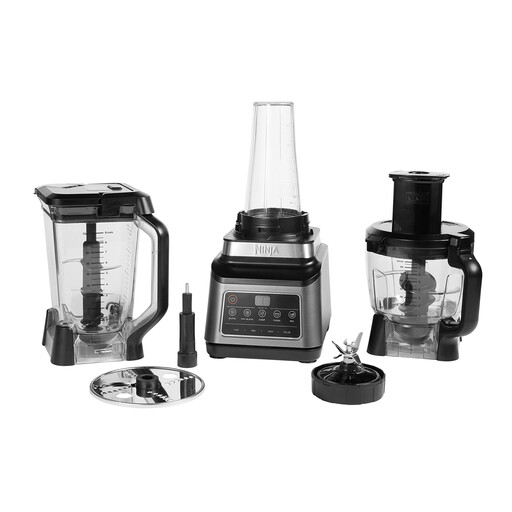
The BN800UK is a food processor within a 3-in-1 setup for cooks who also want a blender jug and personal cup.
These choppers and food processors offer bowl sizes for mixed-ingredient batch prep, with some also providing blender or additional food-prep functions. If you usually process just a few chillies, check the chosen model’s small-load guidance before deciding on a larger bowl.
 No image available
Consider this if chilli prep is part of a mixed batch and you also want the listed blender and personal-cup functions.
The Joybuy listing specifies a 1.8L processor bowl, 1200W rated power, manual settings and five automatic programmes. Check the manual before relying on the processor bowl for a very small chilli-only load.
 No image available
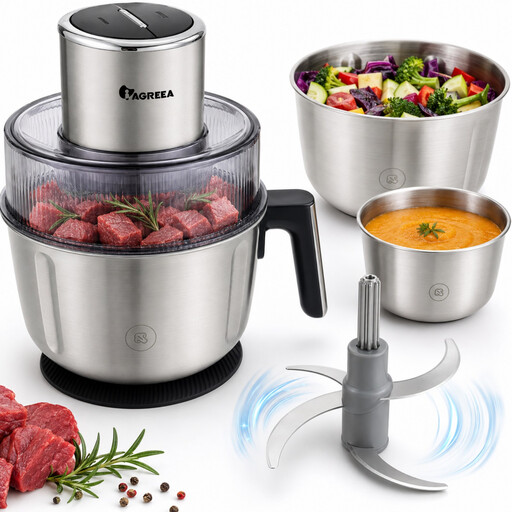
The three bowl sizes are worth considering if your batch ingredients vary and you want separate containers for prep.
The product name specifies a 350W motor, two speeds, three nesting 304 stainless steel bowls and triple-curved blades. Follow the model’s operating-interval instructions, and check small-load guidance for the bowl you plan to use.
 No image available
Consider the processor bowl for chilli prepared alongside other batch ingredients if you also need a separate blender jug.
The product name specifies a 750W motor and a 2L processor bowl. Check the model instructions for small loads and handle its blades carefully during cleaning.
 No image available
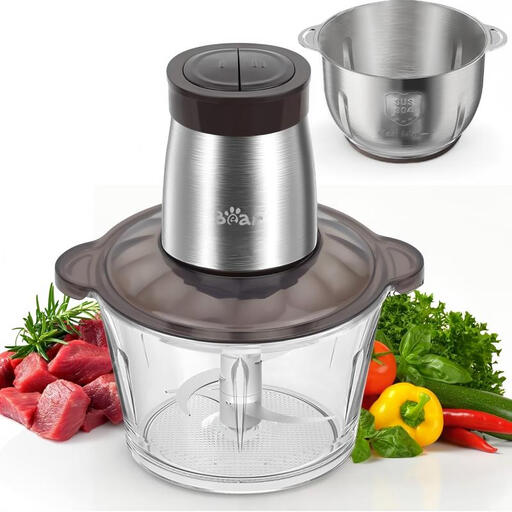
Two containers may suit prep sessions in which you want to keep ingredients separate.
The product name specifies 300W rated power, two speeds and four stainless steel blades. Check the manual for small-load suitability and the applicable running and rest-cycle limits before extended prep.
 No image available
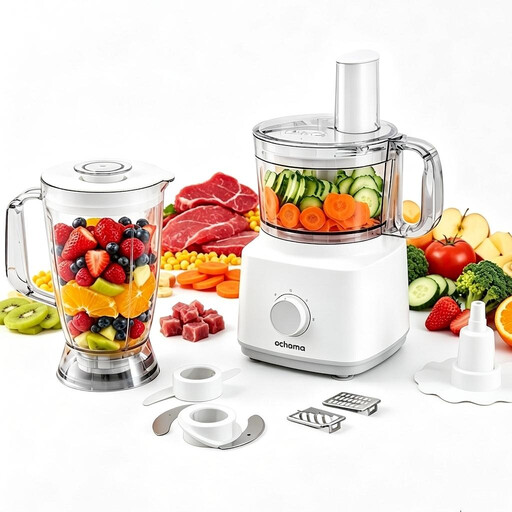
Consider this for mixed-ingredient prep if slicing and grating are useful alongside chopping.
The product name specifies a 1.8L bowl and detachable parts. If a coarse chilli chop matters, confirm the exact controls before buying; stop and unplug the appliance before dismantling it.
Choose by the total ingredients you process together, not the chillies alone. Kenwood specifies a 500ml mini chopper for modest prep, while examples from Joybuy and Bosch have larger processor bowls for mixed batches; check the exact model’s minimum-load guidance if you will sometimes chop only a few chillies.
Use a chopping attachment with pulse, moment or another manual control, processing in short bursts and checking the texture between them. Bosch describes pulse as useful for chunkier textures, but check which controls work with the bowl and blade of the model you choose.
Stop and unplug the processor before taking it apart, handle the blades carefully and clean food-contact parts as the manual directs. Wash your hands before handling other food; the Food Standards Agency advises that gloves do not replace effective handwashing.
Yes. For a food business, GOV.UK guidance dated 21 August 2026 states that food-safety management procedures must be based on Hazard Analysis and Critical Control Point principles. Household chilli-prep advice does not replace those procedures; seek guidance from your local authority for your operation.