Frequent batch-cook sauce makers
You prepare several portions at once and want a usable bowl capacity that does not force you to divide every recipe into multiple runs.


For batch peanut sauce, choose a food processor by the stated working capacity of the vessel you will use, then consider how you want to control a thick mixture. A larger total bowl figure is not necessarily the liquid-sauce limit; a processor-and-blender combination is worth considering if you will use its separate vessels for other tasks and have room to store them.
You prepare several portions at once and want a usable bowl capacity that does not force you to divide every recipe into multiple runs.
You process roasted peanuts or a thick peanut base and want control over pulsing, continued processing and stopping to scrape down the bowl.
You also want to chop vegetables or make blended drinks and dressings, but need to account for the space taken up by extra vessels and accessories.
Start with the volume of sauce you normally make and the usable capacity of the vessel you intend to use. Then decide whether control over a thick peanut mixture or extra functions will matter more in your kitchen.
| Concern | What to check | Who this matters to |
|---|---|---|
| Usable batch capacity | Compare your usual sauce volume with the stated liquid working capacity, where supplied, rather than the total bowl size. | If I make several portions at once, I want to avoid splitting a liquid sauce between runs; around 46% of consumers would put usable batch capacity first. |
| Texture control | Check for a suitable chopping blade, pulse or manual controls and access for scraping down the bowl. | If I start with roasted peanuts, I need to pause and scrape down a thick mixture as it processes; around 36% of consumers would make texture control their primary concern. |
| Versatility and storage | Compare each vessel separately, then check the included attachments and appliance dimensions. | If I need one appliance for sauce, vegetable prep and smoothies, I also need somewhere to keep its parts; around 18% of consumers would prioritise multi-use functions and storage. |
A liquid sauce may reach a processor’s working limit well before its headline bowl volume. Kenwood GB lists the FDP65.180SI with a 3L bowl but a 1.5L liquid working capacity.
Compare the volume of your usual recipe with the liquid working capacity, allowing room to process and add ingredients.
The Ninja BN800UK listing gives separate capacities for its 1.8L processor bowl and 2.1L blender jug. The larger jug figure does not describe how much fits in the processor bowl.
Decide which vessel your peanut-sauce method calls for, then check that vessel’s capacity.
Motor wattage alone does not tell you how a processor will handle your peanut mixture. Cuisinart’s peanut-butter method calls for continued processing and periodic scraping down.
Check the blade, available controls and how easily you can stop and scrape the bowl. Follow the appliance’s instructions for thick mixtures.
A larger batch of cooked sauce still needs prompt cooling. GOV.UK advises putting cooked food in the fridge within one to two hours.
If your sauce is cooked, divide it into smaller portions to help it cool and refrigerate it within that period.
The 5200XL is a large-capacity option for cooks who regularly prepare several portions and have space for a heavier appliance.
The MultiPro Express FDP65.180SI is a conventional processor option for weekly sauce and ingredient preparation.
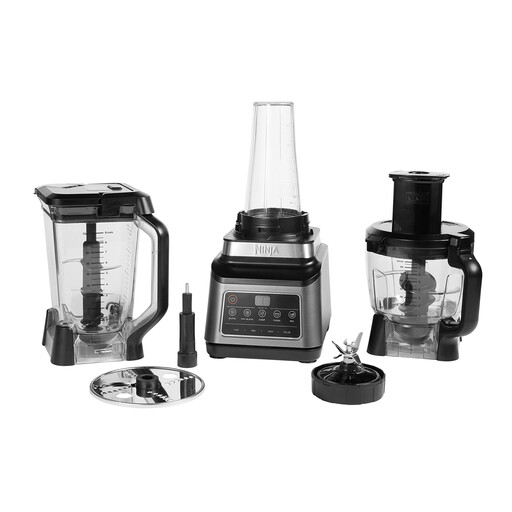
The BN800UK combines a processor with separate blending vessels for cooks who will use it for sauce and other preparation tasks.
These processors cover conventional batch preparation and multi-use cooking. Compare the capacity of the vessel you would use for peanut sauce with your usual recipe before choosing among them.
 No image available
Consider this model if your usual liquid-sauce batch fits within its stated 1.5L liquid working capacity and you want pulse control for preparation.
Kenwood GB lists a 3L bowl, knife blade and dishwasher-safe components for the FDP65.180SI. The product title specifies 1000W and six accessories; the 3L bowl figure is not its liquid limit.
 No image available
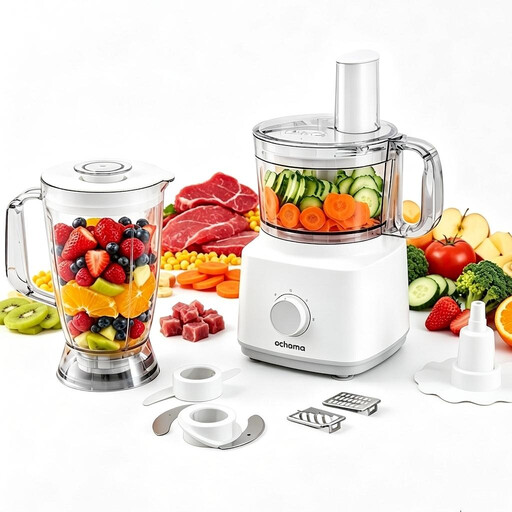
Consider this processor if you want sauce preparation alongside chopping, slicing and grating.
Its listed 1.8L figure describes bowl capacity, not a liquid working limit. Check the permitted liquid volume and controls against your batch size and peanut-sauce method before buying.
 No image available
Consider this combination if you also expect to use a separate blender jug or personal cup for other recipes.
The listing specifies a 1.8L processor bowl, 2.1L blender jug, 700ml cup and five programmes. Check the processor bowl’s liquid working limit for your batch. The product warning cautions against overly thick mixtures that may jam, so check that your intended peanut-sauce method is suitable.
Use the stated liquid working capacity when you plan to process a liquid sauce in the bowl. Kenwood GB lists a 3L bowl but a 1.5L liquid working capacity for the FDP65.180SI; compare the latter with your usual batch rather than treating the bowl size as the liquid limit.
Not necessarily: a food processor can be used to process a peanut base, with stopping and scraping down as the mixture thickens. Cuisinart’s peanut-butter method uses those steps. A processor-and-blender combination makes more sense if you will also use its jug for other liquid blends; check the instructions for your chosen peanut-sauce mixture.
Cool cooked sauce promptly and put it in the fridge within one to two hours, in line with GOV.UK guidance for cooked food. Dividing a large batch into smaller portions can help it cool more quickly.
Check the terms for the exact model, including what its motor guarantee covers and whether spare parts are available. Magimix UK lists a 30-year motor guarantee and 30-year spare-parts availability for the 5200XL; confirm the current terms before choosing it on that basis.