Texture-control cooks
If you want roughly chopped cooked beetroot rather than a smooth purée, prioritise a pulse or momentary setting. Use short bursts and inspect the texture between them.


For cooked beetroot you want chopped rather than puréed, look for a chopping blade and pulse or momentary control, then stop to inspect the texture. Match the bowl’s usable or working capacity to the quantity you will prepare rather than relying on its headline size; check the exact model’s manual before processing beetroot that is still warm.
If you want roughly chopped cooked beetroot rather than a smooth purée, prioritise a pulse or momentary setting. Use short bursts and inspect the texture between them.
If beetroot is one of several dishes you are preparing, check how much the bowl can hold during use. A total-capacity figure is not necessarily the working capacity for your batch.
If the processor will spend most of its time in a cupboard, a compact model may be easier to store. Decide whether its smaller bowl makes extra batches acceptable when guests come round.
Start with control over the beetroot’s texture, then consider the quantity you need to chop and where the processor will live between meals.
| Concern | What to check | Who this matters to |
|---|---|---|
| Chopped texture | Look for a chopping blade and pulse or momentary control; inspect the beetroot between short bursts. | I want distinct pieces for serving, not a purée after a few seconds too long. Around 42% of consumers put texture control first. |
| Batch capacity | Compare usable or working capacity where stated, and check the model’s fill guidance for the amount you intend to chop. | When beetroot is part of a larger dinner-party spread, I would rather avoid many small batches. Around 33% of consumers prioritise batch capacity. |
| Storage | Check the machine’s dimensions and where its accessories will go, alongside the number of batches a smaller bowl would require. | I host occasionally but need to put the processor away afterwards, even if that means chopping in batches. Around 17% of consumers make storage their primary concern. |
| Other prep tasks | Check which discs and bowls come with the exact variant if you also plan to slice, grate or prepare other ingredients. | I would use the same machine for dishes beyond the beetroot, so the included tools matter to me. Around 8% of consumers put wider meal-prep use first. |
Cooked beetroot is soft, so a long run gives you less opportunity to stop at the texture you want. Kenwood describes pulse as short, user-controlled bursts.
Use brief bursts, then stop and inspect the pieces before continuing.
Capacity labels differ between models. Magimix lists both total and working capacity for its 4200XL and 5200XL, while Bosch lists usable volume for the MultiTalent 3 MCM3501MGB.
Compare figures with the same meaning where possible, and check the exact model’s fill guidance against your beetroot quantity.
A compact processor can suit a small side dish, but a larger dinner-party quantity may need several runs through the bowl.
Choose compact storage if it matters most to you; otherwise, compare the bowl guidance for a larger model before deciding how much prep it can handle at once.
Guidance for ingredients that are still warm depends on the exact processor and its instructions.
Read the model’s manual before processing warm beetroot, and let it cool if the instructions require that.
Magimix UK lists food processors including the 3160, 4200XL and 5200XL, with different bowl arrangements and capacities.
KitchenAid UK lists food processors in several bowl sizes, including 2.1 L and 3.1 L models with chopping blades and pulse action.
Kenwood GB’s MultiPro Go FDP23.130GY is a compact food processor with a stated 1.3 L bowl.
Bosch GB lists the MultiTalent 3 MCM3501MGB with 2.3 L usable volume and chopping, grating and mixing functions.
These choppers and food processors offer different bowl arrangements for chopping vegetables. Compare their controls, usable fill guidance and storage needs against your dinner-party quantity; check the exact manual if the beetroot is still warm.
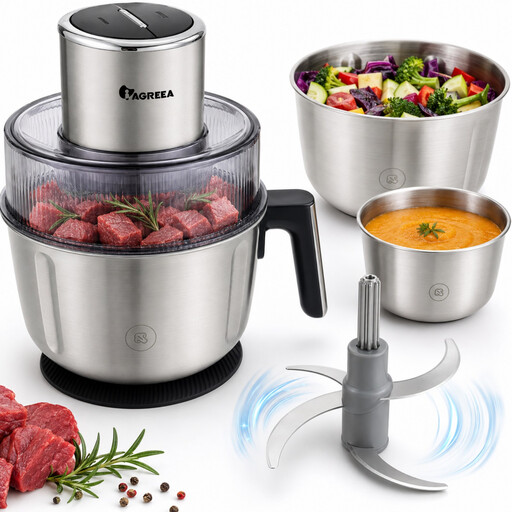 Image unavailable
Consider this if you want separate bowls for vegetable prep and can pause to check the beetroot’s texture.
The title lists three 304 stainless-steel bowls of 2.5 L, 2.2 L and 1.8 L, two speeds and triple-curved blades. Follow the stated limit of up to 30 seconds per pulse cycle, and check the manual for fill and warm-ingredient guidance.
 Image unavailable
Consider this if you want a processor bowl for chopping and a separate blender jug for other preparation.
The title specifies a 2 L processor bowl and a 1.8 L blender jug; their capacities do not combine into one chopping bowl. Check the processor bowl’s fill guidance and the manual’s instructions for warm ingredients.
 Image unavailable
Consider this larger-bowl model if you want pulse control while preparing beetroot alongside other dishes.
The title lists a 1000 W motor, a 3 L bowl, six accessories and dishwasher-safe attachments. Check the manual’s working-fill guidance for your beetroot batch and confirm which chopping tool comes with the exact listing.
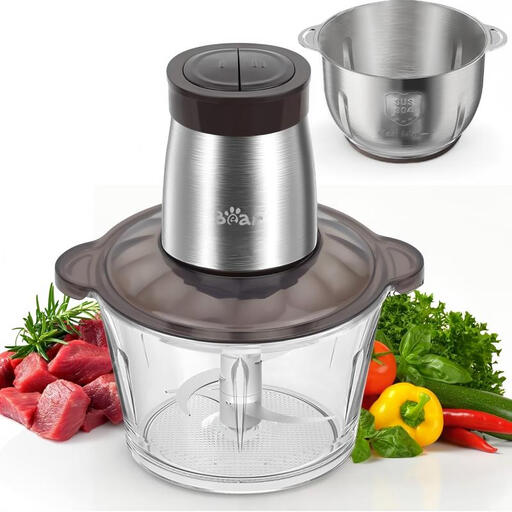 Image unavailable
Consider this if separate bowls suit your preparation, but confirm how you would stop and restart chopping to control the beetroot’s texture.
The title lists two speed settings and four stainless-steel blades; the 2 L glass bowl and 1.8 L 304 stainless-steel bowl are separate. Check the exact instructions for operating time and warm ingredients before use.
 Image unavailable
Consider this for a 2 L chopping bowl, provided its controls let you stop and inspect the beetroot at the texture you want.
The title lists a 300 W motor, two speeds and 304 stainless-steel blades. Check how its controls work, and follow the stated operating and rest instructions as well as the manual’s guidance for warm ingredients.
Use brief bursts with a pulse or momentary setting and check the texture between them. Kenwood describes pulse as short, user-controlled bursts; stop once the pieces are the size you want rather than leaving the motor running continuously.
Choose according to your beetroot quantity and how many batches you are willing to process, rather than a single litre figure for every dinner party. Compact 1.3–1.7 L bowls may mean more batches, while a larger stated bowl gives you another option to consider; check usable or working capacity and the exact model’s fill guidance before assuming it will hold your full batch.