
24/7 Customer Support

Free returns

Same-day & Next-day Delivery

Quality Guaranteed

Unlock Your Welcome Offers: FREE Delivery | Up to 80% OFF | Free 30-day JoyPlus trial
Download the APP
A food processor and blender can replace several single-purpose appliances, but the wrong model may quickly become an expensive cupboard resident. UK shoppers often compare wattage and accessory counts first, while overlooking capacity, cleaning requirements and the difference between a processor bowl and a blender jug.
This guide explains the practical specifications to check, highlights common buying traps and matches selected appliances to different household needs.
A larger wattage figure can indicate greater motor input, but it does not automatically guarantee smoother blending or better chopping. Blade design, bowl shape, speed control and the type of food being processed also affect results.
A powerful food processor is useful for tasks such as dough mixing, shredding or processing firm vegetables, but the appliance still needs suitable attachments and sensible operating intervals. Check the stated power alongside the included tools rather than treating wattage as the only performance measure.
A 2-litre bowl may not safely process 2 litres of every ingredient. Dry foods, liquids and mixtures that expand may each have different maximum-fill limits. A family-size food processor is useful for batch preparation, but overfilling can cause spillage, uneven processing and unnecessary strain on the motor.
Look for separate figures when available, such as processor bowl capacity and blender jug capacity. A 1.8-litre bowl, for example, may suit family meal preparation, while a smaller beaker is more practical for a single smoothie.
A multifunctional food processor may include chopping blades, slicing discs, shredders, beaters and separate jugs. These accessories can save time during cooking, but they also require storage and cleaning.
Check whether detachable parts are dishwasher-safe, whether the base can be wiped clean and whether the appliance will fit beneath your kitchen cupboards. “Easy to clean” should mean removable food-contact parts and a clear cleaning process, not simply a smooth exterior.
For one or two people, a compact food preparation appliance may be sufficient for sauces, dips and small chopping tasks. Families and meal-prep enthusiasts should consider a bowl of around 1.8 to 3 litres, while also checking the maximum working capacity.
If smoothies are a priority, compare the blender jug capacity separately. A processor bowl is designed for chopping, slicing and mixing, whereas a jug is generally shaped for liquid circulation and blending.
Models in this category range from compact 250W appliances to larger 1,200W or 1,300W-max systems. Lower-powered appliances can be suitable for lighter everyday tasks, including soft fruit, sauces and small quantities. Higher-rated motors may be more appropriate for larger batches and firmer ingredients, subject to the manufacturer’s instructions.
Variable speed and pulse controls are valuable because they allow more control over texture. Automatic programmes can simplify repeated recipes, but manual control remains useful for chopping onions, making breadcrumbs or preparing chunky salsa.
A 2-in-1 food processor typically combines a processor bowl with a blender jug. More extensive sets may add a vegetable slicer and shredder, dough tool, whisk, grinder jar or meat grinder attachment.
Before buying, check:
Sharp blades should always be handled with care. Switch off and unplug the appliance before changing attachments or cleaning, and never immerse the motor base in water.
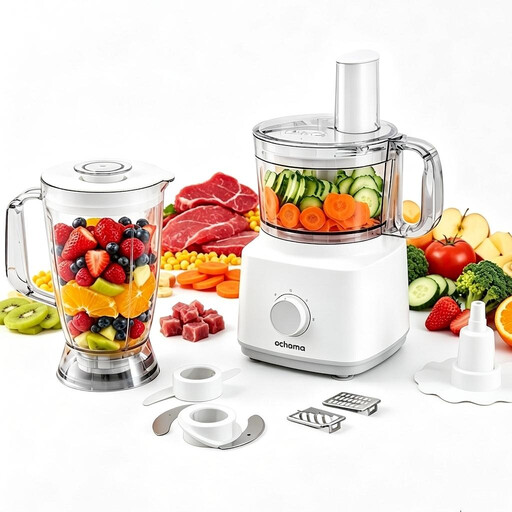
Why This Fits Their Persona: A practical starting point for UK households wanting chopping, slicing, grating and puréeing without buying several separate appliances.
The 1.8-litre bowl gives a clearly stated capacity, while detachable parts support a simpler cleaning routine. Users should still observe the stated maximum fill line.
750W motor; processor and blender functions; chopping, slicing, grating and puréeing accessories.

Why This Fits Their Persona: Suits cooks who value integrated measuring, structured programmes and a broad accessory set for regular meal preparation.
Its 3-litre processor bowl and 1.5-litre blender jug are specified separately, reducing confusion when planning batch recipes.
1000W motor; integrated EasyWeigh scale; variable speed and pulse; 13 listed accessories.
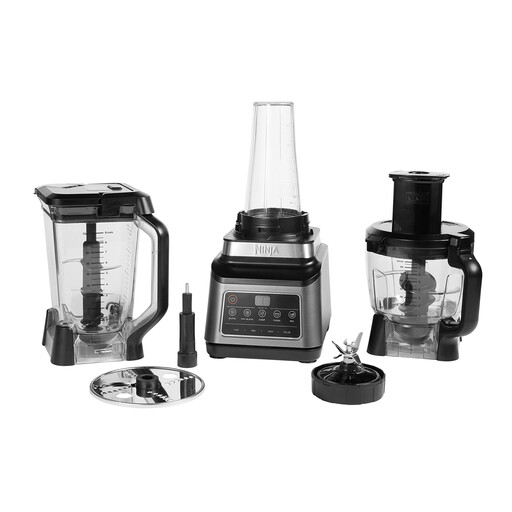
Why This Fits Their Persona: A suitable option for households preparing dips, doughs, smoothies, sauces and larger drinks, with separate containers for different portions.
The system provides stated capacities for a 1.8-litre processor bowl, 2.1-litre jug and 700ml cup, rather than presenting one figure for every task.
1200W motor; five automatic programmes; slicing and grating disc; dishwasher-safe parts.
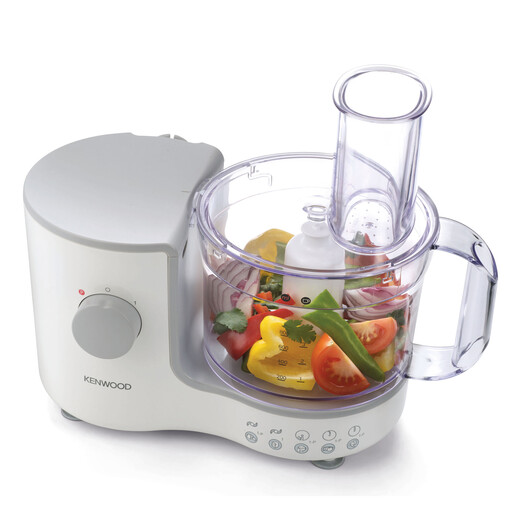
Why This Fits Their Persona: Its compact dimensions and cord storage are useful for flats, smaller worktops and cooks who mainly prepare sauces, vegetables and dressings.
The 1.4-litre bowl and 400W motor are clearly specified, helping buyers choose according to realistic portion sizes rather than inflated expectations.
Single speed plus pulse; shredder disc; safety interlock; dishwasher-safe parts; stated 27.5 × 15 × 17.5cm dimensions.
We have compiled a complete, real-time list of products that fully satisfy these strict selection criteria and UK safety regulations.
It can be worthwhile if you regularly chop, slice, shred, purée and blend. One appliance may reduce worktop clutter, but combination models can have more parts to store. Choose a 2-in-1 food processor when you will use both functions regularly; otherwise, a dedicated kitchen blender or food chopper may be more practical.
Lifespan varies according to construction, frequency of use, cleaning and whether the motor is operated within its stated limits. Avoid overfilling, follow recommended rest periods and store blades safely. A clear warranty, replacement-part information and proper UK support can also be useful considerations before purchase.
Running cost depends on the appliance’s wattage and how long it operates. A simple estimate is:
Power in kilowatts × operating time in hours × your electricity tariff.
For example, a 750W appliance uses 0.75kW while operating. Short pulse cycles generally mean limited active running time, although your household tariff determines the actual cost.