
24/7 Customer Support

Free returns

Same-day & Next-day Delivery

Quality Guaranteed

Unlock Your Welcome Offers: FREE Delivery | Up to 80% OFF | Free 30-day JoyPlus trial
Download the APP
A food processor can reduce chopping, slicing, mixing and blending time, but choosing the wrong one may leave you with a bulky appliance, unsuitable bowl capacity or accessories that spend most of their time in a cupboard. Marketing often focuses on motor wattage and the number of functions, while practical details such as cleaning, storage and operating limits receive less attention.
Before buying a food processor, watch for these common pitfalls:
Motor ratings in the available range include 300W mini food processors, 350W electric food choppers, 400W compact models and larger 1,000W or 1,200W systems. A compact motor may suit herbs, onions, garlic, sauces and small batches. Tougher ingredients, dough and larger quantities generally call for a model with a stronger motor and an appropriate blade or tool.
Speed control is also important. A pulse function gives short bursts, helping you control texture rather than producing an unnecessarily smooth mixture. Some choppers use two speeds, while larger machines may combine a dial, manual settings and automatic programmes.
Always follow the supplied instructions. For example, some compact choppers specify operation for no more than 30 seconds continuously, followed by a rest period. This matters when preparing several batches of meat or vegetables.
A mini food processor with a 350ml bowl is convenient for small households, dressings, dips and quick ingredient preparation. A 1.4L or 1.8L bowl is more suitable for everyday family cooking, while a 3L food processor can support batch preparation and larger recipes.
Bowl material affects handling and storage. Plastic is relatively light, glass can resist odours and scratches, and 304 stainless steel bowls are coating-free and suitable for chopping ingredients such as meat and vegetables. Stainless steel also prevents you from seeing the food while processing, so pulse control becomes more important.
If you prepare raw meat and vegetables in the same appliance, separate bowls can be useful. They may help reduce flavour transfer, but each bowl and blade still needs thorough cleaning between ingredients.
A basic vegetable chopper may include one blade, while a multifunctional food processor can add slicing, shredding, grating, whisking, kneading and blending tools. A blender and food processor combination may be useful when you regularly make smoothies, sauces, batters and chopped foods, but it usually requires more storage space.
Check whether removable parts are described as dishwasher-safe. This should apply to specific components such as the bowl, lid, blade or discs—not necessarily the motor base. Sharp blades should be handled carefully, and the appliance should be unplugged before changing attachments or cleaning.
For smaller UK kitchens, nesting bowls, cord storage and a compact footprint can make a larger appliance easier to live with.
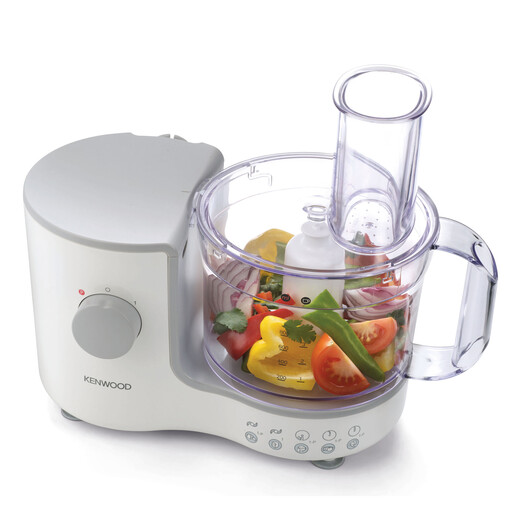
Why This Fits Their Persona: Its 1.4L bowl and compact dimensions suit smaller kitchens, flats and shoppers wanting one appliance for routine preparation.
It states a 1.4L bowl, one speed plus pulse and dishwasher-safe parts, making the specification easier to assess than vague multifunction claims.
400W motor, chopping blade, shredder disc, emulsifying function, cord storage and safety interlock.

Why This Fits Their Persona: A 3L bowl and integrated scale suit organised batch cooking, baking and family meal preparation.
The eight accessories and 3kg scale capacity are specified clearly, so you can judge whether the extra tools justify the required storage space.
1000W motor, integrated 1g-increment scale, slicing, shredding, whisking, mixing and kneading tools.
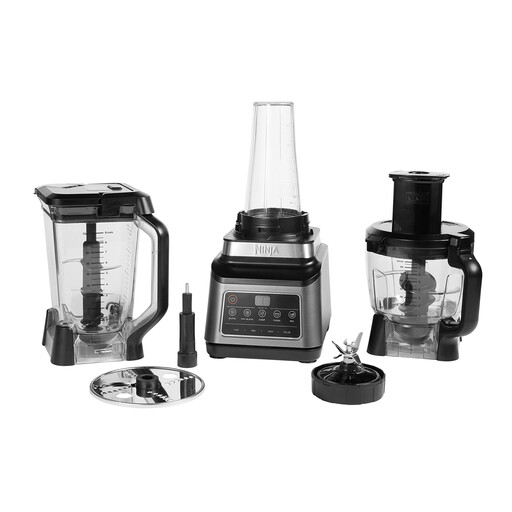
Why This Fits Their Persona: Households making doughs, smoothies, sauces and larger drinks may value the processing bowl, jug and personal cup in one system.
The separate 1.8L processor bowl, 2.1L jug and 700ml cup make the different capacities clear instead of presenting one inflated capacity figure.
1200W motor, five automatic programmes, chopping blade, slicing/grating disc, dough tool and dishwasher-safe parts.

Why This Fits Their Persona: Its 350ml bowl is suited to herbs, onions, garlic, nuts, breadcrumbs, dips and sauces without occupying the worktop like a full-size machine.
The small bowl makes its intended use clear, while the 30-second operating warning helps prevent unsuitable continuous use.
300W motor, two speeds plus pulse, stainless steel blade, non-slip feet and dishwasher-safe bowl and blade.
We have compiled a complete, real-time list of products that fully satisfy these strict selection criteria and UK safety regulations.
It can be worthwhile if you regularly chop vegetables, prepare sauces or make small batches. A mini food processor or compact 1.4L model takes less storage space than a full-size multifunctional food processor. Choose a larger model only if you expect to use its extra bowl capacity and attachments.
There is no universal limit. Follow the specific product manual. Some listed choppers state a maximum of 30 seconds per cycle, while another specifies up to 40 seconds followed by a two-minute rest. Allowing the motor to cool between cycles can help avoid overheating and supports safer operation.
Some models can perform both roles. A food processor with blender accessories may chop, slice, shred and purée, while a dedicated jug or cup can handle drinks and liquid mixtures. However, capacity, blade design and instructions differ, so check whether the appliance is specifically supplied for blending before purchase.