Choose a food processor by its stated dough limit and dough-capable tool, not its bowl size alone. If you want to mix a substantial party batch in fewer rounds, compare your recipe quantity with a model-specific dough or pastry capacity; if storage matters more, a compact processor may suit smaller batches, provided its instructions cover the dough you plan to make.
Who is this for?
Party-batch cracker bakers
You want enough dough for guests without mixing more batches than necessary. A model-specific dough limit is more useful for that decision than bowl volume alone: Bosch and Magimix publish different dough or pastry capacities for individual models.
Texture-conscious cracker makers
You want a documented dough tool and a method suited to brief mixing, rather than assuming a chopping blade is the right tool. Magimix’s shortcrust-pastry instructions, for example, say to stop once the dough forms a ball; follow the instructions for your own machine and recipe.
Occasional bakers with limited storage
You would rather store a smaller appliance after the party and can make a modest quantity at a time. Kenwood lists the compact MultiPro Go FDP23.130GY with a 1.3 L bowl and a separate 0.75 L working dry capacity, so its bowl label alone cannot settle your batch size.
What matters when mixing party dough?
Work out how much dough your recipe makes, check the exact model’s dough tool and operating limit, then weigh storage and clean-up against how often you will use the processor afterwards.
| Concern |
What to check |
Who this matters to |
| Party-batch capacity |
Compare your planned dough quantity with the exact model’s dough limit; do not treat bowl litres as a dough-weight rating. |
If I am making crackers for guests, I want to know whether the dough can be mixed in a manageable number of batches. Around 36% of consumers put batch capacity first. |
| Dough tool and method |
Check the included tool and the model’s dough instructions, including when to stop mixing. |
For a short, cheese-rich dough, I care about using a documented method rather than relying on chopping features. Dough handling comes first for around 29% of consumers. |
| Storage and small batches |
Check external dimensions, usable capacity and whether your recipe needs splitting. |
If this is an occasional baking task, I would rather store a compact machine and mix more than once if necessary. Around 21% of consumers prioritise that trade-off. |
| Clean-up and later use |
Check which supplied accessories can be washed as you intend and which other functions you would use. |
After the party, I want the processor to earn its storage space without leaving awkward parts to clean. Continued use and clean-up are the primary concern for around 14% of consumers. |
Mistakes to avoid
-
Treating bowl size as the dough limit
Bosch lists a 3.9 L bowl for the MultiTalent 8 MC812S734G but a separate maximum dough content of 1.5 kg. Filling a bowl to its stated volume is not the same as staying within its dough limit.
Compare the finished recipe quantity with the exact model’s dough rating. Where that rating is unavailable, consult its instructions rather than assuming the whole party batch will fit.
-
Using wattage to judge batch size
Kenwood lists a 900 W motor for the compact MultiPro Go, alongside a 0.75 L working dry capacity. Motor power and usable bowl capacity describe different things.
Check the operating limit and dough method before using wattage as a supplementary comparison.
-
Assuming every variant includes the same dough accessory
Kenwood specifies a dough tool for the MultiPro Express FDP65.180SI, but an accessory pictured or described for a wider product range need not come with every variant.
Check the in-the-box list against the exact model number before ordering.
Brands to consider
Bosch
Relevant if you want to compare published dough limits across differently sized MultiTalent models.
- Bosch lists a maximum dough content of 0.8 kg for the MultiTalent 3 MCM3501MGB and 1.5 kg for the MultiTalent 8 MC812S734G.
- Those limits apply to the named models; they do not establish how a particular cheese cracker recipe will mix.
Magimix
Relevant if you want multiple bowls, a dough blade and separate published capacities for pastry and bread dough.
- Magimix lists pastry capacities of 1 kg for the 4200XL and 1.2 kg for the 5200XL.
- Use the pastry figure as the closer reference for cracker-style dough; do not substitute the models’ separate bread-dough figures or assume either is a tested cheese-cracker limit.
Kenwood
Relevant if you are deciding between a compact processor and a larger model with a listed dough tool.
- Kenwood lists a dough tool, 3 L bowl and 1.5 L working dry capacity for the MultiPro Express FDP65.180SI; the MultiPro Go FDP23.130GY has a 1.3 L bowl and 0.75 L working dry capacity.
- Working dry capacity is not a maximum dough weight. Match the recipe to the instructions for the exact model.
Food processors on Joybuy
These food processors cover different bowl sizes and combinations of food-preparation functions. For birthday-party cracker dough, check each exact model’s dough attachment, method and permitted batch quantity before deciding how many batches you would need.
 No image available
Kenwood MultiPro OneTouch FDM73.850SS 3-in-1, 3 L
Consider this model if you also want integrated weighing and a blender; check its kneading instructions and permitted dough quantity against your cracker recipe.
The product name specifies a 3 L bowl, 1000 W motor, 13 accessories and a pulse function. Bowl volume does not establish its dough limit.
View on Joybuy
 No image available
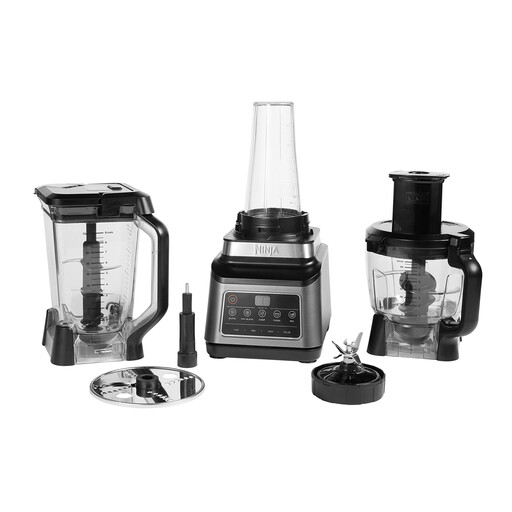
Ninja 3-in-1 Auto-iQBN800UK Food Processor, 1.8 L Bowl
This processor-and-blender combination may appeal if you will use its other containers after the party. Confirm the supplied dough tool, follow its instructions and check the permitted batch size; the listed guidance cautions against overly thick mixtures that could jam the blades.
The product name specifies a 1200 W motor, 2.1 L jug, 700 ml cup and five automatic programmes. None of those figures is a dough-weight limit.
View on Joybuy
 No image available
Kenwood MultiPro Express FDP65.180SI, 3 L
Consider this model if a listed dough tool matters alongside other food-preparation tasks. Compare your recipe with the model’s dough instructions rather than using its dry-capacity figure as a dough limit.
Kenwood lists a 3 L bowl, a dough tool and a separate 1.5 L working dry capacity for the FDP65.180SI. The product name also specifies a 1000 W motor and six accessories.
View on Joybuy
 No image available
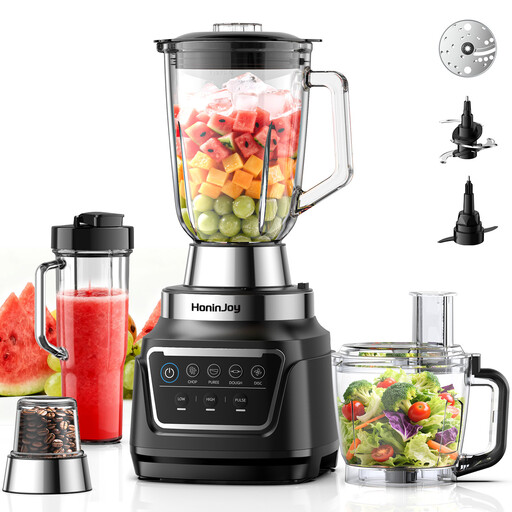
HoninJoy All-in-One 10-in-1 Blender & Food Processor
This combination is worth considering if you also want its chopping, grinding and blending functions. Before choosing it for crackers, check which supplied tool and container its dough instructions specify and how much dough they permit.
The product name describes dough making and dishwasher-safe parts, but those descriptions do not establish a batch quantity for this recipe.
View on Joybuy
Common questions
Can I make cheese cracker dough in a food processor?
Yes, if the exact model has a documented dough-capable tool or method that suits your recipe and batch size. Magimix’s shortcrust-pastry method says to stop processing once the dough forms a ball; that is useful method guidance, not a result guaranteed for every cracker recipe or processor.
Should I compare bowl litres or dough capacity?
Use the manufacturer’s dough quantity when one is stated for the exact model. Bosch lists the MultiTalent 8 MC812S734G with a 3.9 L bowl and a separate 1.5 kg maximum dough content. If you only have a bowl or working-capacity figure, consult the model’s dough instructions before planning a full party batch.
Will a compact processor handle enough dough for a birthday party?
It may, if your recipe fits its permitted batch size or you are willing to mix in rounds. Kenwood lists a 1.3 L bowl and 0.75 L working dry capacity for the compact MultiPro Go FDP23.130GY; neither figure confirms a maximum dough weight.
Should I reject a processor marked CE rather than UKCA?
Not solely on that basis if it will be supplied in Great Britain. GOV.UK guidance dated 21 August 2026 says CE marking continues to be recognised alongside or instead of UKCA marking for many product types placed on the Great Britain market. Check the requirements and product documentation for the specific appliance and delivery destination; Northern Ireland follows different market processes.


