Chunky-salsa cooks
If you want distinct mango, onion and chilli pieces, look for pulse control so you can stop and inspect the bowl. KitchenAid’s published salsa method uses short pulses with a multipurpose blade.


Choose a food processor with a pulse function and a multipurpose chopping blade if you want recognisable pieces of mango and vegetables: short bursts let you stop and inspect the texture. Match the bowl arrangement to your usual batch, and choose extra bowls or blender components only if you will use them for other preparation. Check the exact model’s cleaning instructions and UK plug and fuse details before buying.
If you want distinct mango, onion and chilli pieces, look for pulse control so you can stop and inspect the bowl. KitchenAid’s published salsa method uses short pulses with a multipurpose blade.
If you prepare salsa for several people or use the machine for other meal preparation, consider the main bowl’s capacity, whether a smaller bowl is supplied and where the attachments will go.
If salsa and similar dips are your main jobs, check the appliance’s dimensions and cleaning instructions before taking on extra bowls and attachments.
For mango salsa, decide how much control you want over the texture, then choose a bowl arrangement for your usual serving size. Storage and washing requirements matter most when the processor will be used only occasionally.
| Concern | What to check | Who this matters to |
|---|---|---|
| Salsa texture | Confirm pulse control and an included multipurpose chopping blade; stop between bursts to inspect the mixture. | If I want pieces of mango and vegetables to remain visible, I need to control each chopping burst. Around 50% of consumers would put texture control first. |
| Batch size and other tasks | Compare work-bowl capacities and check whether a smaller bowl is supplied; a litre rating does not establish a suitable minimum batch. | When I make salsa for a gathering and prepare other foods too, I need enough room without losing a useful option for smaller jobs. Batch size and versatility would come first for around 30% of consumers. |
| Storage and cleaning | Measure the intended storage space and read the exact model’s instructions for washing bowls and accessories. | If I make salsa only now and then, I want the appliance to fit my cupboard and be straightforward to wash. Around 20% of consumers would prioritise storage and cleaning. |
A wattage figure does not tell you whether you can stop between chopping bursts or whether the right blade is supplied. KitchenAid’s salsa method uses repeated short pulses to control the chop.
Check for a pulse function and an included multipurpose blade before comparing capacity and accessories.
A large bowl gives you room for more ingredients, but its stated capacity does not establish how it handles a small salsa quantity.
Choose around your normal serving size and consult the exact model’s guidance on small batches. If you regularly switch between quantities, consider whether you would use a secondary bowl.
Cleaning instructions can still set limits for plastic accessories. Magimix Support recommends temperatures no higher than 50°C for its dishwasher-safe processor accessories.
Follow the exact model’s temperature, rack-placement and detergent instructions, and keep the motor base out of the dishwasher.
Cleaning outside the maker’s stated conditions can deteriorate plastic accessories over time.
Reviews alone do not establish who supplies an appliance or whether its electrical fittings suit your kitchen. Electrical Safety First advises buying food processors from a reputable retailer and checking for a standard UK three-pin plug and fuse.
Confirm the seller, plug and fuse details, and the documentation for the exact model before ordering.
KitchenAid offers 2.1 L and 3.1 L food processors with pulse action; its own published salsa recipe illustrates using a multipurpose blade in short bursts.
Magimix offers multi-bowl processors for cooks who alternate between smaller quantities and broader preparation jobs.
Ninja offers food processors and processor-blender combinations for households that want chopping as well as other preparation functions.
These choices include processor-blender combinations, a larger food processor and food choppers. Compare their bowl arrangements and controls against the batch size and salsa texture you want; a chopper may not cover the wider tasks of a full food processor.
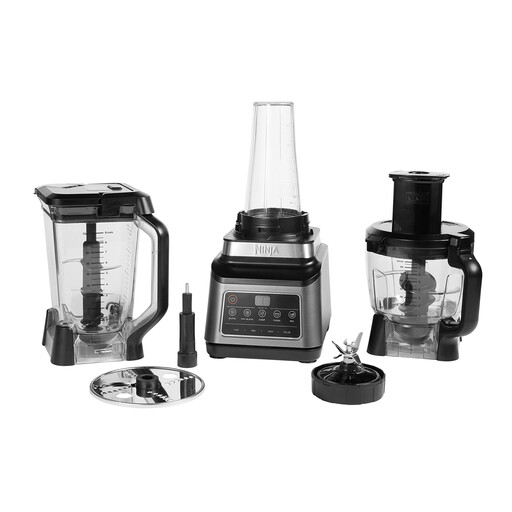 No image available
Consider this combination if you want to prepare salsa and also use separate blending vessels for other recipes.
1200 W; 1.8 L processing bowl, 2.1 L jug and 700 ml cup. Check the exact model’s minimum-batch guidance for your usual salsa quantity.
 No image available
Consider its larger bowl if salsa is one of several food-preparation jobs, but check the manual before using it for a very small batch.
3 L capacity; 1000 W; eight accessories and an integrated digital scale. Check which accessories you would use and where you would store them.
 No image available
This processor-blender format is worth considering if you want a bowl for salsa and a separate blending option for other recipes.
750 W; 2 L processor bowl and a stated 1.8 L blending capacity. Check the controls and the exact model’s guidance for your usual batch.
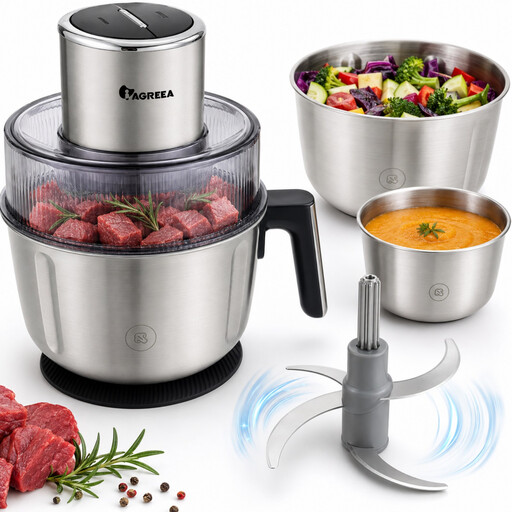 No image available
Consider a chopper if stopping between chopping bursts matters more to you than having the wider functions of a full food processor.
350 W; three nesting 304 stainless-steel bowls of 2.5 L, 2.2 L and 1.8 L; two speeds. Check the exact cleaning instructions before buying.
 No image available
The smaller bowl gives you another vessel choice for modest preparations. If precise chunky texture is your priority, confirm how the exact model’s controls let you stop and inspect the chop.
300 W; two glass bowls of 2 L and 0.6 L. This is a food chopper rather than a full food processor.
Use short pulses if you want visible pieces, stopping to inspect the mixture between bursts. KitchenAid’s published salsa method uses repeated pulses with a multipurpose blade; process further only if a smoother result is what you want.
Choose by your usual batch, not by the largest stated capacity. KitchenAid lists 2.1 L and 3.1 L processor models, while the Magimix 3160 has a 2.6 L main bowl and 1.2 L mini bowl; consult the exact manual for guidance on small quantities.
Follow the instructions for the exact bowl and model. Magimix Support says its processor accessories are dishwasher-safe but recommends temperatures no higher than 50°C for plastic parts, along with suitable rack placement and detergent; the motor base must stay out of the dishwasher.
Confirm the seller and the appliance’s plug and fuse details. Electrical Safety First advises buying from a reputable retailer and checking for a standard UK three-pin plug and fuse; keep the exact model information for future support.