Texture-focused cooks
If you want pieces for a salad or filling rather than a smooth purée, look for a chopping blade and pulse control. Inspect the beetroot between short bursts so you can stop at the texture you want.


For cooked beetroot that you want in pieces rather than a purée, choose a processor with a chopping blade and pulse control. Short bursts let you inspect the texture as you go. Match the bowl’s working capacity to your usual portion: a small chopper takes less space, while a larger processor makes more sense if you regularly prepare batches or use its other attachments.
If you want pieces for a salad or filling rather than a smooth purée, look for a chopping blade and pulse control. Inspect the beetroot between short bursts so you can stop at the texture you want.
For one or two portions, a compact appliance may be easier to retrieve and store. Check that its usable capacity accommodates your usual amount, not just that the bowl looks small.
If beetroot is part of larger meals or regular preparation, compare working capacities and the attachments you will actually use. A larger processor also needs more storage space.
Start with the texture you want, then choose a usable capacity for your usual batch; storage and extra functions matter most once those needs are covered.
| Concern | What to check | Who this matters to |
|---|---|---|
| Chopped texture | Confirm that the exact model includes a chopping blade and pulse control. | If I want distinct pieces for a salad, I need to stop before soft beetroot turns smooth. Around 36% of consumers put texture control first. |
| Batch capacity | Compare working capacity with total bowl volume and follow the manual’s filling limits. | When preparing several portions, I want to avoid processing beetroot in too many separate batches. For around 29% of consumers, capacity is the primary concern. |
| Storage and cleaning | Measure your storage space and check which removable parts the manual says are dishwasher safe. | For a quick, small portion, I want an appliance I can put away and clean without much fuss. Around 21% of consumers prioritise storage and cleaning. |
| Other preparation tasks | Check whether the exact model includes the slicing or grating attachments you intend to use. | If beetroot is only one of my cooking tasks, I want the extra tools to earn their cupboard space. Wider functions come first for around 14% of consumers. |
Wattage does not tell you how easily you can stop at a coarse chop when processing soft cooked beetroot.
Check for a chopping blade and pulse setting on the exact model, then inspect the texture between short bursts.
Total bowl size and working capacity can differ. Magimix lists the 4200XL at 3L total capacity but 1.3L working capacity; Kenwood lists a 1.3L bowl and 0.75L working capacities for the MultiPro Go Blend.
Compare the stated working limit with your usual batch before choosing a size.
Slicing and grating discs produce different cuts; they do not take the place of a chopping blade when you want rough pieces.
Choose additional tools for preparation jobs you regularly do, rather than for the beetroot-chopping task alone.
Extra attachments also take space and add parts to clean.
Returns for a change of mind and remedies for faulty or misdescribed goods are different matters. GOV.UK describes cancellation rights for qualifying online orders, while Coventry City Council Trading Standards advises that faulty goods can qualify for a refund in most cases within 30 days.
Keep the listing and order details, check the seller’s terms before ordering, and contact the seller if the processor arrives faulty or not as described.
Its compact FP120A and MultiPro Go range illustrate different combinations of chopping tools, discs and bowl sizes.
Its Mini Prep Pro and Easy Prep Pro offer a choice between a small chopper and a processor with separate bowl sizes.
The 4200XL is a larger processor to consider when beetroot is one of several regular preparation tasks.
The 5KFP1319 is a larger-format option for cooks who also expect to use slicing or shredding tools.
Its food-processor range offers different bowl sizes for comparing portion needs.
These choices span small choppers, a compact processor and larger multi-function machines. For cooked beetroot, compare each model’s chopping attachment, pulse control and usable capacity before choosing by bowl size alone.
 No image available
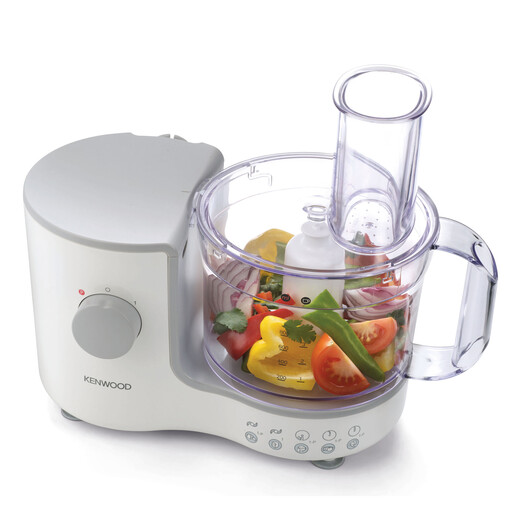
Consider this for smaller portions when you want a chopping blade and pulse control; Kenwood specifies both for the FP120A.
The listed variant is 400W and has a 1.4L bowl. Check its working limit against your usual batch.
 No image available
Consider the different bowl sizes if your portion size changes, but confirm pulse operation and the usable filling limits for cooked beetroot.
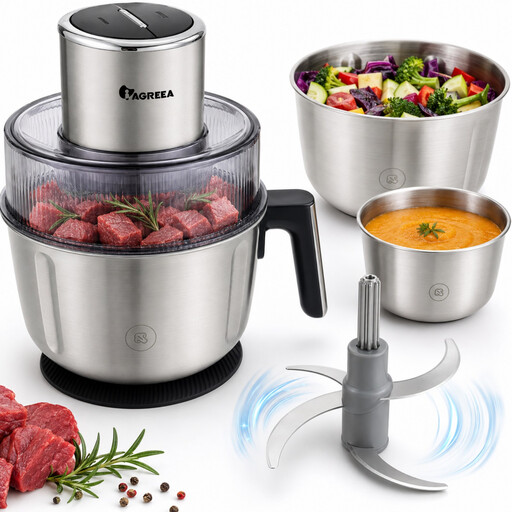
The listed 350W model has 1.8L, 2.2L and 2.5L 304 stainless-steel bowls, two speeds and triple-curved blades. Check the manual before putting parts in a dishwasher.
 No image available
The 350ml bowl is a small-portion choice; a larger beetroot batch may need several rounds. Confirm that its controls give you the short bursts you want for chopped pieces.
The listed model is 300W with two speeds and a dishwasher-safe bowl. Follow its operating instructions when processing.
 No image available
Consider the separate blender jug if you will use it for other recipes; for chopped beetroot, check the processor’s supplied blade, pulse control and working capacity.
The listed 750W model has a 2L processor bowl and a 1.8L blender jug. Consult the manual for cleaning instructions for each part.
 No image available
For regular preparation beyond beetroot, check that the supplied chopping attachment and usable bowl capacity fit your batches; the extra accessories also need storage.
The listed 1000W food processor and blender has integrated weighing, variable speed, pulse control and 13 accessories. Its 3L figure is bowl capacity, not a stated working limit.
Use a chopping or multipurpose blade if you want chopped pieces; use a disc when you want grated or sliced beetroot. For pieces, pulse briefly and check the texture between bursts rather than running the processor continuously.
Choose by your usual portion and the bowl’s stated working capacity, not its total volume alone. A small chopper can suit occasional portions, while larger batches may call for a larger processor or several rounds.
Follow the exact model’s cleaning instructions, because dishwasher suitability differs between parts. Handle the blade carefully, clear coloured residue promptly and keep the motor base out of water unless its manual expressly allows immersion.
A fault is not the same as a change-of-mind return: contact the seller about goods that are faulty or not as described, and check the applicable cancellation terms if you simply do not want the item. GOV.UK sets out cancellation rights for qualifying online orders; Coventry City Council Trading Standards says a refund for faulty goods is available in most cases within 30 days. A manufacturer’s warranty does not replace your rights against the seller.