Regular batch cooks
You prepare several portions of beetroot-based salads, dips, relishes or side dishes at once and want a working bowl capacity that keeps reloads manageable.


Choose a processor whose usable bowl capacity fits your usual prepared batch, with a chopping blade and pulse control so you can pause to inspect the beetroot. A larger working capacity can mean fewer loads but needs more storage space; a compact processor makes more sense if you are comfortable chopping in stages.
You prepare several portions of beetroot-based salads, dips, relishes or side dishes at once and want a working bowl capacity that keeps reloads manageable.
You want pieces of cooked beetroot rather than a smooth mixture, so being able to stop, inspect and pulse again matters more than leaving the machine running.
You prepare beetroot in batches occasionally and would accept several loads if the appliance is easier to put away between uses.
Start with the amount of prepared beetroot you need to process, then decide how much control and storage space you need. A bowl’s headline volume is not necessarily the volume you can use for a load.
| Concern | What to check | Who this matters to |
|---|---|---|
| Enough capacity per load | Compare the stated working or usable capacity with your prepared batch, including any added ingredients. | If I prepare several portions at once, I want to avoid repeatedly emptying the bowl. Around 42% of consumers put usable capacity first. |
| A chopped texture | Look for a chopping or multipurpose blade and pulse control so you can stop between bursts. | When I need distinct pieces for a salad or relish, I want time to inspect the texture before processing further. Roughly 33% of consumers prioritise that control. |
| Storage and clean-up | Check the appliance’s dimensions, working capacity and which parts are listed as dishwasher safe. | With little cupboard space, I would rather process modest amounts in stages than store a larger machine. About 25% of consumers make storage and clean-up their primary concern. |
Bosch states a 3.9 L bowl but 2.4 L usable volume for the MC812S734G; Kenwood states a 3 L bowl and 1.5 L working capacity for the FDP65.180SI. The larger headline figure is not the figure to use when planning a load.
Compare your usual prepared quantity with the relevant working or usable capacity, and split the ingredients when needed.
Soft cooked beetroot needs checking as you chop: a blade and pulse setting give you opportunities to pause before the pieces become finer than you want.
Use short pulses, inspect the pieces between bursts and stop when they reach the size your recipe needs.
Kenwood states a 1.3 L bowl and 0.75 L working capacity for the MultiPro Go FDP23.140GR. That working figure matters if you intend to prepare several portions at once.
Choose a compact processor if your loads are modest or you are willing to process the batch in stages.
Several loads also mean more time spent filling and emptying the bowl.
A large prepared batch still needs suitable containers and prompt chilling. A Food Standards Agency-commissioned literature review recommends refrigerating leftovers within two hours.
Have clean containers ready, refrigerate the finished food promptly and follow any storage instructions for the recipe.
The MultiTalent 8 MC812S734G is a large-bowl option for cooks planning substantial loads.
The MultiPro Express FDP65.180SI and compact MultiPro Go FDP23.140GR address different batch sizes and storage needs.
The 5KFP1319 combines a 3.1 L bowl with pulse action and a multipurpose blade for staged preparation.
The 4200XL is a multifunctional processor with a 3 L total bowl and supplied accessory storage box.
These processors and choppers offer different bowl sizes and controls for preparing cooked beetroot. Match the usable load to your recipe where a working-capacity figure is available; otherwise, check it before deciding whether you are comfortable processing in stages.
 Image unavailable
Consider this model if your prepared batch fits its stated 1.5 L working capacity and you want to check the chop between pulses.
The listing names a 1000 W motor, 3 L bowl, pulse function, six accessories and dishwasher-safe attachments. Kenwood GB specifies a knife blade and 1.5 L dry and liquid working capacities for the FDP65.180SI. Split larger prepared quantities into separate loads.
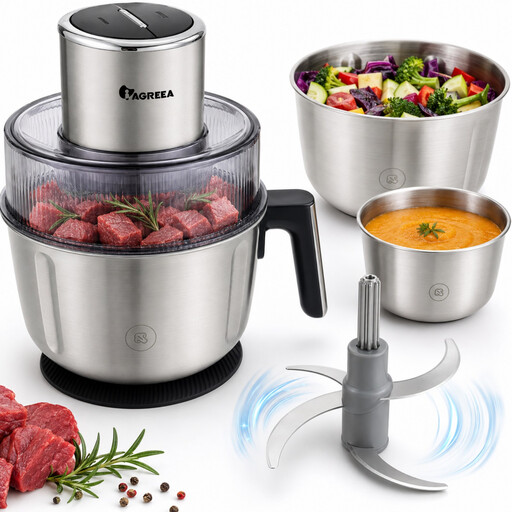 Image unavailable
The nesting bowls may suit cooks who want to put the chopper away between preparation sessions; check the usable load of each bowl against your beetroot batch.
The title lists a 350 W motor, two speeds, triple-curved blades and three 304 stainless-steel bowls of 2.5 L, 2.2 L and 1.8 L. Those bowl sizes are not working-capacity figures.
 Image unavailable
This combined processor and blender may suit a kitchen where both functions are useful. Check the processor bowl’s working capacity before planning a beetroot load.
The title specifies a 2 L bowl and also lists 1.8 L. Keep those figures distinct when checking which capacity applies to the part you intend to use.
 Image unavailable
Consider the integrated scale if you also weigh ingredients during meal preparation; confirm the bowl’s working capacity and the chopping blade supplied for your intended load.
The title lists a 1000 W motor, 3 L bowl, integrated digital scale and eight accessories. The 3 L figure describes the bowl, not a confirmed usable load.
 Image unavailable
This processor-and-blender combination is worth considering if you will use its additional preparation functions as well as chopping beetroot. Check the working capacity and supplied chopping attachment for your recipe.
The title lists a 1000 W motor, 3 L bowl, integrated weighing, variable speed, pulse control and 13 accessories. Its stated 3 L bowl size does not establish how much prepared beetroot fits in a load.
Choose by the working or usable capacity needed for your prepared recipe, not the headline bowl size. Bosch states 2.4 L usable volume within the MC812S734G’s 3.9 L bowl, while Kenwood states 1.5 L working capacity for the FDP65.180SI’s 3 L bowl; divide a larger quantity into loads that fit the relevant figure.
Use a chopping or multipurpose blade with short pulses, stopping to inspect the pieces before continuing. Kenwood GB lists pulse control and a knife blade for the FDP65.180SI, while KitchenAid UK lists pulse action and a multipurpose blade for the 5KFP1319; the result also depends on the beetroot’s softness, load size and any added liquid.
Transfer leftovers to clean containers and refrigerate them promptly. A Food Standards Agency-commissioned literature review recommends putting leftovers in the refrigerator within two hours; also follow storage instructions relevant to the finished dish.