Family batch-prep cooks
If you prepare dates alongside other ingredients for a family meal, working capacity matters more than the bowl size on its own. A smaller working load can mean splitting the preparation into batches.


For dates prepared alongside other family-meal ingredients, choose a processor by its stated working or usable capacity, and check that it has a chopping blade and a way to stop and inspect the texture. A compact model makes more sense when storage matters and you can accept smaller batches. Test a small quantity of dates before processing the rest of your recipe; bowl specifications do not establish the texture you will get.
If you prepare dates alongside other ingredients for a family meal, working capacity matters more than the bowl size on its own. A smaller working load can mean splitting the preparation into batches.
If your recipe calls for pieces rather than a smooth mixture, look for a chopping blade and a control that lets you stop and inspect the dates. Try a small batch to judge the result.
If you chop dates only occasionally, a compact processor may be easier to store. Check its working capacity and decide whether extra batches would be acceptable for a family meal.
Start with the amount you normally prepare and the texture your recipe needs. Then weigh storage and other meal-prep tasks against the possibility of processing dates in several batches.
| Concern | What to check | Who this matters to |
|---|---|---|
| Family batch capacity | Compare stated working dry capacity or usable volume with your usual batch; check that a chopping blade is included. | If dates are one ingredient in a larger meal, I want to avoid stopping repeatedly to empty the bowl. Around 36% of consumers put family-batch capacity first. |
| Chopped texture | Look for a chopping blade and pulse or another control that lets you stop and inspect the mixture. | When my recipe needs pieces, I want to check the dates before they become more finely processed. Texture control is the main concern for around 29% of consumers. |
| Compact storage | Check the working capacity and how the processor and its parts will be stored. | If I use dates occasionally and have limited cupboard space, I can accept preparing them in smaller batches. Roughly 21% of consumers prioritise compact storage. |
| Other prep jobs | Check which slicing, grating or dough accessories are supplied for the tasks you actually do. | If date chopping is only one part of regular meal prep, I want the supplied tools to cover the other jobs too. Broader versatility comes first for around 14% of consumers. |
A bowl’s nominal volume may differ from its stated working dry capacity. Kenwood, for example, lists a 3 L bowl but a 1.5 L working dry capacity for the MultiPro Express FDP65.180SI.
Use the working or usable figure where available, and compare it with the amount you normally prepare. Different manufacturers’ capacity terms may not describe identical measurements.
Kenwood lists a 0.75 L working dry capacity for the MultiPro Go FDP23.140GR, against 1.5 L for the MultiPro Express FDP65.180SI. A family-meal quantity may therefore need more batches in the compact model.
Choose the smaller appliance if its storage advantage is worth that batching trade-off for you.
Chopping does not remove the need to assess the final food’s size, shape and texture for a baby or young child.
Remove stones from dates, check the prepared food before serving, and follow NHS age-appropriate food-safety guidance.
Kenwood International’s recall notice concerns Julienne discs for FPM800 and FPM810 processors manufactured from January 2019 to December 2021 when the notice’s identifying conditions are met. It does not apply to every Kenwood processor or disc.
If you are buying or using one of those models, check its date code and disc marking against Kenwood’s recall instructions before using the disc.
Its MultiPro Go and MultiPro Express models provide a useful comparison between compact storage and larger stated working capacity.
The MCM3501MGB is a reference point for shoppers comparing a stated usable volume with accessories for other prep jobs.
Its multi-bowl models are worth considering if you plan to use a processor for both small and larger preparation jobs, not just dates.
These processors and choppers offer different bowl arrangements for preparing dates alongside other meal ingredients. Compare their stated bowl sizes with any available working-capacity information, and check the chopping controls and tools that matter to your recipe.
 No image available
Consider this model when dates are part of a larger family-meal preparation and you want a stated working capacity to compare with your usual batch.
Kenwood GB lists a 1.5 L working dry capacity for its 3 L bowl. The product title specifies a 1000 W motor, pulse function and 6 accessories.
Try a small batch to judge the chopped texture your recipe needs.
 No image available
This model may suit cooks who want to weigh ingredients during broader meal preparation as well as chop dates.
Its product title specifies a 1000 W motor, integrated digital scale and 8 accessories. The 3 L figure describes the bowl; confirm the appropriate working capacity for your usual batch before choosing it.
 No image available
Consider the processor bowl if chopped dates are one of several meal-prep tasks; assess the texture with a small batch before preparing the full recipe.
The product title specifies a 1200 W motor, a 1.8 L bowl, a 2.1 L jug, a 700 ml cup and 5 automatic programmes, including Chop. Check the processor bowl’s working capacity against the quantity you plan to prepare.
 No image available
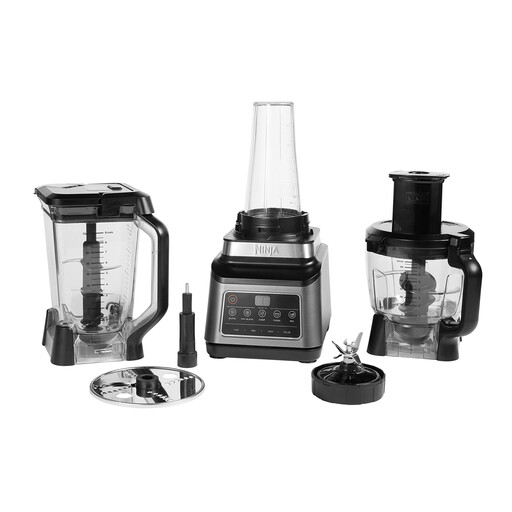
This processor-and-blender combination is relevant if you also prepare other meal components and want to inspect the dates between processing bursts.
Its product title specifies a 1000 W motor, variable speed, pulse function, integrated weighing and 13 accessories. Confirm the bowl’s working capacity and which supplied tool you would use for chopping.
 No image available
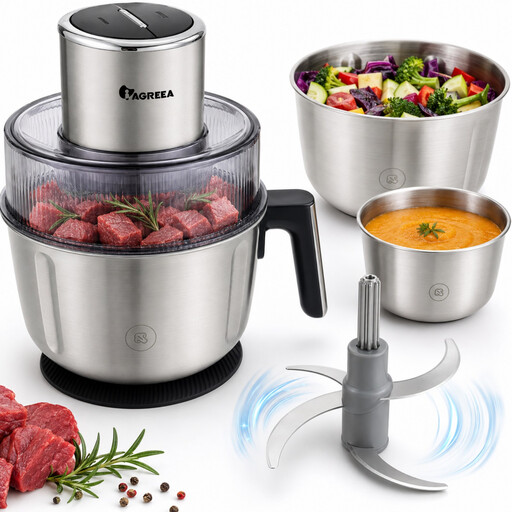
Consider this chopper if chopping and mixing are your main tasks rather than slicing or grating other ingredients for the meal.
Its product title specifies a 350 W motor, two speeds and 304 stainless steel bowls of 2.5 L, 2.2 L and 1.8 L. Check the usable load for dates and follow the product’s operating-cycle instructions.
Compare stated working or usable capacity where available, then judge it against the amount you normally prepare. Kenwood GB lists 1.5 L working dry capacity for the MultiPro Express FDP65.180SI and 0.75 L for the compact MultiPro Go FDP23.140GR; Bosch GB lists 2.3 L usable volume for the MCM3501MGB. The manufacturers’ terms should not be assumed to use identical measurement standards.
Pulse control lets you stop and inspect the mixture, but it does not guarantee a particular texture. Use a small test batch with the appropriate chopping tool and adjust how long you process it for your recipe.
Check the instructions for each component of the exact model. Kenwood lists specific dishwasher-safe parts for the MultiPro Go FDP23.140GR, while Bosch describes dishwasher-safe accessories for the MCM3501MGB; neither statement covers every processor or attachment.
Check the prepared food’s size, shape and texture rather than relying on a processor setting to make it suitable. NHS guidance says to remove hard pips or stones from fruit and to follow age-appropriate preparation and serving advice.