Weekly batch cooks
If you prepare vegetables and sauces alongside herb oil, compare usable capacity and the number of batches you would need, as well as the parts you would wash afterwards.


Choose a food processor with a knife blade for chopping and puréeing herbs, then check that its working liquid capacity fits the amount of herb oil or dressing you make. A larger working bowl is useful for weekly prep, while a compact processor takes less storage space but may mean splitting liquid batches. Blending fresh herbs or garlic into oil does not make it shelf-stable; follow a tested recipe and its storage instructions.
If you prepare vegetables and sauces alongside herb oil, compare usable capacity and the number of batches you would need, as well as the parts you would wash afterwards.
If you want herbs incorporated into a pourable dressing rather than simply chopped, check the knife blade and whether the exact model has a suitable blender jug or blending accessory.
If you usually make small batches and need drawer-friendly storage, compare the appliance dimensions and working liquid capacity, not just the bowl size.
Start with the quantity of liquid you intend to process, then decide whether a knife blade alone suits your preferred texture and how much equipment you want to store and clean.
| Concern | What to check | Who it matters to |
|---|---|---|
| Herb-oil texture | Check for a knife blade; if you want a smoother, pourable result, check the exact model's blender jug or compatible blending accessory. | If I want herbs finely incorporated into a dressing, chopping alone may not give me the texture I am after. Around 33% of consumers put texture control first. |
| Usable batch capacity | Compare working liquid capacity for oil and sauces, and assess dry-prep capacity separately. | Preparing several recipe components in one session makes splitting a dressing into smaller batches inconvenient; roughly 42% of consumers prioritise batch capacity. |
| Storage and clean-up | Compare assembled dimensions, accessory storage and the exact list of dishwasher-safe parts. | When cupboard space is tight and I make small batches, a machine I can put away and clean readily matters most. Around 25% of consumers make storage and clean-up their primary concern. |
A bowl's total volume can exceed the amount of oil or dressing it is intended to process. Kenwood, for example, lists a 1.3 L bowl and 0.75 L working liquid capacity for its MultiPro Go FDP23.140GR.
Plan liquid batches around the exact model's working liquid capacity; assess its dry-prep capacity separately.
Wattage does not tell you which blade, jug or blending accessory comes with a particular model, or establish the texture it will produce.
Check the supplied components and their instructions. Magimix says its BlenderMix accessory is used with the metal blade in the main bowl; the Ninja BN800UK has a separate blender jug.
The Food Standards Agency warns that preserving herbs or garlic in oil at home can be risky because controlling Clostridium botulinum spores is difficult. Processing the mixture does not resolve that storage risk.
Follow a reputable tested recipe and its handling and storage instructions. Do not consume the oil if you are unsure it was preserved or stored correctly.
A processor-blender system can provide separate vessels for prep and blending, but those bowls, jugs and attachments also need space and cleaning.
Check dimensions, how accessories are stored and which frequently used parts the exact model permits you to put in the dishwasher.
Kenwood offers both compact MultiPro Go processors and larger MultiPro OneTouch processor-blender models, making storage space and working capacity useful points of comparison.
The BN800UK is relevant if you want a processor bowl and separate blender vessels for prep and pourable sauces.
Magimix offers multi-bowl processors in several stated household-size capacities, with a model-specific accessory route for liquid blending.
The MCM3501MGB is worth considering if you want a mid-sized processor with an attachment for small quantities of herbs.
These processors cover larger-bowl prep and models with blending functions or a separate jug. Choose between them by the liquid quantity, texture and storage space your recipe requires, rather than treating bowl and jug volumes as usable fill limits.
 No image available
Consider this model if larger weekly prep and a separate blending function both matter. It has a stated 3 L processor bowl, while Kenwood specifies a 1.5 L working liquid capacity for the FDM73.850SS; the product title also lists a 1.5 L blender jug, variable speed and pulse control.
Check which of its components are dishwasher-safe before relying on machine washing for regular clean-up.
 No image available
Consider this format if you want separate vessels for food prep and blending. The product title lists a 2 L processor bowl and 1.8 L jug, and the product description specifies two speeds plus pulse.
Confirm the jug's usable liquid fill limit against your intended oil or dressing batch before buying.
 No image available
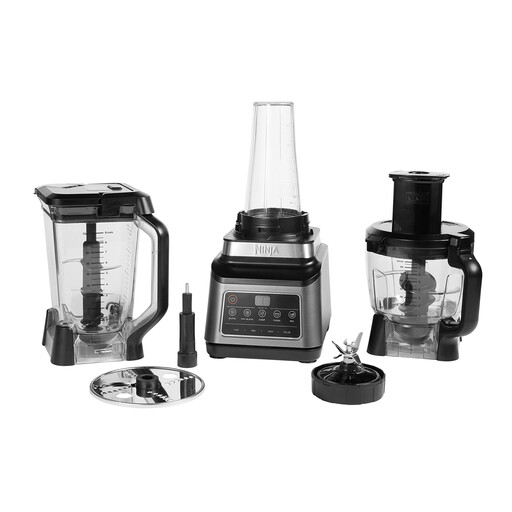
Consider the BN800UK if you want to chop ingredients in a processor bowl and use a separate jug for sauces or dressings. Its listed vessels include a 1.8 L bowl, 2.1 L jug and 700 ml cup, alongside manual settings and five automatic programmes.
Check the jug's working liquid limit. The listing warns against processing hot liquids, and the additional vessels take space to store and wash.
 No image available
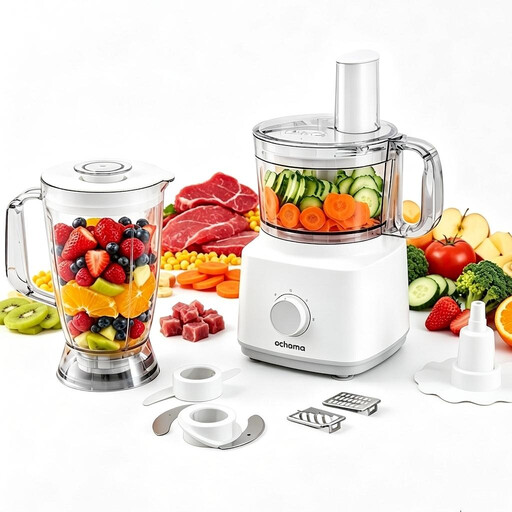
Consider this model for general chopping and puréeing alongside its stated blending function. Its product title gives a 1.8 L capacity and lists slicing and shredding discs.
Before choosing it for herb oil, confirm which vessel the 1.8 L figure describes, its usable liquid limit and the supplied blade and controls.
Choose a food processor with a knife blade if chopping herbs and preparing other ingredients are your main tasks. Kenwood lists herbs, dressings and dips among knife-blade uses; if a smoother, pourable dressing is also important, check for a separate blender jug or a compatible liquid-blending accessory on the exact model.
No: use the model's working liquid capacity to plan an oil or dressing batch. Kenwood lists a 1.3 L bowl but 0.75 L working liquid capacity for the MultiPro Go FDP23.140GR, and a 3.0 L bowl with 1.5 L working liquid capacity for the FDM73.850SS.
Check the instructions for your exact appliance and attachment before blending hot sauce. Heat limits are model-specific, and the Ninja BN800UK listing warns against processing hot liquids; do not apply another model's instructions to yours.
Do not assume homemade fresh-herb or garlic oil is shelf-stable. The Food Standards Agency warns that preserving herbs or garlic in oil at home can be risky because controlling Clostridium botulinum spores is difficult; follow a reputable tested recipe and its storage instructions, and do not consume oil you are unsure was preserved or stored correctly.