Weekly hummus batch cooks
You make hummus for several meals, lunches or sharing and want to avoid splitting it into repeated processing runs. Usable working capacity matters more to you than the bowl size on its own.


For regular hummus batch cooking, start with the processor’s working capacity rather than its total bowl size: the amount you can process may be considerably smaller. Choose a suitable chopping blade and controls that let you pause and adjust the texture, then weigh up cleaning and storage against the batch size you want. Extra preparation tools are useful if you will also use them for other meals, but they add parts to store and wash.
You make hummus for several meals, lunches or sharing and want to avoid splitting it into repeated processing runs. Usable working capacity matters more to you than the bowl size on its own.
You want to pause, scrape down the bowl and adjust processing until the hummus reaches your preferred texture. A suitable blade and pulse or programme controls are central to your choice.
You want to make hummus regularly but have limited storage space. The size of the machine, the parts you need to put away and the clean-up after each batch may matter more than having the largest bowl.
Decide how much hummus you want to process in one run, then check the blade, controls and parts you will handle after each batch.
| Concern | What to check | Who this matters to |
|---|---|---|
| Usable batch capacity | Look for the exact model’s working capacity or manual maximum; do not equate it with total bowl volume. | If I make enough hummus for several meals, I want fewer processing runs without overfilling the bowl. Around 37% of consumers put usable batch capacity first. |
| Texture control | Confirm the included chopping or multipurpose blade and the exact model’s purée, pulse or speed controls. | When texture is my priority, I want to stop and adjust the mixture rather than rely on a slicing attachment. For around 27% of consumers, control over puréeing comes first. |
| Cleaning and storage | Check which removable parts are dishwasher-safe and whether the appliance and its attachments fit where you will store them. | In a small kitchen, I need a processor I can put away and clean after each batch, even if that means smaller runs. That is the primary concern for around 18% of consumers. |
| Wider meal preparation | Compare the supplied blade, discs and dough tool with the tasks you actually do each week. | If hummus is only one part of my meal prep, I want the other included tools to have a regular use. Around 18% of consumers prioritise that versatility. |
Magimix lists the 5200XL at 3.6L total capacity but 1.8L working capacity; Kenwood lists a 3L bowl and 1.5L working capacity for the FDP65.180SI. The larger number is not the amount to assume you can process at once.
Compare working capacities for the exact models and follow their manuals’ maximum-quantity guidance.
Kenwood specifies 0.75L dry and liquid working capacities for the MultiPro Go FDP23.140GR. Its smaller working volume may mean processing a week’s hummus in several runs.
If cupboard space is your main constraint, decide whether those smaller runs suit your routine; otherwise, compare models with a larger stated working capacity.
Repeated runs also take additional preparation and clean-up time.
Motor wattage is a specification, not a result for a particular recipe. Which? assesses blending alongside other food-processing tasks rather than using wattage alone as a performance measure.
Check the supplied blade and processing controls, and consult a model-specific independent test if texture performance will decide your purchase.
Blades and food-contact parts need careful cleaning between recipes. Electrical Safety First advises against handling kitchen electrical equipment with wet hands or leaving it operating unattended.
Follow the model manual when removing blades, unplug the machine before cleaning and keep the motor base and controls dry. Clean food-contact parts thoroughly when allergens are a concern.
The 5200XL represents a higher-capacity option for frequent batch preparation.
The MultiPro Express FDP65.180SI offers a food-processing bowl and tools for hummus alongside other meal preparation.
The 5KFP1319 is a 3.1L-bowl option for buyers considering hummus alongside vegetable and dough preparation.
The BN650UK is a 2.1L processor for buyers interested in preset processing functions.
These processors offer two different starting points for hummus and wider meal prep: the Ninja BN800UK has listed purée programmes and blending attachments, while the Kenwood FDP65.180SI has a processor bowl, pulse control and preparation tools. Check the exact bowl limits before deciding how much hummus to make in one run.
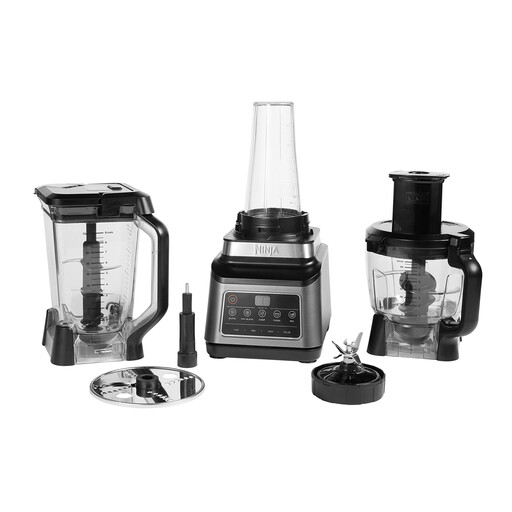 Image unavailable
Consider this model if you want a listed purée programme for hummus as well as blending options for other preparation. Its product name specifies a 1.8L processor bowl, 2.1L jug, 700ml cup and 1,200W motor, with Blend, Max Blend, Chop, Mix and Purée programmes. Check the BN800UK manual’s bowl maximum before planning a batch; the listed bowl volume is not a working-capacity figure.
 Image unavailable
Consider this model if hummus is one of several regular food-preparation tasks and you want a knife blade, pulse control and other tools. The listed package has a 3L bowl, 1,000W motor and six accessories. Kenwood specifies a 1.5L working capacity for the FDP65.180SI, while the Joybuy listing refers to a 3L fill line; check the exact model manual before deciding on batch quantities or bowl-and-blade use for hummus.
Compare working capacity when choosing how much hummus to process in one run. Magimix specifies 1.8L working capacity for the 3.6L-total 5200XL, while Kenwood specifies 1.5L for the 3L-bowl FDP65.180SI; follow the exact model manual for maximum quantities.
Look for a suitable chopping or multipurpose blade and controls that let you process, pause and adjust the mixture. Confirm the intended blade and bowl use in the exact model manual; slicing and grating discs serve other preparation tasks rather than replacing the hummus blade.
Clean the food-contact parts thoroughly between recipes, following the exact model’s disassembly and washing instructions. The Food Standards Agency identifies allergen cross-contamination as a hazard, so check which parts can be removed and washed rather than assuming every component is dishwasher-safe.
Inspect the plug and lead before use, keep the base and controls dry, and unplug the processor before cleaning or handling its blades. Electrical Safety First also advises against touching electrical equipment with wet hands or leaving an appliance operating unattended.