Small-batch shared-kitchen cooks
If you chop one or two leeks for a meal and put the appliance away afterwards, focus on a manageable bowl, chopping control and a place for its accessories rather than capacity for much larger tasks.


If you usually chop one or two leeks, start with a compact chopper or processor that fits your storage space and is straightforward for everyone to clean. A larger, multi-function processor makes more sense when several people regularly prepare bigger batches or need slicing and grating too; check where its bowl and attachments will go before choosing it.
If you chop one or two leeks for a meal and put the appliance away afterwards, focus on a manageable bowl, chopping control and a place for its accessories rather than capacity for much larger tasks.
If leeks are part of a larger round of vegetable preparation, consider whether a bigger bowl and slicing or grating attachments would save repeated setup. Those parts will also need somewhere to be cleaned and stored.
If different people use the machine, choose removable parts that everyone can clean according to the manual and agree where the dry bowl and sharp accessories belong. The Food Standards Agency identifies cleaning and cross-contamination control as important food-safety practices.
Decide how much leek and other produce you normally prepare, then check whether the complete appliance fits your shared storage space and cleaning routine.
| Concern | What to check | Who this matters to |
|---|---|---|
| Cleaning between users | Check which food-contact parts can go in the dishwasher and where sharp accessories can be stored safely. | If several of us use the processor, I need the bowl, lid and blade cleaned before the next person prepares food. Roughly 40% of consumers put this shared-cleanup need first. |
| Storage and small batches | Compare the appliance and accessory dimensions with the cupboard space; consider whether a small bowl handles your usual portion. | When I only chop a little leek, I do not want a machine that takes over our worktop or cupboard. For around 30% of consumers, fitting everyday portions into shared space is the primary concern. |
| Chopping control and capacity | Look for a chopping blade and pulse or moment control; choose bowl capacity and attachments for the quantities and tasks you actually do. | If I prepare several vegetables for a group, I want to control the chop without repeatedly emptying the bowl. Another roughly 30% of consumers prioritise that combination of control and capacity. |
A power rating does not tell you how evenly a particular processor chops leeks or how noisy and easy to clean it will be. Which? assesses chopping, noise and cleaning as separate aspects of food-processor use.
If those qualities will decide your purchase, look for information about the exact model and check its controls and cleaning instructions rather than relying on wattage.
A bigger bowl may suit group preparation, but the complete machine and its attachments still need a home. Bosch lists in-bowl accessory storage for the MCM3100WGB, while Magimix lists the 3160 at 6.7kg.
Measure the intended shelf and decide how often you are willing to lift the appliance in and out before choosing a bowl size.
A claim about removable parts does not include the electrical motor base. Magimix expressly excludes the motor base from its statement about dishwasher-safe processor parts.
Follow the exact model’s manual for each component. Unplug the appliance before cleaning the base, and let washed parts dry before storing them.
The MultiTalent 3 MCM3100WGB is a reference point for smaller batches where accessory storage matters.
The MultiPro range includes 3L models aimed at people who want to do more than chop leeks.
The 3160 offers separate bowl sizes for cooks who regularly vary the amount they prepare.
These choices range from a small chopper for modest portions to larger machines for repeated vegetable preparation. Compare their bowls and functions against the space, cleaning routine and chopping control your kitchen needs.
 No image available
Consider this for a modest amount of leek when a small appliance is easier to put away. Its listed 350ml bowl, 300W rating and two speeds distinguish it from the larger processors; the product name describes the bowl as dishwasher-safe. Check that the bowl holds your usual portion.
 No image available
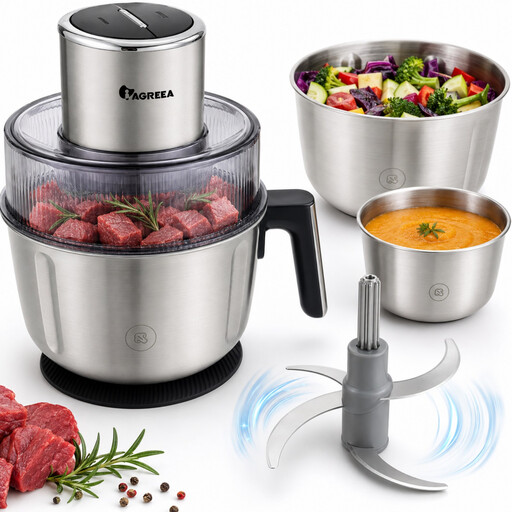
Consider the different bowl sizes if your household prepares varying quantities of vegetables. The product name lists 2.5L, 2.2L and 1.8L stainless-steel bowls, a 350W rating, two speeds and triple-curved blades. Check the cleaning instructions and how the blades should be stored.
 No image available
This is a larger option if leeks are part of regular, varied food preparation. Kenwood lists a 3L processor bowl, pulse control and dishwasher-safe parts for this model; the product name also specifies integrated weighing, a blender, 1000W and 13 accessories. Check which parts the manual permits in the dishwasher and where the accessories will fit.
 No image available
Consider this if you want a processor bowl for vegetable preparation alongside a blender function. The product name specifies a 2L bowl, a separate 1.8L capacity and a 750W rating. Check its dimensions against your storage space and follow the exact model’s instructions for cleaning removable parts.
 No image available
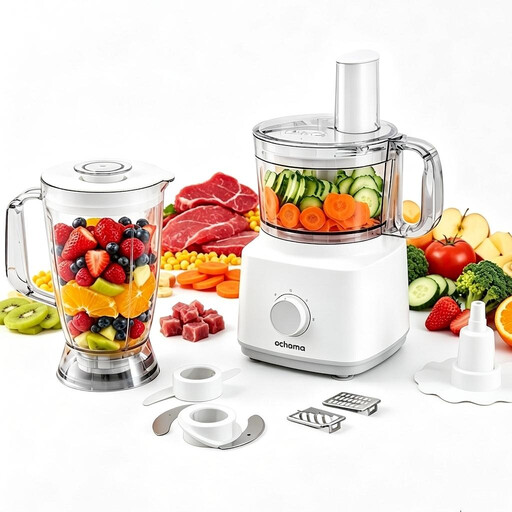
This may suit a household that wants chopping plus slicing and grating rather than a chopper for leeks alone. Its product name lists a 1.8L capacity, 750W rating and detachable parts. If pulse control, dishwasher cleaning or cupboard fit will decide the purchase, check those details for this model first.
A mini chopper can cover small portions if chopping is all you need. Check that its bowl holds your usual amount and that its controls suit the texture you want; choose a full food processor if slicing, grating or repeated larger batches matter too.
Clean food-contact parts promptly after use, following the exact model’s instructions, and dry them before putting them away. A dishwasher-safe-parts claim does not include the electrical motor base: Magimix, for example, expressly excludes its motor base.
Agree who cleans and dries the bowl, lid and blades after each use, where sharp parts are stored, and how to avoid transferring food residues or allergens between users. The Food Standards Agency identifies cleaning and cross-contamination control as important food-safety practices.
Keep the work area and your hands dry around electrical equipment, and unplug the processor before cleaning it. Electrical Safety First also advises against cleaning or repairing an appliance while it is plugged in.