Hosts preparing one batch
You are making a nut crust alongside other food for several people and want the mixture to fit without repeated batches.


Choose a food processor with a chopping blade and pulse control, then compare its stated working capacity with your nut-crust recipe rather than relying on bowl size alone. A mid-capacity machine may suit family preparation; a compact one can mean more batches, while a larger machine makes more sense if you also prepare several dishes or batch-cook regularly.
You are making a nut crust alongside other food for several people and want the mixture to fit without repeated batches.
You want to stop at a coarse or sandy crumb rather than keep processing until the nuts become too fine. A chopping blade, pulse control and pauses to inspect the mixture matter more to this choice than wattage alone.
You make nut crusts infrequently and need a machine that is easier to put away, even if a larger gathering recipe takes more than one batch.
Start with the amount your recipe makes and the texture you want, then decide how much cupboard space and cleaning work the appliance justifies between gatherings.
| Concern | What to check | Who this matters to |
|---|---|---|
| Working capacity | Compare your ingredient quantity with the stated dry working or usable capacity, not just the bowl size. | I would rather make the gathering recipe in one batch than divide it and manage several mixtures; around 42% of consumers would put one-batch capacity first. |
| Nut texture | Look for an included chopping blade and pulse or manual control so you can stop and inspect the crumb. | If the crust needs a particular crumb texture, I want to stop before the nuts become too fine; roughly 33% of consumers would prioritise that control. |
| Storage and clean-up | Check storage dimensions and the care instructions for the bowl, lid and blade. If a guest has a nut allergy, discuss their needs before preparing food. | I use the appliance only occasionally and need to store and clean it without making assurances about allergen safety; around 25% of consumers would place these practical concerns first. |
A stated bowl size is not necessarily the amount of dry mixture you can process. Kenwood GB lists a 3L bowl but a 1.5L working dry capacity for the FDP65.180SI; Bosch GB lists a 3.9L bowl and 2.4L usable volume for the MC812S734G.
Compare the relevant working-capacity figure with your recipe before deciding whether one batch is realistic.
If you need to divide the mixture, allow time to process and combine the batches.
A power rating does not tell you what crumb texture you will get. Which? assesses nut chopping as a distinct food-processor task, while pulse controls let you pause and inspect the mixture.
Check for a chopping blade and pulse or manual control, then use short bursts and stop when the texture suits the recipe.
The Ninja BN800UK has a 1.8L processor bowl and a separate 2.1L blender jug, according to its Joybuy product information. The jug figure does not describe the processor bowl you would assess for a crust.
Check the processor bowl and its working-capacity guidance when planning the batch.
Dishwasher-safe accessories can make routine cleaning more convenient, but they do not establish that food prepared afterwards is suitable for someone with a nut allergy. Food Standards Agency material discusses cleaning equipment and separating food preparation as cross-contamination controls in food businesses.
If a guest has a nut allergy, ask about their requirements before cooking and avoid making assurances you cannot substantiate.
These product lines illustrate different capacity and storage choices; compare the exact model and its working capacity before choosing for your recipe.
Larger multifunction processors for households that regularly prepare family meals or several dishes.
A range that includes compact models and mid-capacity processors.
Food processors spanning smaller MultiTalent 3 and larger MultiTalent 8 models.
Processor-and-blender combinations for cooks who expect to use both functions.
These choices include a mid-capacity processor, processor-and-blender combinations and a food chopper. For a family nut crust, check each model's blade, controls and relevant working capacity against your recipe; bowl size alone cannot establish one-batch fit.
 No image available
Consider this model if your family recipe fits its stated 1.5L working dry capacity and you want to control chopping in short bursts.
Kenwood GB specifies a knife blade and pulse control for the FDP65.180SI. Its 3L bowl size is not its dry working capacity.
 No image available
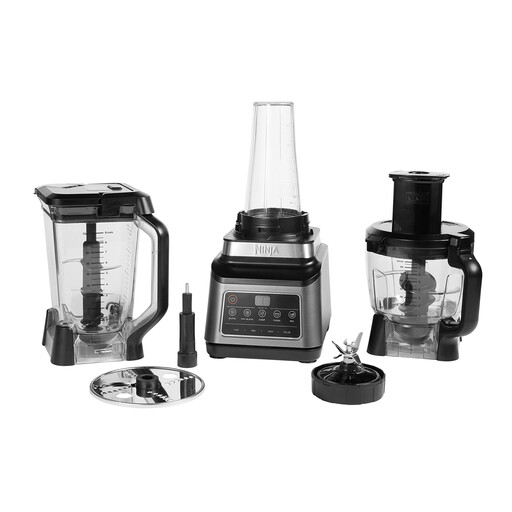
Consider this processor-and-blender combination if you expect to use the blender as well as the processor for other preparation.
The listed 1.8L processor bowl is separate from the 2.1L blender jug and 700ml cup. Check the processor bowl's working capacity against your crust recipe before planning one batch.
 No image available
Consider this combination if you want a processor bowl and a separate blender for meal preparation.
The listed processor bowl is 2L. Check its working-capacity guidance against your recipe and follow the model's care instructions when cleaning its parts.
 No image available
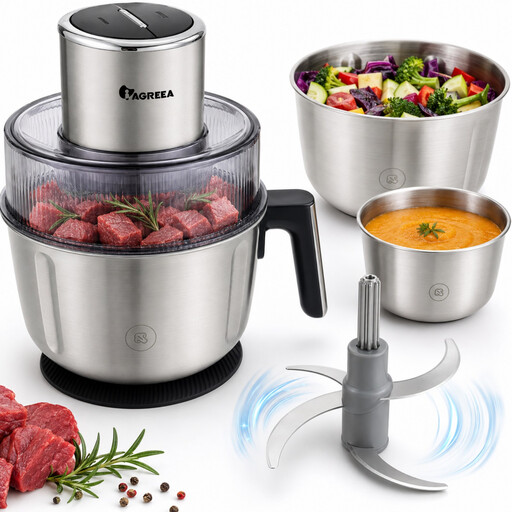
Consider this chopper if nesting bowls would help with storage, but confirm that its instructions cover your nut-crust task before choosing it for the gathering.
The listing names 2.5L, 2.2L and 1.8L stainless-steel bowls and two-speed operation. Those bowl sizes do not establish usable dry capacity for your recipe.
Choose by the quantity in your recipe and the model's stated working capacity, rather than its bowl size alone. For example, Kenwood GB gives the FDP65.180SI a 3L bowl but a 1.5L working dry capacity; a larger processor is more relevant if the crust is part of broader batch preparation.
Wattage alone does not establish the finished crumb texture. Look for a chopping blade and pulse or manual control, then use short bursts so you can inspect the nuts and stop at the texture your recipe needs.
Check the blender's instructions for the intended ingredients and quantity before using it for a crust. If you are considering a combined machine, assess the processor bowl separately: the Ninja BN800UK lists a 1.8L processor bowl and a distinct 2.1L blender jug.
Ask about the guest's requirements before cooking, and do not assume that washing a processor after nut use makes later food suitable for them. Food Standards Agency material describes cleaning equipment and separating food preparation as cross-contamination controls in food businesses; it does not certify a domestic kitchen or appliance as allergen-safe.