What matters when choosing?
Work out your recipe quantity before comparing bowls, then decide how much control you need over texture and how the machine will fit into preparation and clean-up.
| Concern |
What to check |
Who this matters to |
| Batch capacity |
Compare the complete recipe quantity with the exact model’s working capacity and any limits for dense mixtures, not just its total bowl volume. |
If I have several trays to make, dividing the mixture into many runs would slow me down. Around 33% of consumers put batch capacity first. |
| Texture control |
Check for pulse control and confirm which blade or mixing tool comes with the exact model. |
I want the ingredients combined without processing them more finely than my recipe calls for. Texture control is the primary concern for around 27% of consumers. |
| Storage and occasional use |
Measure the space available for the machine and its accessories, then check whether its working capacity fits your planned batch. |
For an occasional bake sale, I need somewhere to keep the processor for the rest of the year and can accept extra runs for a larger recipe. Around 20% of consumers prioritise that balance. |
| Cleaning and allergens |
Check the cleaning instructions for every food-contact part and plan how ingredients and potential cross-contact will be managed. |
When making bars for others, I need to clean between recipes and give appropriate ingredient information; a dishwasher-safe label alone would not settle either task. This is the main concern for around 20% of consumers. |
Relevant brands to consider
These examples show why specifications need to be checked at model level: bowl volume, usable capacity and supplied tools are not interchangeable.
Kenwood
The Kenwood MultiPro Express FDP65.860WH is an example to examine when planning substantial batches.
- Kenwood states a 3.0L bowl, 1.5kg dry working capacity, two speeds plus pulse and an included dough tool for this model.
- Those figures are specific to the FDP65.860WH; its manual still matters when assessing a particular sticky mixture.
Magimix
The Magimix 4200XL provides a published working-capacity figure and accessory storage to weigh against your recipe and cupboard space.
- Magimix states a 1.3L working capacity and lists a storage box and a 30-year motor guarantee for the 4200XL; check the guarantee terms if they affect your decision.
- A large recipe may need to be divided into batches; the stated working capacity does not establish a limit for every oat-bar mixture.
Ninja
The Ninja BN650UK is worth examining if a processing bowl and a dough-oriented accessory suit your preparation method.
- Ninja identifies a 2.1L bowl for the BN650UK and a compatible dough blade designed for dough, batter and cake-mix tasks.
- Confirm whether the blade is included in the exact bundle and check the manual’s limits before using it for a dense oat-bar recipe.
Joybuy products for oat-bar preparation
These chopper and food-processor options offer ways to prepare ingredients and assess mixture texture. Compare your recipe with each machine’s usable-capacity and operating instructions before treating either bowl size as a one-batch answer.
 No image available
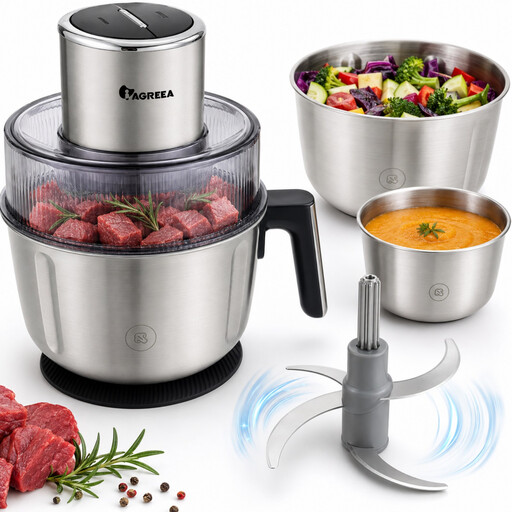
IAGREEA MS-25JM08 350W food chopper, three nesting bowls
Consider this chopper if preparing ingredients in stages and finding storage space for several bowls are important to your bake-sale preparation.
Its listed 304 stainless-steel bowls are 2.5L, 2.2L and 1.8L, and the 350W model has two speeds and triple-curved blades.
Check your mixture against the usable-capacity instructions rather than the bowl volumes. Follow the stated maximum of 30 seconds per pulse cycle and check the cleaning instructions for each part.
Joybuy
 No image available
DAEWOO 2-in-1 food processor and blender, 750W, 2L/1.8L
Consider this model if chopping ingredients is part of your recipe and you want a processor and blender in one appliance.
The listed processor bowl is 2L; the model is rated at 750W and its title also specifies a 1.8L capacity.
Compare the complete oat-bar recipe with the processor’s working limits. If you need a dedicated mixing or dough tool, confirm the included accessories, and check how the food-contact parts should be cleaned.
Joybuy
Common questions
What size food processor do I need for oat-bar mixture?
Choose by your complete recipe quantity and the processor’s stated working limits, not bowl volume alone. Kenwood gives the FDP65.860WH a 3.0L bowl and 1.5kg dry working capacity, while Magimix states a 1.3L working capacity for the 4200XL; neither figure confirms that a particular sticky recipe will fit in one run. Check the exact manual and divide the mixture when necessary.
Will a dough tool help with oat-bar mixture?
A dough or mixing tool may suit a recipe that needs combining rather than fine chopping, but follow the manufacturer’s guidance for the mixture. Kenwood lists a dough tool with the FDP65.860WH, while Ninja identifies a dough blade compatible with the BN650UK; check whether a tool is included in the bundle you are considering.
How should I clean a processor after using nuts or other allergens?
Take apart and clean the food-contact parts according to the appliance instructions, handling blades carefully and inspecting the lid and other hard-to-reach areas before another recipe. Dishwasher-safe parts can help with cleaning, but they do not replace a process for managing ingredients, cross-contact and allergen information.
Do I need to give allergen information when selling oat bars at a bake sale?
Check how the bars will be packed and offered before deciding what information is required. The Food Standards Agency sets out allergen-labelling requirements for food prepacked for direct sale and describes mandatory information about 14 regulated allergens for non-prepacked food. Use its guidance to establish which requirements apply to your sale arrangement and ingredients.


