What matters when buying?
Start with the amount of olives you normally chop and how the appliance will be cleaned between users. Then check its chopping controls, dimensions and any other preparation tasks you need it to handle.
| Concern |
What to check |
Who this matters to |
| Cleaning between users |
Check which food-contact parts come off and which the manufacturer specifically permits in a dishwasher. Plan how parts will be cleaned, dried and stored. |
If other people will use the processor after me, I want to prevent food residue being left in the bowl or around the blade. Roughly 44% of consumers would put clean-up and cross-contact first. |
| Small-batch texture and space |
Look for a chopping blade and pulse or moment control; compare the appliance dimensions with your available space. |
When I need a coarse chop for a modest portion, I want to stop and inspect the olives rather than run the machine continuously. Around 33% of consumers would make controllable small-batch chopping their primary concern. |
| Batch capacity and other tasks |
Compare bowl capacity and the supplied attachments with the quantities and tasks you regularly have in mind. |
If several of us prepare food in one session, I need enough capacity or functions to make the appliance useful beyond a small olive garnish. Approximately 23% of consumers would prioritise larger batches or wider preparation use. |
Joybuy products for olive preparation
These choices span a small chopper, larger-bowl processors and machines for other preparation tasks. Compare their controls and cleaning instructions against your batch size and the way your shared kitchen is used.
 No image available
Kenwood CH180B Mini Chopper, 350 ml
Consider this small-bowl chopper for modest olive portions rather than preparing several large batches. The named variant has a 300 W rating, two speeds and a dishwasher-safe bowl; check its instructions for blade care and operating limits.
View on Joybuy
 No image available
Kenwood MultiPro Express Weighing+ FDM71.450SS, 3 L
Consider the 3 L bowl if shared preparation regularly involves more than a small olive portion. This 1,000 W variant is named with eight accessories and an integrated digital scale; check its dimensions and the care instructions for the accessories you expect to use.
View on Joybuy
 No image available
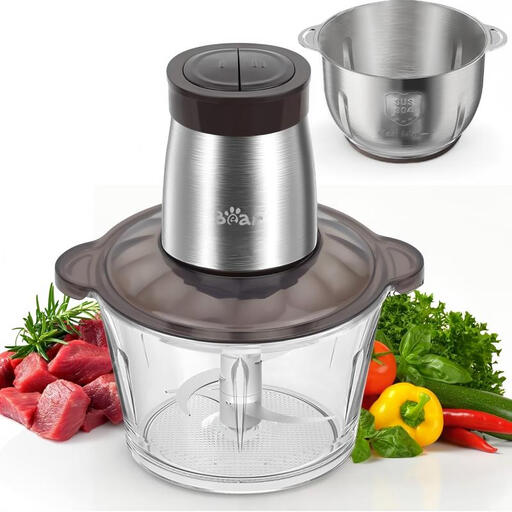
Bear Double-Cup Food Chopper, 2 L + 1.8 L
Consider the separate containers if users need to organise different preparation tasks, while allowing room to clean and store both. The named 300 W variant has a 2 L glass container, a 1.8 L stainless-steel container and two speed settings; check the manual for its operating limit and available short-burst controls.
View on Joybuy
 No image available
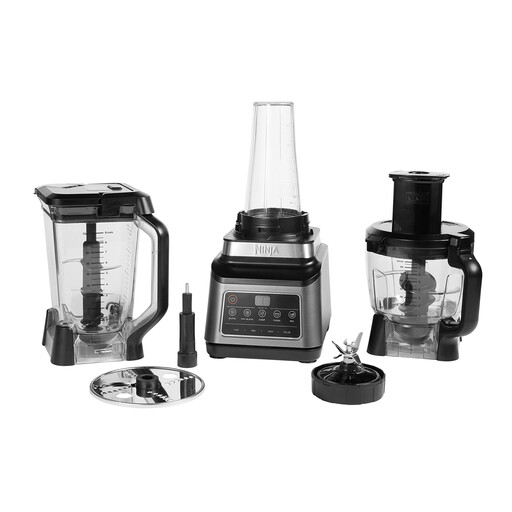
Ninja BN800UK 3-in-1 Food Processor
Consider this model when the kitchen also needs blending alongside olive chopping. Its named configuration includes a 1.8 L processor bowl, 2.1 L jug, 700 ml cup and 1,200 W rating. HBH Woolacotts lists a height of 480 mm; check storage space and the care instructions for each attachment. The product description limits it to household use.
View on Joybuy
 No image available
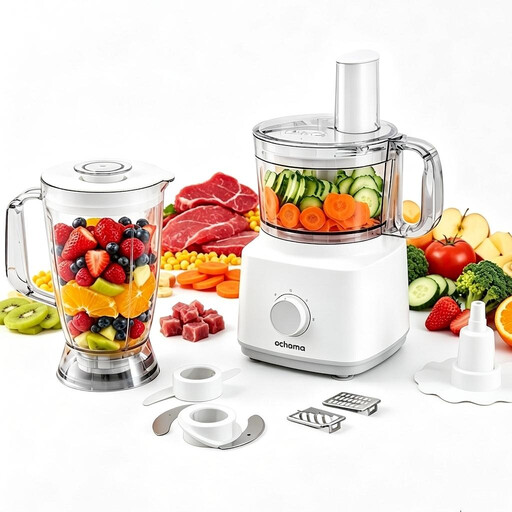
ochama Food Processor, 1.8 L
Consider this processor if slicing and grating are regular shared-kitchen tasks alongside chopping. The named variant has a 750 W rating, a 1.8 L bowl and detachable parts; check its chopping controls, dimensions and washing instructions before deciding whether it suits olive preparation between users.
View on Joybuy
Questions about chopping olives
Do I need a full-size processor to chop olives?
Not for occasional modest batches: a chopping blade, brief-burst control, manageable footprint and cleanable parts are more useful starting checks. Consider a larger bowl when you regularly prepare several portions or use the machine for other batch-preparation tasks.
How can I keep chopped olives from becoming a paste?
Use short pulses or moment-control bursts and inspect the texture between them. Bosch UK describes pulse control as an option for chunkier textures; use pitted olives and follow your exact appliance’s operating instructions.
Are dishwasher-safe parts enough when people share a kitchen?
No: dishwasher suitability tells you how specified parts may be washed, not whether a complete contamination-control process is in place. Food Standards Agency guidance for food settings calls for systems to prevent, control and detect contamination, including allergens; follow the appliance instructions and the kitchen’s cleaning routine.
What if the shared kitchen is used for a food business?
Choose and use the processor as part of the business’s own food-safety process, rather than assuming a household cleaning routine is sufficient. Food Standards Agency MyHACCP guidance calls for contamination controls and consideration of physical hazards; assess the ingredients, equipment and applicable local requirements for the particular business.
What should I check before putting the processor away?
Follow the model’s instructions for washing and drying its bowl, lid and blade, then store sharp parts safely for the next user. Check each attachment separately: Magimix support, for example, says its food-processor parts can be washed in a dishwasher or by hand, but excludes the motor base.


