Small-portion purée makers
If you make one or a few servings at a time, check working capacity and where the processor and its accessories will go between uses. A large headline bowl need not be the priority in a small kitchen.


Choose a processor that explicitly supports puréeing or blending, then match its working capacity to the portions you normally make: compact storage may matter more for occasional servings, while a larger working bowl helps with batches. If the pea purée is for a prescribed swallowing texture, the appliance alone cannot establish that it is suitable; Frimley Health NHS Foundation Trust notes that peas may need sieving, and the International Dysphagia Diet Standardisation Initiative says to test finished food under its intended serving conditions.
If you make one or a few servings at a time, check working capacity and where the processor and its accessories will go between uses. A large headline bowl need not be the priority in a small kitchen.
For several portions at once, compare usable working capacity rather than bowl size alone. Pulse control and the cleaning instructions for removable parts also matter when you prepare purée regularly.
If you are preparing food to a prescribed swallowing texture, follow the prescribed level and check the finished food. Frimley Health NHS Foundation Trust notes that pea skins or bits may need to be removed by sieving after puréeing.
Start with the processing task and usable batch size, then decide how much storage space and washing-up you can accommodate. A prescribed texture adds checks on the finished food that no programme button can replace.
| Concern | What to check | Who this matters to |
|---|---|---|
| Texture and control | Look for an explicit purée or blending function and controls that let you pause and inspect the food. | I want to check for skins and uneven pieces before serving, rather than rely on the name of a programme. Around 33% of consumers put finished texture and processing control first. |
| Batch capacity | Compare stated working capacity with the portions you intend to make; a total bowl volume is not the same measure. | When I prepare family meals or portions to freeze, repeated small batches would make the job less convenient. Working capacity is the primary concern for around 33% of consumers. |
| Storage and cleaning | Check dimensions, accessory storage and which parts the exact model permits you to wash in a dishwasher. | For occasional small servings, I would rather have a machine I can put away and clean without difficulty. Around 25% of consumers place that convenience first. |
| Prescribed texture | Follow the prescribed level, check whether sieving is needed and use the applicable IDDSI tests under serving conditions. | If I prepare food for someone with a swallowing-texture prescription, the finished food has to meet that requirement, whatever processor I use. Around 9% of consumers make this their primary concern. |
Total bowl volume can exceed usable working capacity. Kenwood GB lists a 3 L bowl and 1.5 L working capacity for the FDP65.180SI; Magimix UK lists 2.6 L total and 1 L working capacity for the 3200XL.
Plan portions around the working-capacity figure for the exact model, not the largest litre figure in its name.
A programme cannot establish the texture of the food as served. Frimley Health NHS Foundation Trust notes that peas may need sieving to remove skins or bits, while IDDSI calls for testing under intended serving conditions.
Follow the prescribed texture level and carry out the applicable tests on the finished food.
Extra bowl capacity may be of little use if storage space and washing-up determine how often you use the processor.
Compare working capacity, appliance dimensions and accessory storage against the portions you usually prepare.
Cleaning instructions depend on the machine and part. Magimix Support says its processor parts can go in a dishwasher except for the motor base.
Check the exact model’s manual before washing components, and drain washed parts before refitting them.
Kenwood offers both a compact route and a larger-bowl route for this task; compare the specifications of the particular model rather than treating them as brand-wide features.
The 3200XL is a multi-function option to consider if you expect to use a processor for tasks beyond pea purée.
The BN800UK combines a food-processor bowl with other blending formats for buyers who want those functions in one appliance.
These food choppers and processors offer blending or purée-related options for different portion sizes and food-preparation tasks. Check the usable capacity and instructions for the exact model before deciding how you will prepare cooked peas.
 No image available
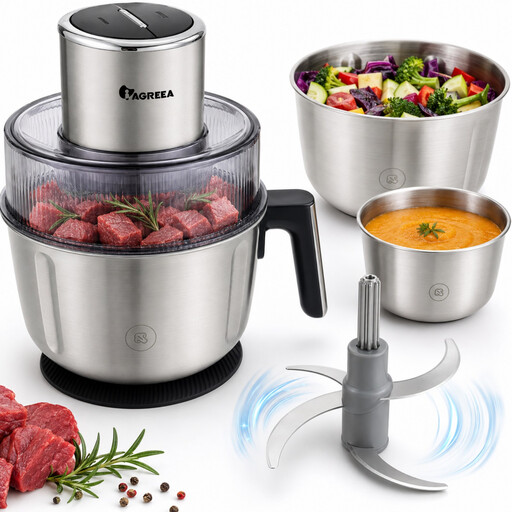
Consider this model if you want a food chopper labelled for purée and bowls that nest for storage.
Its title lists 350 W, two speeds and three stainless-steel bowls of 2.5 L, 2.2 L and 1.8 L. Check how much the bowl you intend to use can process in one batch; these volumes are not stated working capacities.
 No image available
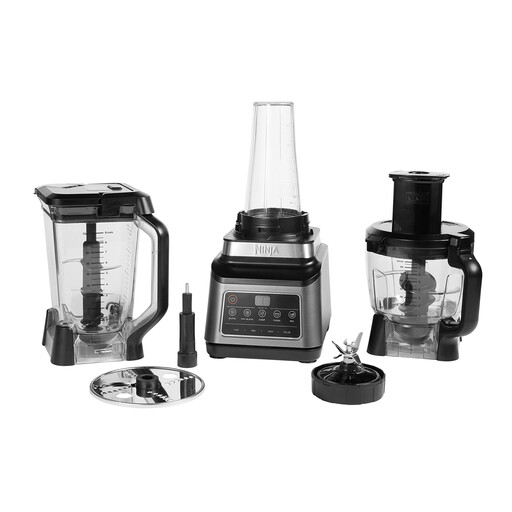
Consider this model if you want a processor bowl alongside jug and cup blending formats.
The Joybuy listing gives a 1.8 L processor bowl, 2.1 L jug, 700 ml cup and a Purée programme; the title also lists dishwasher-safe parts. Check usable working capacity separately from the bowl volume. Follow the product instructions for cooked ingredients, particularly if they are still hot.
 No image available
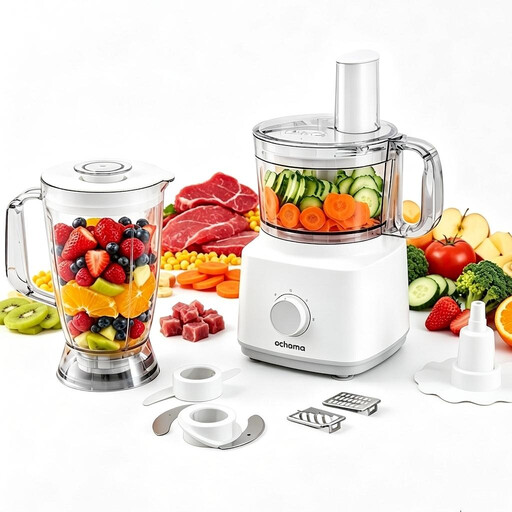
Consider this model if you want blending as well as slicing and shredding functions.
Its title lists a 1.8 L bowl, detachable parts, and slicing, shredding and grater discs. Confirm the usable batch size and follow the model’s instructions when processing cooked peas.
 No image available
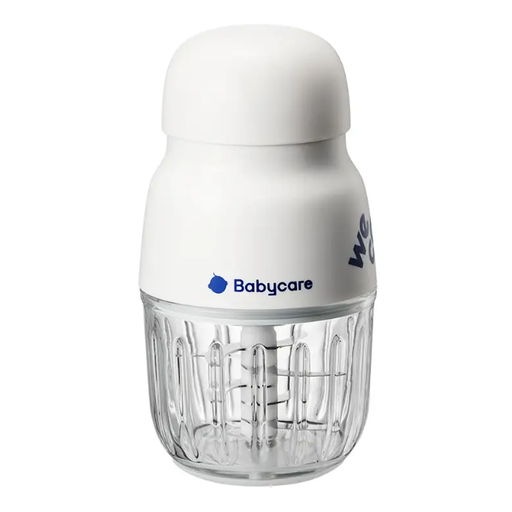
Consider this baby-food processor for occasional small portions if its bowl size suits the servings you intend to make.
The title lists one-button operation and automatic stopping. Confirm the exact bowl capacity and cleaning instructions before choosing it for your routine.
Yes, if the exact model supports puréeing or blending; do not assume that every chopper does. Kenwood GB describes puréeing for its FDP65.180SI, while the Joybuy listing for the Ninja BN800UK names a Purée programme.
For an ordinary recipe, sieve it if skins or bits remain and you want a smoother result. For a prescribed purée texture, Frimley Health NHS Foundation Trust says peas and beans may need sieving after puréeing to remove skins or bits; follow the prescribed level and test the finished food.
No: a processor programme cannot establish the IDDSI level of the finished food. The International Dysphagia Diet Standardisation Initiative says testing should reflect intended serving conditions, and more than one test may be needed to determine a level. Use the level prescribed for the person eating the food.
Cool it promptly, then refrigerate or freeze it. NHS guidance advises cooling batch-cooked baby food ideally within one to two hours, using refrigerated food within two days and reheating already-cooked food only once.