Small-batch shared-kitchen cooks
If you usually make a little pea purée, look for a usable small-bowl capacity, somewhere convenient to store the machine and parts you can clean promptly before the next person uses it.


Choose a food processor that explicitly supports puréeing, then match its usable bowl capacity to the amount of pea purée you normally make. For small portions in a shared kitchen, a compact model with removable parts you can clean between users is a practical starting point. Consider a larger multi-bowl model when you regularly prepare more food, or an independently assessed noise-conscious option when disturbance matters enough to justify its greater storage footprint.
If you usually make a little pea purée, look for a usable small-bowl capacity, somewhere convenient to store the machine and parts you can clean promptly before the next person uses it.
If pea purée is one part of a larger meal-prep session, working capacity and a choice of bowl sizes may matter more than the smallest storage footprint.
If processing noise would disturb other people, an independently assessed model may be worth considering. Check its weight and dimensions before committing shared cupboard or worktop space.
Start with the portion you normally make and how the food-contact parts will be cleaned between users. Then decide whether storage, repeated batches or noise changes your choice.
| Concern | What to check | Who this matters to |
|---|---|---|
| Cleaning between users | Check which bowl, lid, blade and other food-contact parts can be washed as directed; inspect places where residue could remain. | I need to leave the processor clean for the next person, without overlooked food residue. Around 42% of consumers put a reliable changeover first. |
| Small portions and storage | Look for an explicit purée function and a suitable small-bowl or working-liquid capacity; measure the available storage space. | For one modest serving, I do not want an oversized bowl or a machine that is awkward to put away. Around 33% of consumers prioritise small-batch fit and storage. |
| Batches and disturbance | Compare usable capacity and bowl options, then check the appliance’s dimensions and whether any noise assessment applies to that model. | When several portions need preparing, or the sound affects others nearby, I can accept a larger machine if it meets that recurring need. Around 25% of consumers put batch capacity or reduced disturbance first. |
A headline capacity is not necessarily the amount you can process as purée. Cuisinart, for example, gives its FP8U small bowl a 0.7 L capacity but a 300 ml liquid capacity.
Check the capacity relevant to your usual portion and confirm that puréeing is an intended function of the exact model.
Dishwasher suitability does not establish that every component is covered or that residue has been removed. Food Standards Agency MyHACCP guidance calls for contamination controls in food establishments, including controls relevant to allergens.
Follow the appliance’s cleaning instructions and inspect food-contact surfaces. If the shared kitchen is part of a food business, also follow its documented cleaning and allergen procedures.
Hot-food instructions differ by appliance and accessory. Magimix advises against pouring boiling liquid into a processor bowl when using its BlenderMix accessory.
Follow the manual for your exact model; if hot processing is not clearly permitted, let the purée cool before processing it.
The Magimix 4200XL weighs 7.7 kg and measures H435 × L213 × D272 mm, according to Magimix. That matters if it must be moved in and out of a shared cupboard.
Measure the storage space and the route to the worktop before choosing a larger machine for regular batches or noise-sensitive use.
Kenwood’s MultiPro Go FDP23.140GR is a compact route for cooks who value storage space and an explicitly stated purée function.
The Easy Prep Pro FP8U offers a smaller bowl for modest purée portions alongside a larger bowl for other preparation.
The 4200XL is a multi-bowl option for recurring preparation needs where operating noise is also a consideration.
The MultiTalent 3 MCM3100WGB is a full-size processor to consider when usable bowl capacity and accessory storage matter.
These choices include choppers with different bowl sizes and a food processor with a stated purée programme. Compare the practical portion size and cleaning instructions for the exact appliance you choose.
 No image available
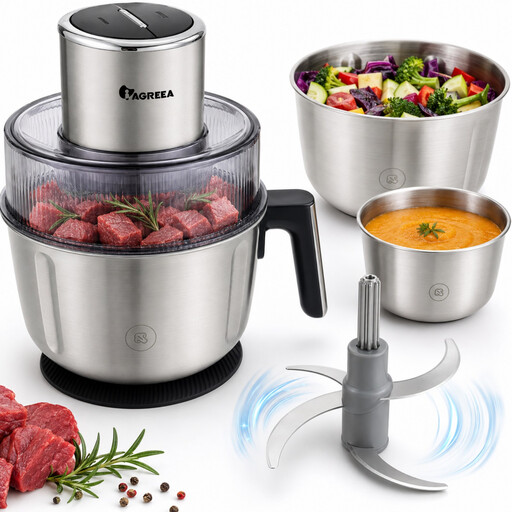
Consider the nesting bowls if shared storage is tight and you want a stated bowl option for purée; check which bowl handles your usual portion.
 No image available
The smaller bowl is worth considering for modest portions, provided its usable capacity suits the purée you make.
 No image available
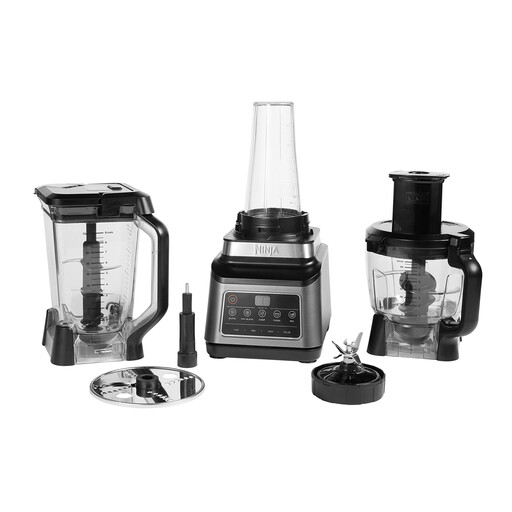
Consider this model if you want a processor with an explicitly named Puree programme as well as separate blending vessels.
Yes, if the exact model lists puréeing as an intended function and you use the specified blade or attachment. Cuisinart lists puréeing for the FP8U, while Kenwood lists it for the MultiPro Go; check the instructions for your chosen model and portion.
Clean the food-contact bowl, lid, blade and any other used parts according to the model’s instructions, paying attention to places where residue can remain. In a food-business kitchen, follow its documented contamination and allergen controls; Food Standards Agency MyHACCP guidance calls for systems to prevent, control and detect contamination.
Only if the instructions for your exact processor and attachment permit it. Magimix advises against pouring boiling liquid into a processor bowl with its BlenderMix accessory; do not extend another model’s instructions to yours, and cool the purée when hot processing is not clearly permitted.
Consider one when you regularly need more bowl capacity or when processing noise affects others in the shared space. Quiet Mark lists the Magimix 4200XL following acoustic assessment, but its 7.7 kg weight and H435 × L213 × D272 mm dimensions make storage and handling important checks before choosing it.