Small-batch cooks short on space
If you usually make one or two portions, where the processor goes after use may matter more than its maximum bowl volume. Check the space needed for the appliance, cord and tools, as well as the working capacity.


For small portions of pea purée, start with a processor whose working capacity suits your usual batch and whose assembled size fits where you will store it. A drawer-oriented model can save space, while a larger processor makes more sense if you also prepare bigger batches or use slicing and grating attachments; neither bowl size nor motor power alone establishes how smooth a particular batch will be. If the purée is for a prescribed modified-texture diet, check the finished food against the person’s clinical instructions rather than relying on the appliance.
If you usually make one or two portions, where the processor goes after use may matter more than its maximum bowl volume. Check the space needed for the appliance, cord and tools, as well as the working capacity.
If you need a smooth result from a small portion, consider the blade, pulse control and whether your usual amount suits the bowl. For a prescribed modified-texture diet, the finished food must also meet the person’s clinical instructions.
If pea purée is only one task among slicing, grating, mixing or preparing larger batches, weigh usable capacity and accessory storage against the space the whole appliance takes up.
For pea purée in a small kitchen, check storage fit and your usual portion before deciding whether extra capacity and attachments are worth accommodating.
| Concern | What to check | Who this matters to |
|---|---|---|
| Storage space | Measure the intended space against the assembled dimensions, allowing room for the lid, cord and accessories. | If I make small batches and have little cupboard room, I need a processor I can put away without finding separate space for its tools. Around 46% of consumers put storage first. |
| Small-portion purée | Check working capacity, blade arrangement and pulse control against the amount you normally prepare. | When I make just a little pea purée, I want a bowl that suits the portion and enough control to assess the texture as I go. Smooth results from small portions come first for around 36% of consumers. |
| Capacity and other tasks | Compare usable or working capacity with your batch size, then check which attachments you would use. | If I also prepare larger meals or use slicing and grating tools, I can allow more storage space for those tasks. Broader preparation is the primary concern for around 18% of consumers. |
Bowl volume and stated working liquid capacity can differ. Kenwood lists a 1.3 L bowl and 0.75 L working liquid capacity for the MultiPro Go FDP23.140GR; its larger MultiPro Express FDP65.180SI has a 3 L bowl and 1.5 L working liquid capacity.
Compare the working figure with your usual batch, and decide whether making repeat batches is acceptable in exchange for a smaller appliance.
For someone with swallowing difficulties, smooth-looking purée alone does not establish that the finished food meets their prescribed texture. South Tees Hospitals NHS Foundation Trust describes further Level 4 requirements, including no lumps, stickiness or liquid separation.
Follow the person’s clinician-prescribed instructions and carry out the relevant checks on the finished food.
Discs and other tools can take up cupboard space even when the processor itself fits. Kenwood describes in-bowl storage for the MultiPro Go, while Bosch describes accessory storage in the bowl of its MultiTalent 3 MCM3501MGB.
Measure the complete storage space you have and prioritise attachments you expect to use.
A motor rating does not, on its own, tell you how a particular pea portion will turn out.
Check the bowl’s working capacity, blade and controls alongside cleaning access, and assess the finished texture for its intended use.
Kenwood’s MultiPro Go FDP23.140GR is a drawer-storage option for smaller batches; the MultiPro Express FDP65.180SI offers a larger bowl for broader preparation.
Bosch’s MultiTalent 3 MCM3501MGB is relevant when pea purée is one of several regular food-preparation tasks.
Magimix positions the Mini Plus for smaller kitchens and describes it as a model for one or two people.
These choices include a combined processor and blender, a chopper with nesting bowls, and a compact baby-food processor. Compare their stated bowl information with your usual pea portion and check the space available for storage.
 No image available
Consider this combined processor and blender if pea purée is one of several preparation tasks.
The title states a 750 W rating and a 2 L bowl. Check the usable working capacity for your usual portion and measure the space where you plan to use and store it.
 No image available
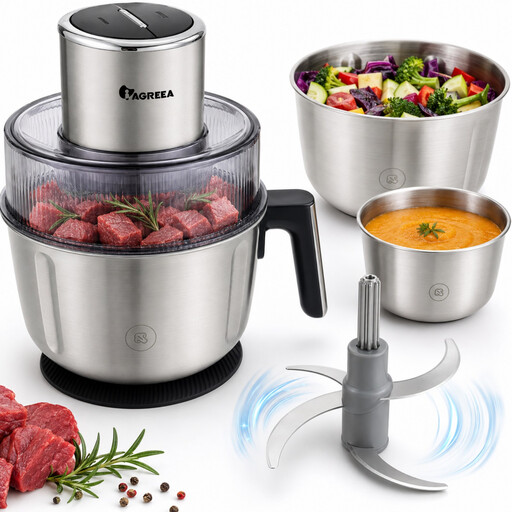
Consider the nesting-bowl arrangement if you want different bowl sizes for food preparation but need to store them together.
The title lists 2.5 L, 2.2 L and 1.8 L bowls, two speeds and triple-curved blades. Check the working capacity and minimum practical batch size for pea purée, as well as the appliance’s assembled dimensions.
 No image available
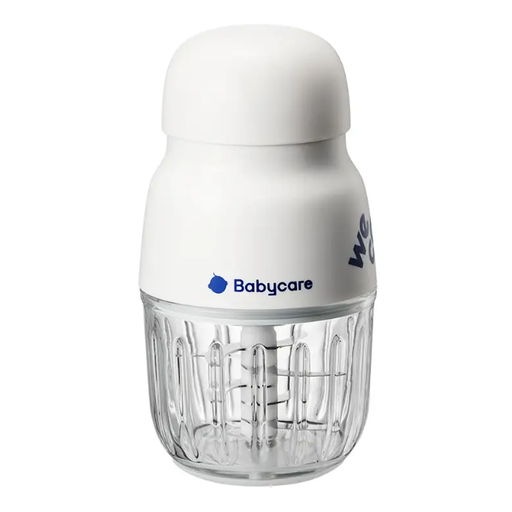
Consider this baby-food processor if you prepare small portions and prefer a compact appliance.
Its title lists one-button operation. Confirm the exact bowl capacity and practical batch size before buying, particularly because the capacity descriptions conflict; also check the controls and cleaning instructions if those affect your choice.
Yes, a food processor can be used to purée cooked food. Cambridge University Hospitals NHS Foundation Trust advises preparing and cooking food before processing it and working with small amounts to help prevent lumps; assess the finished texture for its intended use.
Choose by your usual portion and the stated working capacity where available, not headline bowl volume alone. Kenwood, for example, states a 1.3 L bowl but a 0.75 L working liquid capacity for the MultiPro Go FDP23.140GR.
No: the appliance prepares food, but the finished purée must meet the texture prescribed for the person. South Tees Hospitals NHS Foundation Trust describes Level 4 food as smooth and lump-free, non-sticky, able to hold its shape on a spoon and fall off in one spoonful when tilted, without liquid separating from solids. Follow the clinician’s instructions and required texture checks.
Check that the exact model and plug arrangement suit your delivery region, and keep its documentation. Department for Business and Trade guidance dated 21 August 2026 says Great Britain continues to recognise CE marking alongside or in place of UKCA marking in relevant product regimes, while the processes for Northern Ireland differ; do not assume one marking rule applies identically across both regions.