What matters when choosing?
Settle how peanut-containing equipment will be cleaned in the shared kitchen, then choose a size around your usual portions and the space available for storage.
| Concern |
What to check |
Who this matters to |
| Cleaning and peanut cross-contact |
Check which food-contact parts detach, which are listed as dishwasher-safe and how the manual says to clean the remaining parts. Agree on peanut use before bringing the machine into a kitchen with allergy controls. |
When someone sharing the kitchen needs peanut exposure controlled, cleanable parts and an agreement about use take priority; roughly 42% of consumers put this concern first. |
| Storage and small batches |
Compare stored dimensions with the available drawer or cupboard, and check working capacity and operating guidance for your usual sauce quantity. |
If the processor must be put away after a modest sauce batch, a manageable stored size matters more than a large bowl; around 33% of consumers prioritise that need. |
| Shared-meal capacity |
Match bowl size and supplied tools to the meals you regularly prepare, allowing space to store and wash the accessories. |
For sauce alongside chopping or grating for several people, I need the extra capacity and tools to earn their place in the cupboard; roughly 25% of consumers put wider meal preparation first. |
Joybuy products for compact preparation
This compact chopper is an option for modest peanut-sauce preparation where cupboard space matters. Check its operating instructions and your kitchen’s cleaning arrangements before relying on it for your usual batch.
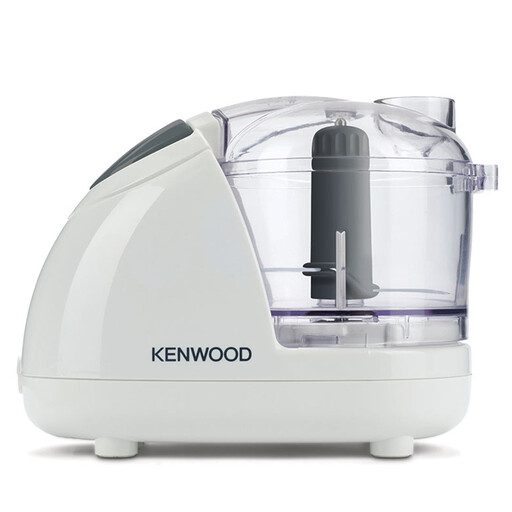 Image unavailable
Kenwood CH180B Mini Chopper, 350ml, 300W, white
Consider this compact chopper for modest sauce batches if its operating guidance suits the quantity you normally make.
It has a 350ml bowl, two speeds and pulse control. The bowl and blade are listed as dishwasher-safe; check how to clean the other food-contact parts. Follow the stated 30-second continuous-running limit.
View on Joybuy
Common questions
Can a shared kitchen use the same processor for peanut sauce and other foods?
Only if its use fits the kitchen’s arrangements for managing peanut exposure. If someone sharing the space has a peanut allergy, agree whether peanut processing is permitted and how equipment and surfaces will be cleaned; do not assume dishwasher-safe parts settle that decision.
Does dishwasher-safe mean every part can go in the dishwasher?
No. The designation applies to the parts the manufacturer specifies. Check the instructions for the bowl, lid, blade, pusher and any other food-contact components, and clean parts that are not listed according to those instructions.
What bowl size do I need for peanut sauce?
Choose around the quantity you normally make, but do not treat capacity as a minimum workable batch. Kenwood GB lists a 0.75L liquid working capacity for the 1.3L MultiPro Go FDP23.140GR and 1.2L for the 2.1L MultiPro Compact FDP31.170GY; check operating guidance before assuming either will handle a very small, thick batch.
What if the shared kitchen prepares food as a business?
Food-business cleaning and allergen controls need to be addressed as part of the kitchen’s own procedures, not by choosing a dishwasher-safe processor alone. Food Standards Agency guidance calls for systems to prevent and control allergen contamination, while GOV.UK food-business guidance calls for effective cleaning arrangements covering utensils and equipment. Those business requirements should not be presented as rules for an ordinary domestic flatshare.


