Regular batch cooks checking seed texture
If you often prepare chopped seeds for toppings, fillings or other meal-prep components, a pulse control lets you pause and inspect them. You may also need the bowl for ingredients beyond seeds.


Choose a processor with a knife blade and pulse control so you can stop and inspect the texture, then size the bowl for everything else you prepare in the same session. Kenwood GB documents those controls and a 3L bowl on the FDP65.180SI, but bowl capacity is not a pumpkin-seed limit: try your usual seed quantity in a small batch before relying on the machine for repeated prep.
If you often prepare chopped seeds for toppings, fillings or other meal-prep components, a pulse control lets you pause and inspect them. You may also need the bowl for ingredients beyond seeds.
If seed chopping is an occasional job, compare the space a processor takes up with the amount you usually prepare. Check its actual dimensions rather than judging storage needs from bowl capacity alone.
If your batch-cooking routine also involves slicing, grating, weighing or dough preparation, the included tools matter alongside the chopping blade. Check the accessory list for the exact model.
Start with the amount you prepare in a session, then check how you will control the seed texture and whether the other functions justify the storage and cleaning involved.
| Concern | What to check | Who this matters to |
|---|---|---|
| Batch capacity | Compare the exact model’s bowl and working capacities with your wider prep session. Do not treat either figure as a seed limit. | If I prepare several ingredients at once, I want a bowl that avoids unnecessary repeat batches without taking up more room than I can spare. Around 36% of consumers put batch capacity first. |
| Chopping control | Look for a knife blade and pulse control; check the texture between short bursts. | When I want visible seed pieces rather than an increasingly fine mixture, I need to be able to stop and inspect them. Texture control comes first for around 29% of consumers. |
| Other prep tasks | Check which discs, tools or weighing functions are included with the particular model. | If seeds are only one part of my batch-cooking routine, I want the same appliance to handle other jobs I actually do. Around 21% of consumers chiefly value that wider use. |
| Storage and cleaning | Check dimensions, accessory storage and the manual’s cleaning instructions for removable parts. | With limited cupboard space or frequent changes between ingredients, I need a machine I can store and clean conveniently. For around 14% of consumers, that is the primary concern. |
A total bowl figure describes general appliance size, not how many pumpkin seeds it will chop as intended. Magimix Support’s published maximum-amount table covers other foods, including dough and carrots.
Use capacity to plan the wider batch-cooking workflow, then try your usual seed quantity in a small batch and consult the exact model’s manual.
A motor rating does not establish the chopped texture or seed quantity you will get. The cited Kenwood, Ninja and Magimix product information does not provide a comparable pumpkin-seed processing test.
Check the chopping blade and controls first, then compare the bowl and other features you will use.
Extra discs, blending equipment and weighing functions serve different prep jobs; they do not replace the need to check the chopping setup.
Choose a broader accessory set if slicing, grating, weighing or other listed tasks are part of your regular routine.
GOV.UK food-business guidance identifies equipment as a possible route for cross-contamination between raw and ready-to-eat food.
Thoroughly clean food-contact parts before preparing a ready-to-eat seed mixture, following the processor manual’s instructions for its removable parts.
Kenwood GB lists the MultiPro Express FDP65.180SI with a 3L bowl, 1.5L dry working capacity, knife blade, two speeds and pulse. Kenwood lists variable speed, pulse and built-in weighing on the separate FDM71.900SS.
Magimix UK lists food processors with total bowl capacities from 1.7L to 3.6L. Its 4200XL has a stated 3L total capacity and 1.3L working capacity.
Ninja UK describes the BN650UK with a 2.1L bowl and chopping, slicing, grating, puréeing and mixing functions.
These choices include processors for broader batch preparation and smaller-bowl options for more modest jobs. Compare each model’s stated equipment with your usual seed quantity, other prep tasks and available storage space.
 No image available
Consider this model if seed chopping sits alongside other batch-prep jobs and you want to pause to inspect the texture. Kenwood GB lists a knife blade, two speeds and pulse, with a 3L bowl and 1.5L dry working capacity; neither capacity is a tested seed limit.
 No image available
Consider this variant if weighing and other prep tasks matter alongside chopping. Its product name specifies a 3L capacity, integrated digital scale and eight accessories; check the included tools against the jobs you intend to do.
 No image available
This processor-and-blender variant suits cooks planning several batch-prep tasks. Its product name specifies variable speed, pulse, integrated weighing and 13 accessories; use pulse to inspect the seeds rather than assuming a particular texture from the 3L capacity.
 No image available
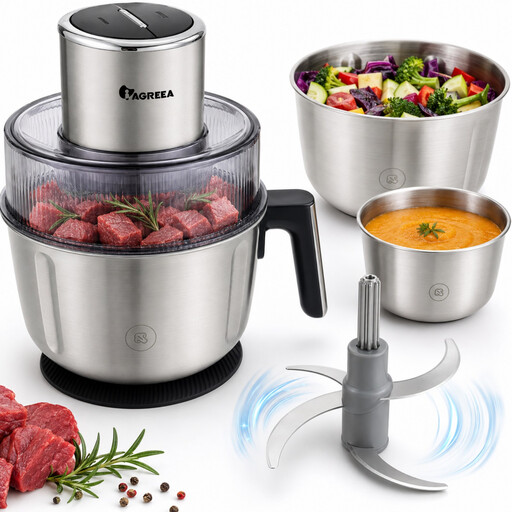
Consider this chopper if choosing between bowl sizes and storing them together suits your prep routine. Its product name lists 2.5L, 2.2L and 1.8L stainless-steel bowls and two speeds; check the manual before using a bowl volume as a guide to seed quantity.
 No image available
Consider the 2L processor bowl if your general prep sessions are modest and you also want a blender. The product name separately lists 1.8L; check the exact configuration and manual before planning your usual seed batch.
Do not choose by wattage alone: the cited Kenwood, Ninja and Magimix product information does not establish a wattage threshold for chopping pumpkin seeds. Check the blade, available controls and bowl size for your wider prep, then try the quantity you normally use.
Use a chopping blade and short pulses where the exact model provides them, stopping to inspect the seeds between bursts. Kenwood documents pulse on the cited MultiPro models, and Magimix Support describes a PULSE control; the number of bursts needed will depend on your quantity and intended texture.
Clean the processor’s food-contact parts thoroughly before using them for ready-to-eat seeds, following its manual and disinfecting where appropriate. GOV.UK food-business guidance warns that bacteria can spread between foods through equipment; it is hygiene guidance, not a substitute for the appliance’s cleaning instructions.
Follow safe chilling, freezing and defrosting practices for the finished food, as well as storage instructions appropriate to its ingredients. Food Standards Agency guidance explains that proper chilling, freezing and defrosting help stop harmful bacteria from growing.