Regular batch-dip makers
If you roast several aubergines at once, compare working capacities to judge whether your usual quantity will fit without repeated processing runs.


Choose a food processor by its usable working capacity, not just its advertised bowl size, and look for a chopping blade and pulse control if you want to adjust the dip’s texture. A compact processor can suit smaller portions and limited storage, while a larger working capacity matters more if you want to process a regular batch in fewer runs. Extra bowls and attachments are worth considering only if you will use them for other preparation jobs.
If you roast several aubergines at once, compare working capacities to judge whether your usual quantity will fit without repeated processing runs.
If you prefer to stop at a coarse dip or continue towards a smoother purée, consider pulse and speed controls alongside capacity.
If you make smaller quantities infrequently, storage space may matter more than fitting a large batch into one bowl.
For roasted aubergine dip, establish how much you want to process at once before comparing controls and storage. Kenwood GB lists a 1.5L liquid working capacity for the 3L MultiPro Express FDP65.180SI, while Magimix lists a 1.3L working capacity for its 3L 4200XL: the bowl figure alone does not tell you how much dip to plan for.
| Concern | What to check | Who this matters to |
|---|---|---|
| Usable batch capacity | Compare the model’s working or liquid capacity with your usual batch; allow room to pulse and scrape down. | I want to process several roasted aubergines without dividing the dip between runs. Around 42% of consumers with this batch-cooking need would put usable capacity first. |
| Texture control | Look for a chopping blade and pulse control; check whether the model also offers speed settings. | If I want to leave some texture in the dip, I need to be able to stop and assess it as I process. Roughly 33% of consumers would prioritise that control. |
| Storage and cleaning | Check the processor’s dimensions, the accessories you would store and which parts are dishwasher-safe. | Limited cupboard space or a lengthy clean-up could make a large accessory set inconvenient for me. Around 25% of consumers would make storage and cleaning their primary concern. |
A 3L bowl need not accommodate 3L of ingredients in use. Kenwood GB states a 1.5L liquid working capacity for the FDP65.180SI, and Magimix states a 1.3L working capacity for the 4200XL, despite both having 3L total bowls.
Use the chosen model’s working-capacity or maximum-fill guidance when planning a batch, rather than filling to the headline bowl figure.
Kenwood GB lists a 1.3L bowl and 0.75L liquid working capacity for the MultiPro Go FDP23.130GY. That limit matters if your regular dip batch is larger.
Choose a compact model when smaller portions suit you, or when the storage benefit outweighs processing the dip in stages.
Slicing and grating tools can be useful for other meals, but they do not replace the chopping blade, usable capacity and stopping control needed for this task.
Decide which other preparation jobs you will actually do before choosing a larger accessory set.
Additional discs and tools also take up storage space and add components to clean.
Finished dip needs a cooling and storage plan as well as a suitably sized processor. UK government food-safety guidance for England, Northern Ireland and Wales advises refrigerating cooked food within one to two hours and eating leftovers within 48 hours or freezing them; Food Standards Scotland advises not keeping leftovers for longer than two days.
Divide the finished dip into shallow containers to help it cool, then refrigerate or freeze it in line with the guidance that applies where you live.
The MultiPro Go and MultiPro Express illustrate the choice between compact storage and more room for a regular dip batch.
The MultiTalent 8 MC812S734G is a model to examine if larger-volume preparation is a regular requirement.
The 4200XL provides a useful example of why a 3L total bowl should be considered separately from working capacity.
The Expert Prep Pro FP1300SU is worth examining if you alternate between a main batch and small quantities of herbs or seasoning.
These food processors offer different stated bowl sizes and preparation options for roasted aubergine dip. Compare each model’s usable fill guidance with your intended batch before relying on its bowl size.
 No image available
Consider this model for regular batches that fit within its working limit and for adjusting texture with pulse control.
Its listed features include a 1000W motor, 3L bowl, six accessories and dishwasher-safe attachments. Kenwood GB specifies a 1.5L liquid working capacity for the FDP65.180SI; a larger dip batch would need to be divided.
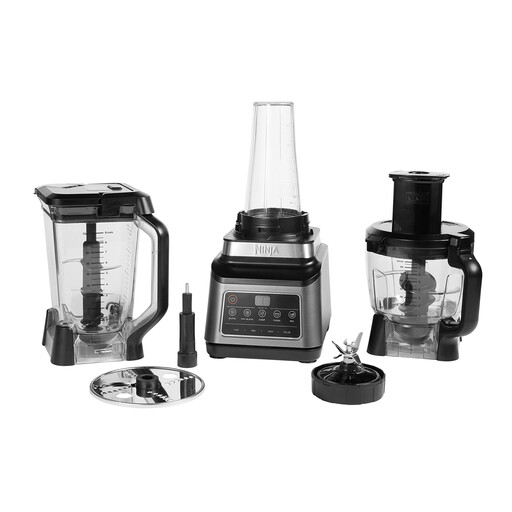 No image available
Consider this model if you also want its separate blending vessels and purée programme for other preparation tasks.
The listing states a 1200W motor, 1.8L processor bowl, 2.1L jug, 700ml cup and dishwasher-safe parts. Check its maximum fill guidance for dip rather than treating 1.8L as a liquid working limit. Its product description warns against processing hot liquids, so let roasted aubergine cool before processing.
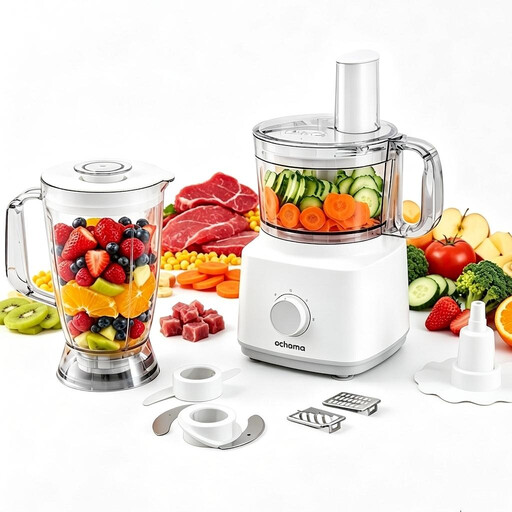 No image available
Consider its listed chopping and puréeing functions for a smaller dip batch.
The 1.8L figure describes the bowl, not a confirmed liquid working limit. Check the usable fill guidance and available pulse or speed controls if batch size or coarse-texture control is important to you.
Do not plan on processing 3L just because the bowl is labelled 3L. Kenwood GB gives the 3L FDP65.180SI a 1.5L liquid working capacity, while Magimix gives the 3L 4200XL a 1.3L working capacity. Check the chosen model’s usable-fill guidance against your recipe.
Yes, if its bowl arrangement suits both quantities. Cuisinart UK specifies a 3L main bowl and a separate 0.95L small bowl for the Expert Prep Pro FP1300SU; check the included bowls on any other model rather than assuming a large processor has a small one.
Cool and refrigerate the finished dip promptly, or freeze portions you will not use soon. UK government guidance for England, Northern Ireland and Wales advises refrigerating cooked food within one to two hours and eating leftovers within 48 hours or freezing them. Food Standards Scotland advises cooling leftovers within one to two hours, keeping the fridge between 0°C and 5°C and not keeping leftovers for longer than two days.