Chunky-salsa cooks
You want to stop chopping while pieces of tomato, onion and herbs are still visible. A pulse or momentary setting matters more to you than having the largest bowl.


Choose a food processor with pulse or momentary control if you mainly make chunky salsa: short bursts let you stop and check the texture. In a shared kitchen, weigh the bowl and accessories against the cupboard space and washing-up they require. A larger multifunction model makes more sense when you regularly prepare bigger batches or will use its other attachments.
You want to stop chopping while pieces of tomato, onion and herbs are still visible. A pulse or momentary setting matters more to you than having the largest bowl.
You share worktop, cupboard and sink space. The number of parts to store, and how each food-contact part is cleaned, affect whether a processor is convenient to share.
You make salsa for groups or want the same appliance for chopping, slicing, grating and other food preparation. Usable bowl capacity and the attachments you will actually use become more important.
Start with the texture and batch size you usually want, then check whether the complete appliance can be cleaned and put away without taking over shared space.
| Concern | What to check | Who this matters to |
|---|---|---|
| Salsa texture | Check the exact model for pulse, momentary or manual control and a processor bowl for chopping. | I want visible pieces rather than an unintended purée, so I need to stop and inspect the mixture between bursts. Around 27% of consumers put texture control first. |
| Cleaning and storage | Check which individual parts are dishwasher-safe and where the bowl and accessories will fit. | If other people need the sink and worktop, I want to clean the food-contact parts promptly and put everything away. For around 46% of consumers, manageable shared-space use is the primary concern. |
| Batch size and other uses | Compare usable bowl capacity with your usual servings, then check the attachments included with the exact model. | When I make salsa for a group or prepare other meals, I need enough working capacity and tools I will use. Bigger batches and wider food preparation come first for around 27% of consumers. |
The largest capacity number may not describe the volume you can use for every task. Bosch, for example, lists a 3.9L bowl and a 2.4L usable volume for the MC812S734G.
Compare usable capacity, any stated liquid limit and the appliance dimensions with your typical batch before giving it shared cupboard space.
An automatic chopping programme does not by itself tell you when salsa has reached the texture you want. Ingredient size, quantity and processing time also matter.
If visible pieces are important, check for a documented pulse, momentary or manual control and inspect the mixture between short bursts.
A multifunction processor may add a jug, cup, discs and extra lids to the bowl and blade you use for salsa. Those parts still need somewhere to go after cleaning.
Check the included components and washing instructions for each one, then agree where the complete set will be stored.
Selling salsa as part of a food business is different from preparing it privately in a shared home. The Food Standards Agency sets out registration and contamination-control requirements for food businesses.
If you intend to operate a food business, check the applicable requirements before starting. The Food Standards Agency says registration with the local authority must take place at least 28 days before trading or food operations begin.
The FP8U Easy Prep Pro is a compact-to-mid-size option for controlled chopping and accessory storage.
The models considered here range from a 2.3L multifunction processor to a larger batch-oriented option.
Magimix offers processor sizes intended for different household sizes, including the Mini Plus and 3200XL.
The BN800UK combines a processor bowl with a blender jug and personal cup for households that will use several preparation formats.
The 5KFP0719 is a 1.7L processor for cooks considering a smaller appliance.
These choices cover chopping-focused and multifunction appliances for salsa preparation. Compare their controls, bowl sizes and complete sets of parts against the space and cleaning arrangements in your shared kitchen.
 No image available
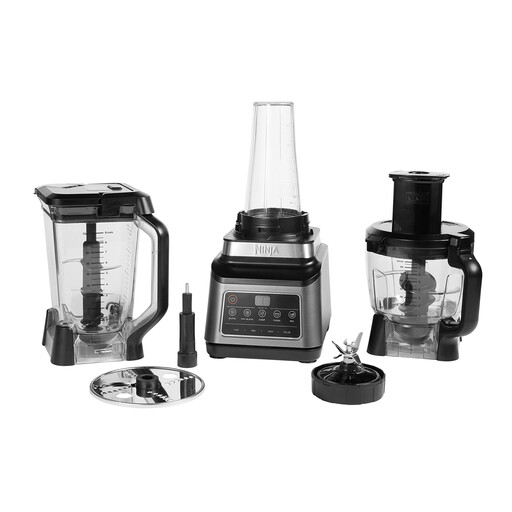
Consider this model if you need a larger bowl and will use several preparation accessories as well as making salsa.
The product name specifies a 3L capacity, 1000W rating, integrated digital scale and eight accessories. Check where the complete set will fit in the shared kitchen.
 No image available
This model is worth considering if you want to check salsa texture between bursts and will also use a blender jug or personal cup.
The BN800UK has a 1.8L processor bowl, 2.1L jug and 700ml cup. Its listing describes manual settings and dishwasher-safe parts; plan storage for all three containers.
 No image available
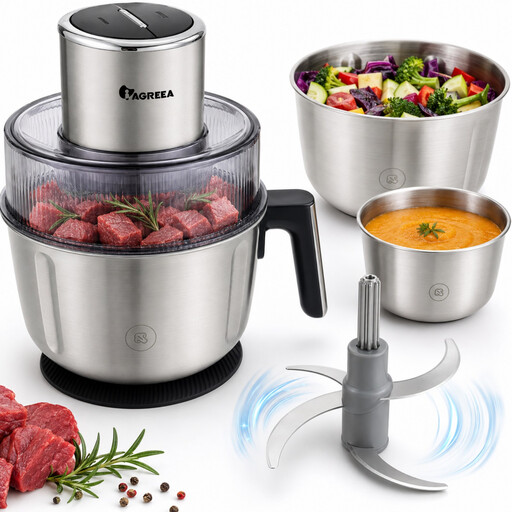
Consider the nesting bowls if cupboard space matters but you want a choice of bowl sizes for chopping ingredients.
The product name lists 2.5L, 2.2L and 1.8L stainless-steel bowls, two speeds and a 350W rating. Check the cleaning instructions for the bowls and blade assembly, and follow the stated 30-second-per-cycle limit.
 No image available
This processor-and-blender combination may suit shared meals if you will use both functions, provided there is room to store the components.
The product name specifies a 2L processor bowl and a 750W rating. Check which removable parts can go in your dishwasher and whether the appliance fits your available space.
 No image available
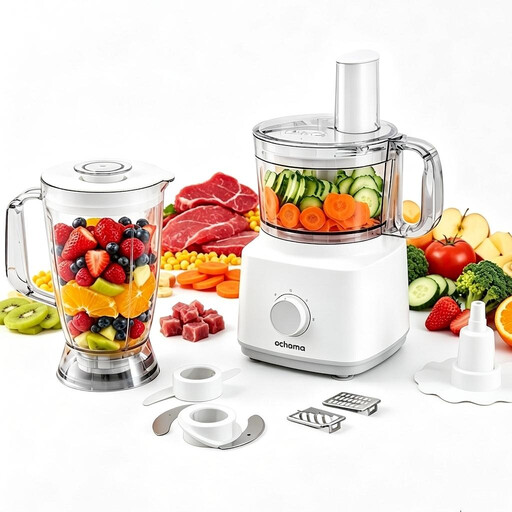
Consider this option if chopping, slicing and grating are all useful to you, rather than choosing it on bowl size alone.
The product name specifies a 1.8L bowl and slicing, shredding and grating discs. If chunky salsa is the priority, check the exact controls before buying; also check cleaning instructions and dimensions for your shared kitchen.
Look for pulse, momentary or manual control on the exact food-processor model so you can stop and inspect the mixture. Short bursts help you manage processing time, but the result also depends on ingredient size and quantity.
Choose around your usual batch rather than the largest advertised bowl. A 1.7L–1.9L model may suit smaller batches and tighter storage; if you regularly cook for several people, compare larger models' usable capacity and dimensions before allocating cupboard space.
No: dishwasher-safe describes how specified parts may be washed, not whether food-contact parts can be left dirty between users or ingredients. Clean the bowl, blade, lid and other used parts promptly, following their individual care instructions.
Clean and dry food-contact parts between uses, and keep raw-food preparation separate from ready-to-eat salsa where relevant. Agree who will clean the blade, bowl, lid and feed tube; for food businesses, the Food Standards Agency calls for controls to prevent contamination, including allergen cross-contamination.
If you start or take over a food business, the Food Standards Agency says you must register with the local authority at least 28 days before trading or food operations begin. Preparing salsa privately for household use is not the same as operating a food business.