Small-batch bakers with limited storage
If you make a modest batch at a time, look for pulse control and a processor you can put away easily. Check its dry working capacity before assuming a compact bowl will fit your recipe.


For savoury scone dough, choose a food processor with pulse or low-speed control and a working capacity that fits your usual batch. A compact model can suit occasional small batches, while regular larger batches call for closer attention to the model’s stated pastry or dough limit. Check the exact model’s supplied tools and available storage space before buying.
If you make a modest batch at a time, look for pulse control and a processor you can put away easily. Check its dry working capacity before assuming a compact bowl will fit your recipe.
If you make larger batches often, compare stated pastry, dough or dry working capacities for the exact models you are considering. Total bowl volume alone does not tell you how much dough to process.
If the processor will also grate cheese or slice vegetables, check which tools come with the model and where you will store and clean them.
Start with mixing control and the size of your usual scone batch, then consider storage and the other preparation jobs you expect the processor to do.
| Concern | What to check | Who this matters to |
|---|---|---|
| Controlled mixing | Look for pulse or low-speed control so you can inspect the mixture between brief bursts. Good Food advises low speed to avoid being too aggressive with dough. | If I want to stop when my scone dough starts to come together, I need control over each burst of mixing; around 40% of consumers put that control first. |
| Batch capacity | Compare your recipe with the exact model’s pastry or dough limit, where stated, or its dry working capacity. Do not use total bowl volume as a dough limit. | When I regularly make a larger batch, I want to know whether it fits in one run; roughly 30% of consumers make batch capacity their primary concern. |
| Storage and clean-up | Check the stored dimensions and which removable parts the model’s instructions identify as dishwasher safe. | For an occasional quick batch, I need an appliance I can put away and clean without fuss; around 20% of consumers prioritise storage and clean-up. |
| Other food-prep tasks | Check which slicing, grating and dough tools are supplied with the exact variant, and allow space for the accessories. | If I also prepare cheese and vegetables, I want those tasks covered by the same appliance; roughly 10% of consumers put wider food-prep use first. |
A bowl’s total volume is not its recommended pastry workload. Magimix, for example, publishes separate shortcrust-pastry maximums for its named models.
Compare your recipe with the exact processor’s stated pastry, dough or dry working capacity.
Continuous processing makes it harder to stop when the ingredients have just come together. Good Food advises low speed to avoid being too aggressive with dough.
Use brief pulses or low speed where available, inspecting the mixture between bursts.
Processors within a range can have different supplied tools, bowls and discs, so the range name does not establish what is in the box.
Check the exact model code and its included accessories, particularly if a dough tool is important to you.
The Food Standards Agency’s guidance for England, Northern Ireland and Wales advises against eating flour products that have not been cooked thoroughly.
Do not taste unbaked dough unless it is labelled ready to eat. Wash hands and clean bowls, utensils and surfaces after handling flour or raw dough.
Its food-processor range offers model-specific pastry limits that can help with batch-size decisions.
Its named models span compact storage and larger working capacities.
The Expert Prep Pro FP1300SU combines dough-mixing controls with tools for other preparation tasks.
This processor suits shoppers considering a dough tool and pulse control for scones alongside slicing and grating for other food preparation. Match its working capacity to your own batch before choosing.
 No image available
Consider this model if you want pulse control for brief mixing and a supplied dough tool, as well as slicing and grating tools for other preparation jobs.
It has a 3 L bowl and a stated 1.5 L dry working capacity. The bowl volume is not a scone-dough limit, so check the model’s workload instructions against your recipe.
The listed 1000 W model comes with six accessories and dishwasher-safe attachments. Check the available speed settings if a separate low-speed setting matters to you.
Use short pulses or low speed where available, and stop when the dough starts to come together. Good Food advises low speed to avoid processing dough too aggressively; follow your recipe and inspect the mixture rather than relying on a fixed processing time.
No: total bowl volume should not be treated as the dough or pastry limit. Magimix, for example, lists a 3 L total capacity for the 4200XL but a separate 1.2 kg maximum for shortcrust pastry. Check the applicable limit for your exact model.
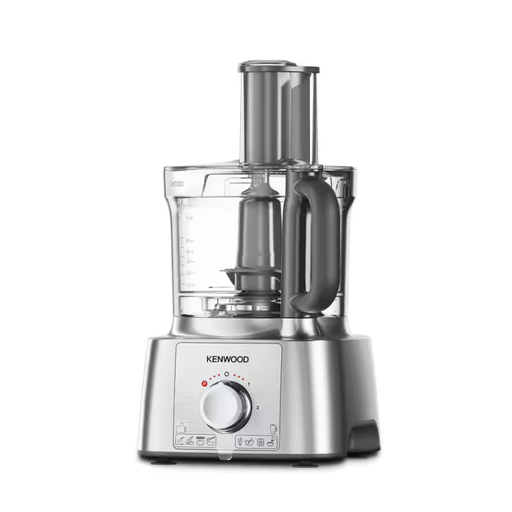
Only put in parts that the exact model’s instructions identify as dishwasher safe. Kenwood lists specific MultiPro Go parts as dishwasher safe, while Cuisinart lists bowls, blades and discs for the Expert Prep Pro; neither description applies automatically to other models.
Do not taste unbaked dough unless it is labelled ready to eat. The Food Standards Agency’s guidance for England, Northern Ireland and Wales advises against eating flour products that have not been cooked thoroughly, and recommends cleaning hands, utensils and surfaces after handling flour or raw dough.