Small-batch cookie bakers
You usually mix one modest batch at a time and want a processor that suits the task without taking up more kitchen space than necessary.


Choose a processor whose instructions for the exact model cover dough mixing, then compare its working bowl and storage footprint with your usual spiced-cookie-dough batch. A compact model can make more sense for occasional small batches; consider a larger multi-function processor if you will also use its other preparation and blending functions. Do not assume a mini chopping bowl is suitable for dough.
You usually mix one modest batch at a time and want a processor that suits the task without taking up more kitchen space than necessary.
You want to mix dough but also use the processor for jobs such as chopping or blending between baking sessions.
You make dough alongside larger food-preparation jobs and may accept a larger appliance if you will use its additional functions.
Start with the bowl and tool specified for dough on the exact model, then consider how the appliance will fit your kitchen and what support you would value over time. A bowl’s headline capacity or a motor rating alone cannot tell you whether it suits your cookie-dough recipe.
| Concern | What to check | Who this matters to |
|---|---|---|
| Small-batch fit | Compare your usual recipe quantity with the working bowl and the instructions for its blade or tool. Check whether pulse control lets you stop and inspect the mixture. | If I make one modest batch, I want a bowl that suits that quantity without choosing an unnecessarily large machine; around 36% of consumers put small-batch fit first. |
| Dough capability | Check for a supplied dough tool or documented dough method for the exact model, including its quantity and operating guidance. | I want instructions that cover the mixing task rather than relying on a wattage figure; dough capability is the primary concern for around 36% of consumers. |
| Storage and cleaning | Measure the space for the machine and its accessories, and check which parts the instructions say are dishwasher-safe. | When cupboard space is tight, I need to be willing to retrieve, assemble and clean the processor for a small batch; around 21% of consumers put that practical effort first. |
| Long-term support | Compare the manufacturer’s guarantee terms and parts support for the exact model. Check the seller’s change-of-mind policy separately. | I expect to keep the appliance and want to know what support applies if a component needs attention; that is the leading concern for around 7% of consumers. |
A small accessory bowl may be intended for produce or dressings rather than dough. Magimix describes its Mini Plus mini bowl for small preparation jobs, while its documented bread-dough method uses the metal blade.
Before buying, identify the bowl and blade or tool specified for dough in the exact model’s instructions.
Neither figure identifies the tool supplied or establishes a suitable quantity for your spiced-cookie-dough recipe.
Check the model’s dough instructions first, then compare their quantity guidance with what you normally make. Do not apply a bread-dough limit to cookie dough without checking the recipe and manual.
A small quantity does not change the need to handle sharp blades and powered parts carefully.
Follow the model’s lid-locking instructions, keep hands clear of blades, unplug before changing tools or cleaning, and keep the base, cable and socket dry.
Its Mini Plus is positioned by Magimix UK for one or two people and smaller kitchens.
Its range includes compact MultiPro processors for buyers considering dough mixing alongside other food-preparation tasks.
Its processor and multi-function models are relevant when dough is one of several regular preparation tasks.
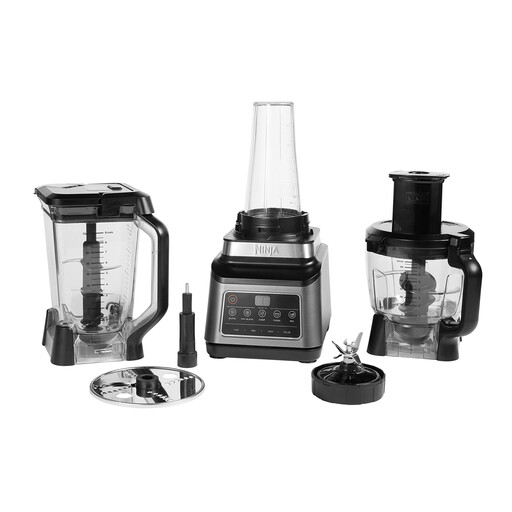
This Ninja processor is a choice to consider if you want to prepare dough alongside blending and other food-preparation tasks. Compare its instructions with your usual small-batch recipe before deciding whether its size suits you.
 No image available
Consider this model if you will use dough preparation as well as its blending functions. Its listing describes a 1.8 L processor bowl for doughs, a separate 2.1 L blending jug and a 700 ml cup; the stated motor rating is 1200 W.
Check the model instructions against your cookie-dough quantity, and confirm its dimensions if storage space is limited.
Do not assume a mini bowl is intended for dough. Magimix describes its Mini Plus mini bowl for small preparation jobs such as produce and dressings; use the bowl and tool specified for dough in the instructions for your exact model.
Not for every processor. Magimix Support says the Mini Plus can make bread dough with its metal blade, subject to a 400 g bread-dough maximum. That figure is not a cookie-dough limit, so follow the guidance for your model and recipe.
Follow the model’s assembly and cleaning instructions, handle blades carefully and unplug the appliance when it is not in use. Electrical Safety First also advises keeping food processors away from sinks; keep the base, cable and socket dry, and do not use an appliance showing signs of electrical damage.
Contact the seller about a faulty appliance and keep your proof of purchase. GOV.UK provides guidance on consumer rights for faulty goods; those rights are distinct from a retailer’s voluntary change-of-mind returns policy, which you should check separately.