Frequent batch cooks
If you prepare tapenade for several portions at a time, compare working capacities so that your usual quantity does not require unnecessary repeat cycles.


Choose a food processor with a chopping blade, control over short bursts and enough working capacity for the amount of tapenade you make at once. A larger bowl is worth considering for frequent, sizeable batches; a compact processor balances batch size with storage, while a small processor suits smaller portions but may require repeat cycles.
If you prepare tapenade for several portions at a time, compare working capacities so that your usual quantity does not require unnecessary repeat cycles.
If you sometimes want a coarse chop and sometimes a smoother spread, give the chopping blade and short-burst control more attention than attachments you will rarely use.
If cupboard space is limited, compare a compact processor or nested-bowl design with the space taken by a larger machine and its accessories.
Start with the amount you normally prepare in one session, then decide how much control you want over texture and how much space you can give the appliance.
Choose it when: You regularly prepare larger batches and want more bowl room in a single cycle.
Bear in mind: It takes more storage space, and the stated bowl volume is not a recipe-specific fill limit.
Choose it when: You make moderate batches but also need to fit the machine into a smaller kitchen.
Bear in mind: A particularly large batch may still take more than one cycle.
Choose it when: You mainly prepare small portions and value direct control over the chop.
Bear in mind: Repeated cycles make a small bowl less convenient for sizeable batches.
| Concern | What to check | Who this matters to |
|---|---|---|
| Batch capacity | Compare the working-capacity guidance for the exact model with your usual batch; allow room for ingredients to move rather than relying on total bowl volume. | If I prepare several portions together, I want to avoid stopping to process the mixture in separate loads. Around 40% of consumers put batch capacity first. |
| Texture control | Check for an included chopping blade and pulse or another clearly described short-burst control. | When I want a coarse tapenade, I need to stop chopping before it becomes smoother than intended; around 30% of consumers prioritise texture control. |
| Storage and bowl sizes | Compare the appliance and accessory storage space; check whether a smaller inner bowl is supplied if you also make small portions. | With limited cupboard space, I need a machine I can store while still preparing a useful batch. Storage is the primary concern for around 20% of consumers. |
| Other uses and cleaning | Confirm the included tools and consult the exact model’s instructions for cleaning its removable parts. | If the processor will also handle other meal preparation, I want its extra tools and cleaning routine to suit regular use. Around 10% of consumers put those broader uses and clean-up first. |
Ingredients need room to move. Magimix Support publishes model-specific maximum quantities, while Kenwood distinguishes the 2.1L bowl size of its FDP31.170GY from its 1.2L liquid working capacity; neither figure sets a fill level for every tapenade recipe.
Compare your planned mixture with the exact model’s capacity guidance before choosing by the headline bowl size.
A small processor can chop ingredients, but dividing a planned batch across several cycles reduces the convenience of preparing it all at once.
If you regularly make several portions, compare small models with compact and larger-bowl processors before deciding.
Extra cycles also mean more time spent transferring ingredients and cleaning up.
Tapenade calls for controlled chopping. Slicing or grating accessories serve other tasks but do not replace a suitable chopping blade.
Check what comes with the exact model and how you can stop or adjust the chop; assess other tools against tasks you actually do.
Making a larger quantity also means handling and chilling more prepared food. The Food Standards Agency identifies cross-contamination and chilling among important home food-safety practices.
Use clean equipment, avoid cross-contamination and plan suitable refrigerated storage for the ingredients and finished tapenade.
A larger-format route to compare if you regularly prepare substantial quantities.
Different bowl arrangements make the cited lines relevant when you alternate between a main batch and smaller preparations.
The MultiPro Compact FDP31.170GY is a compact-format example for moderate preparation and accessory storage.
Compare Ninja models by their exact bowl and tool configuration rather than treating its food-processor lines as interchangeable.
These Joybuy choices include a larger-bowl processor, moderate-capacity processors and choppers, and models with bowls for different quantities. Compare the processor bowl you would use for tapenade—not a separate blender jug or cup—with your planned batch.
 No image available
Consider this larger-bowl processor if you regularly prepare sizeable batches; check the model’s working-capacity guidance for your usual tapenade quantity.
The product name specifies a 3L bowl, 1000W motor, integrated digital scale and eight accessories.
 No image available
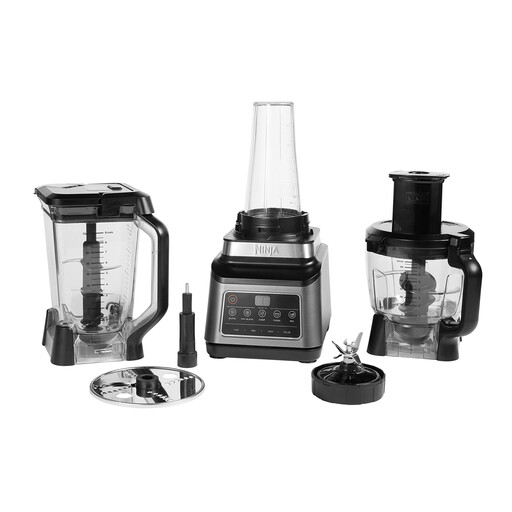
This is a choice to examine if you want a processor bowl for tapenade alongside separate blending vessels. Plan the batch around the processor bowl, and check the instructions before processing a thick mixture.
The product name specifies a 1.8L processor bowl, 2.1L jug, 700ml cup and 1200W motor.
 No image available
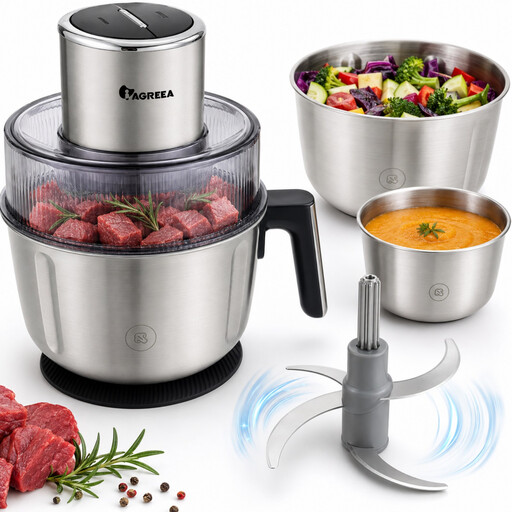
Its different bowl sizes may suit consumers who vary the amount they prepare. Check the usable fill guidance and operating instructions before planning a batch around the largest bowl.
The product name specifies nesting 2.5L, 2.2L and 1.8L bowls, two speeds and a 350W motor.
 No image available
Consider the processor bowl for moderate tapenade batches if you also want a separate blender jug. Check the bowl’s working guidance and the chopping controls for your preferred texture.
The product name specifies a 2L processor bowl, 1.8L blender jug and 750W motor.
 No image available
The two bowl sizes may be useful if you alternate between a moderate quantity and a small portion. If short bursts are important for texture, check how this model is controlled before choosing it.
The product name specifies 2 L and 0.6 L glass bowls and a 300 W motor; check its working limits for the quantity you intend to make.
Match the bowl to the quantity you normally prepare: a compact 1.9L–2.1L bowl is a route for moderate batches, while a larger bowl is worth comparing for frequent, sizeable batches. Bowl volume is not the same as a recipe-specific working limit, so follow the exact model’s capacity instructions.
Use a chopping blade and short bursts, checking the mixture between them. If texture control matters to you, confirm that the particular processor includes the blade and offers pulse or comparable manual control.
A small processor can make tapenade, but a larger planned batch may need several cycles. If you make multiple portions regularly, compare its working capacity with a compact or larger-bowl model before accepting the extra preparation time.
Check the exact model’s instructions for cleaning the bowl, lid and blade, including which removable parts may go in a dishwasher. Clean equipment used for oily ingredients promptly and avoid cross-contamination when preparing and storing the batch.
Check your local authority’s electrical-recycling arrangements or ask a retailer about its collection options. GOV.UK describes the UK’s waste electrical and electronic equipment regulations as aimed at reducing electrical waste, but the available route for a household appliance depends on local arrangements.